
Place value
Mystery number worksheets
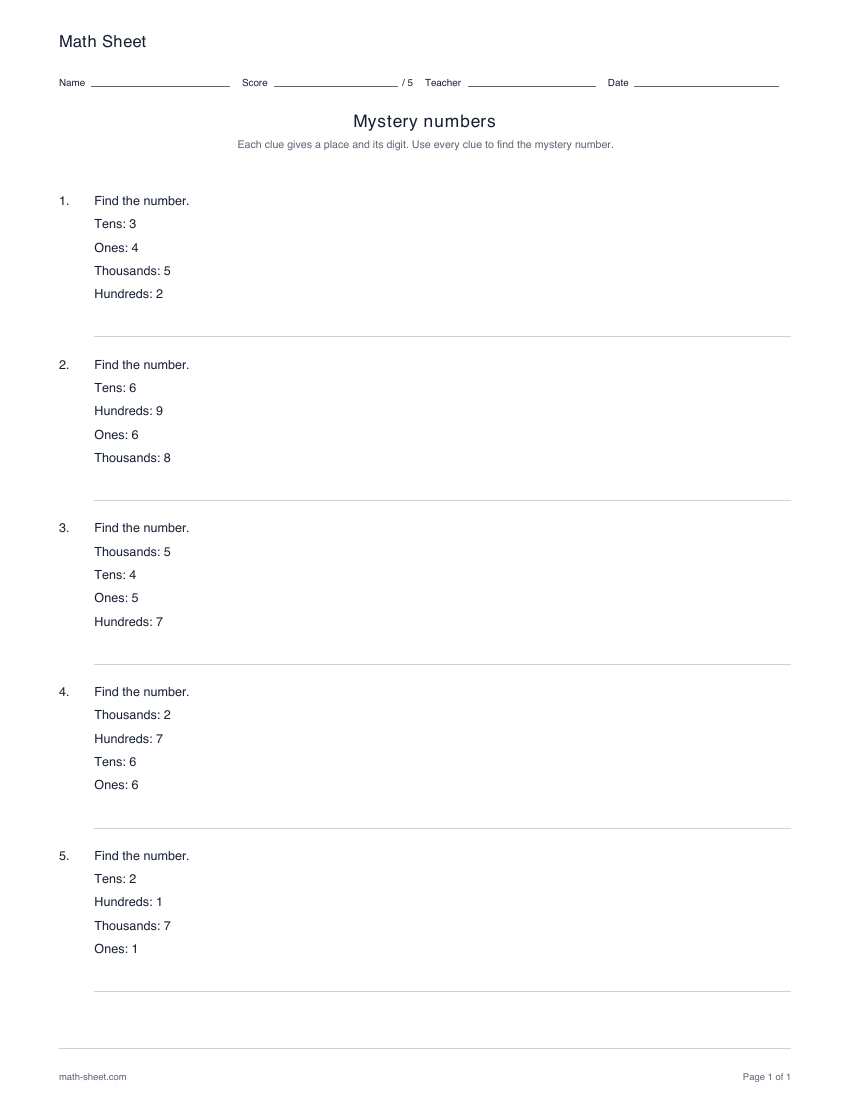
Find a three- to seven-digit number from shuffled place-value clues. Five complete puzzles per sheet, optional zero digits and a separate key.
Preview and downloadPractice by skill
A digit’s position tells you the size of its unit. Begin with one group of ten and some leftover ones, then connect those models with larger whole-number and decimal places.
Choose a resourceDigits and their units
Reconstruct numbers from clues, rearrange their digits, group large numbers and convert scientific notation. Finish with a mixed place-value review.
Place value
Find a three- to seven-digit number from shuffled place-value clues. Five complete puzzles per sheet, optional zero digits and a separate key.
Preview and download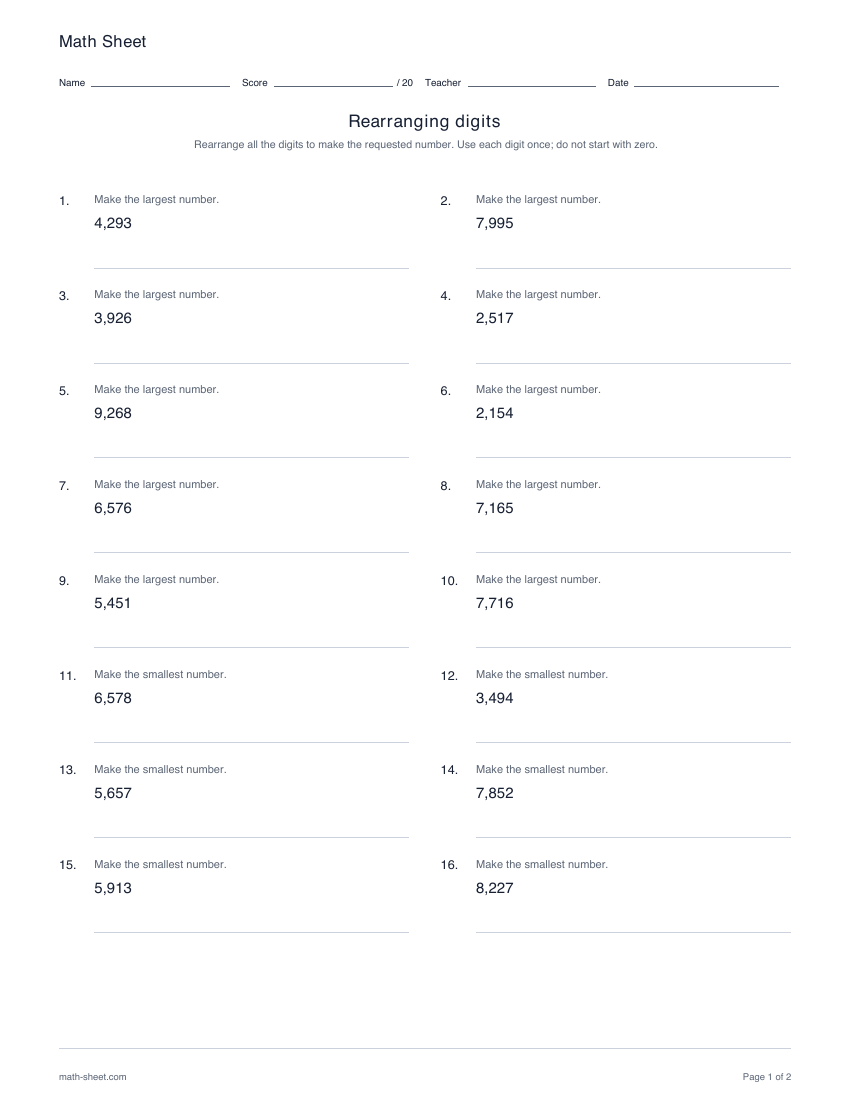
Place value
Build the largest and smallest numbers using every digit exactly once. Choose three to seven digits or selected mixed widths, with optional zeros and twenty questions.
Preview and download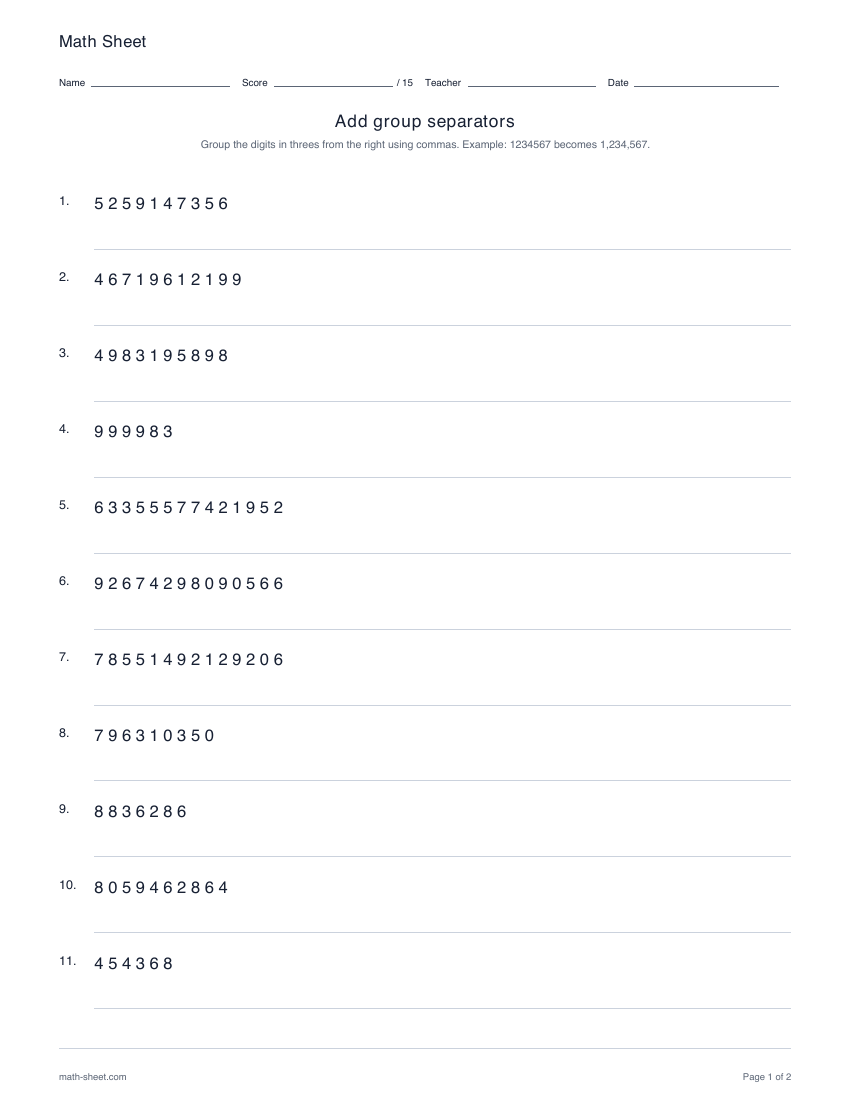
Place value
Group large whole numbers in threes from the right. Practice 4–15 digits or mixed widths, with fifteen questions and an answer key using the chosen print language’s separators.
Preview and download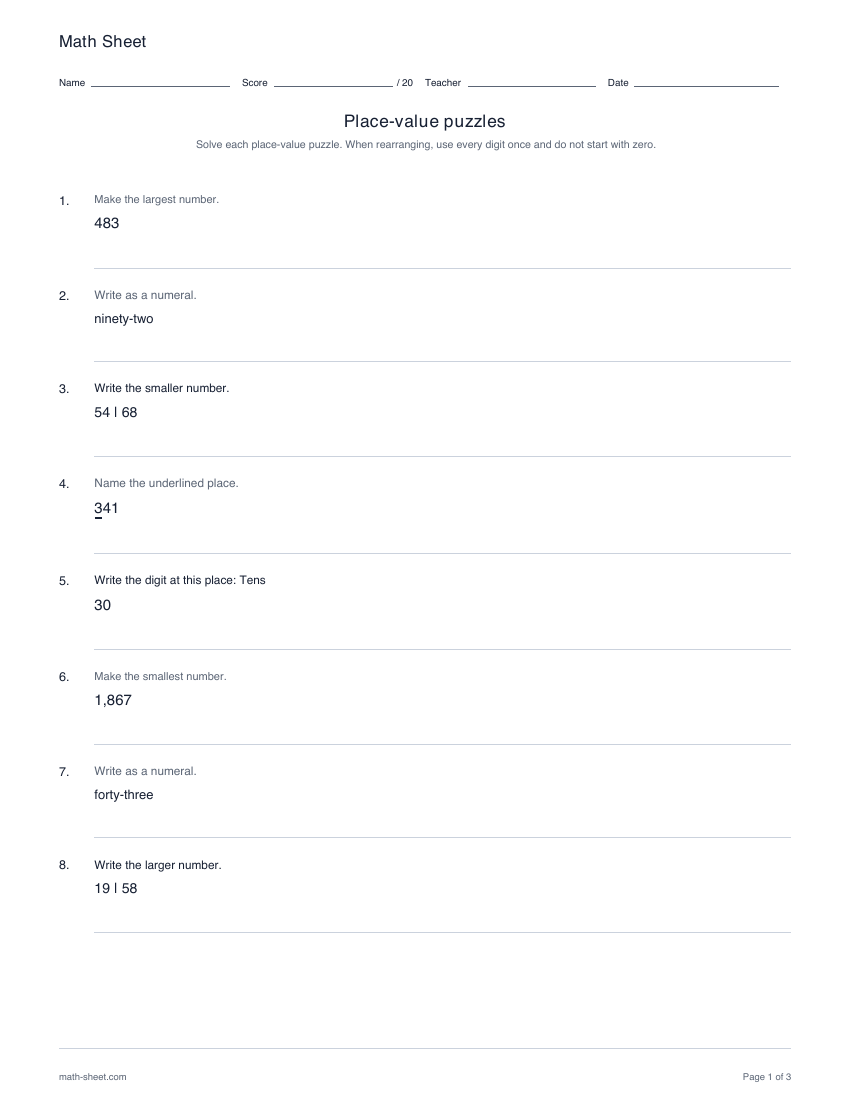
Place value
A twenty-question review combining digit rearrangement, number words, comparison, place names and digit lookup. Select whole places through millions and decimal places through ten-thousandths.
Preview and download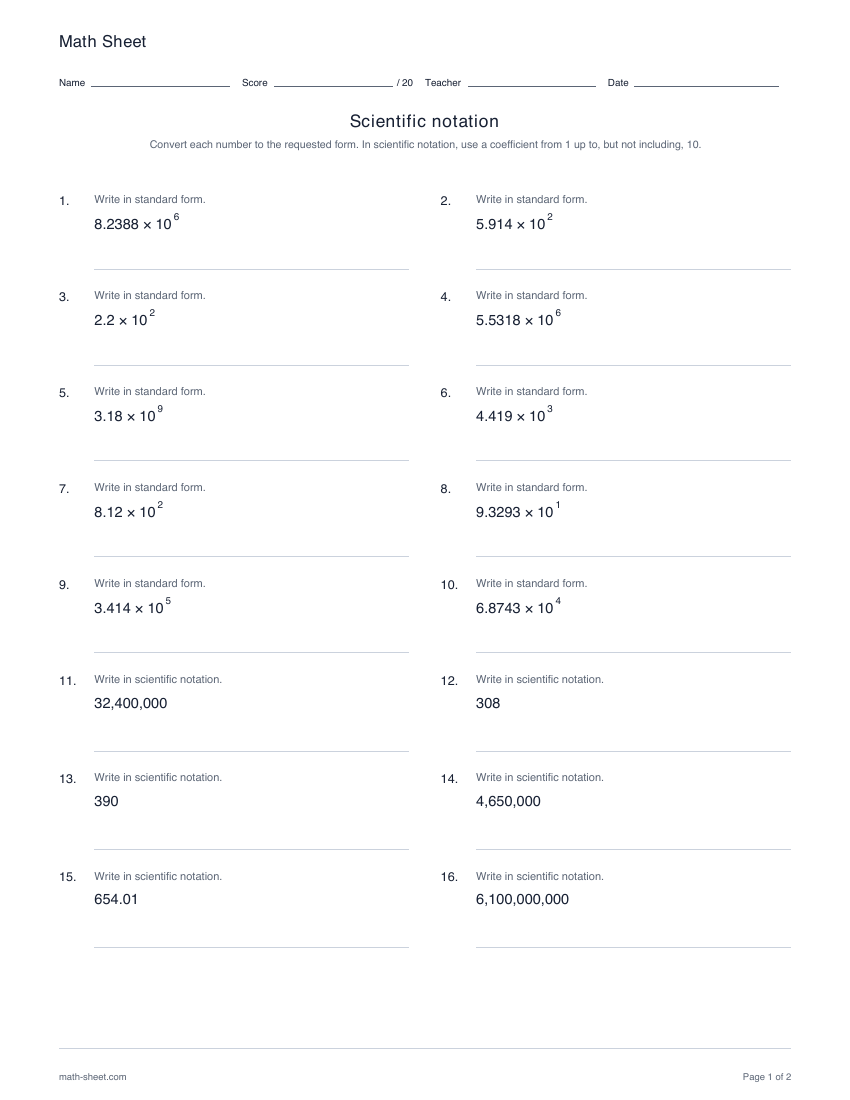
Place value
Choose 20 conversion questions or an optional English 10-task understanding lesson with coefficient normalization, misconception checks and a separate reasoning key.
Preview and downloadDigits and their units
Move between numerals and complete word names, from hundreds through billions. Choose writing in either direction or a shuffled matching bank.
Place value
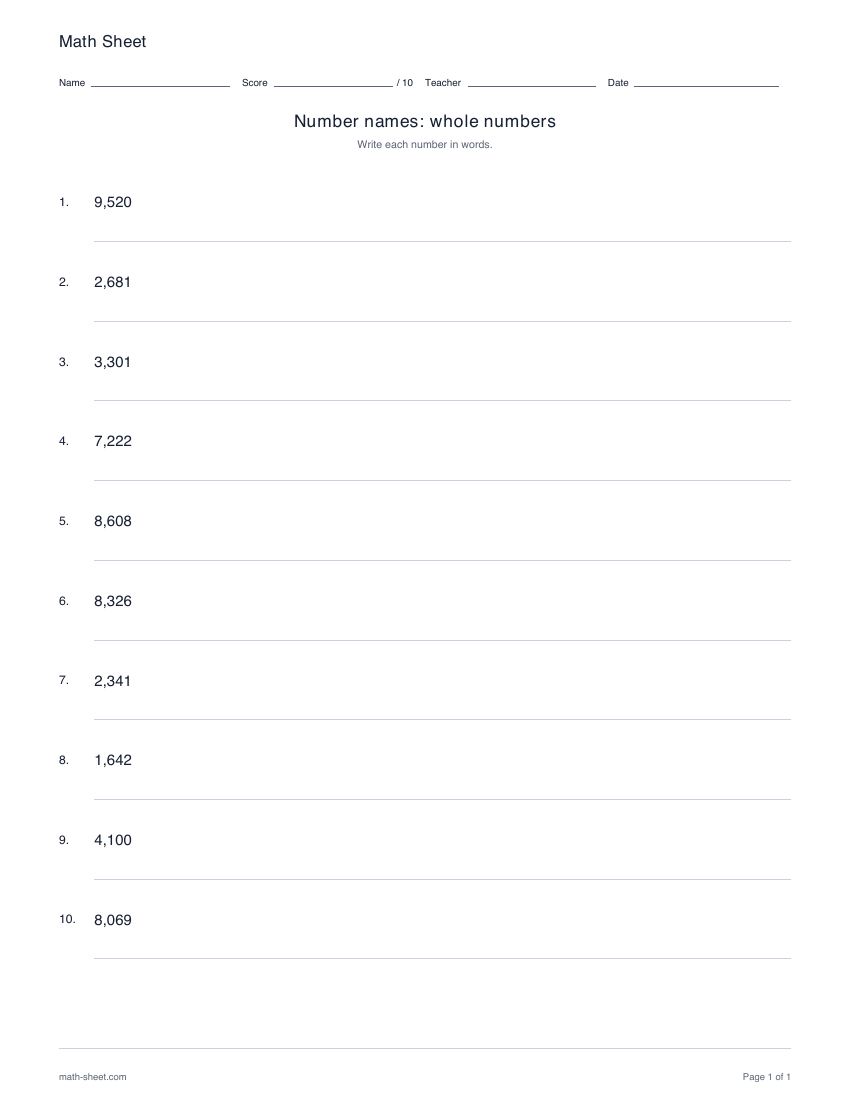
Read numerals and write their number names. Choose 2–12 digits or mix selected widths, including thousands, millions and billions. Ten questions with a separate key.
Preview and download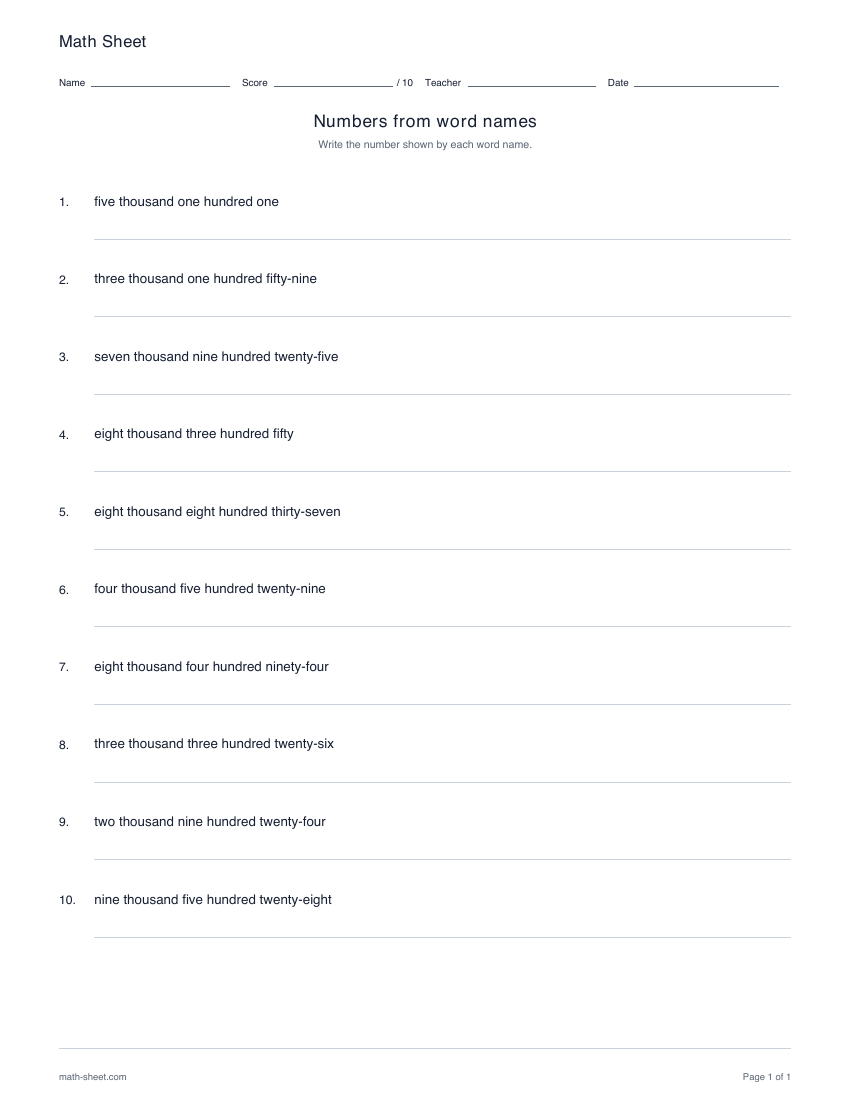
Place value
Convert whole-number names into numerals. Practice 3–12 digits or selected mixed widths, preserving empty places across thousands, millions and billions.
Preview and download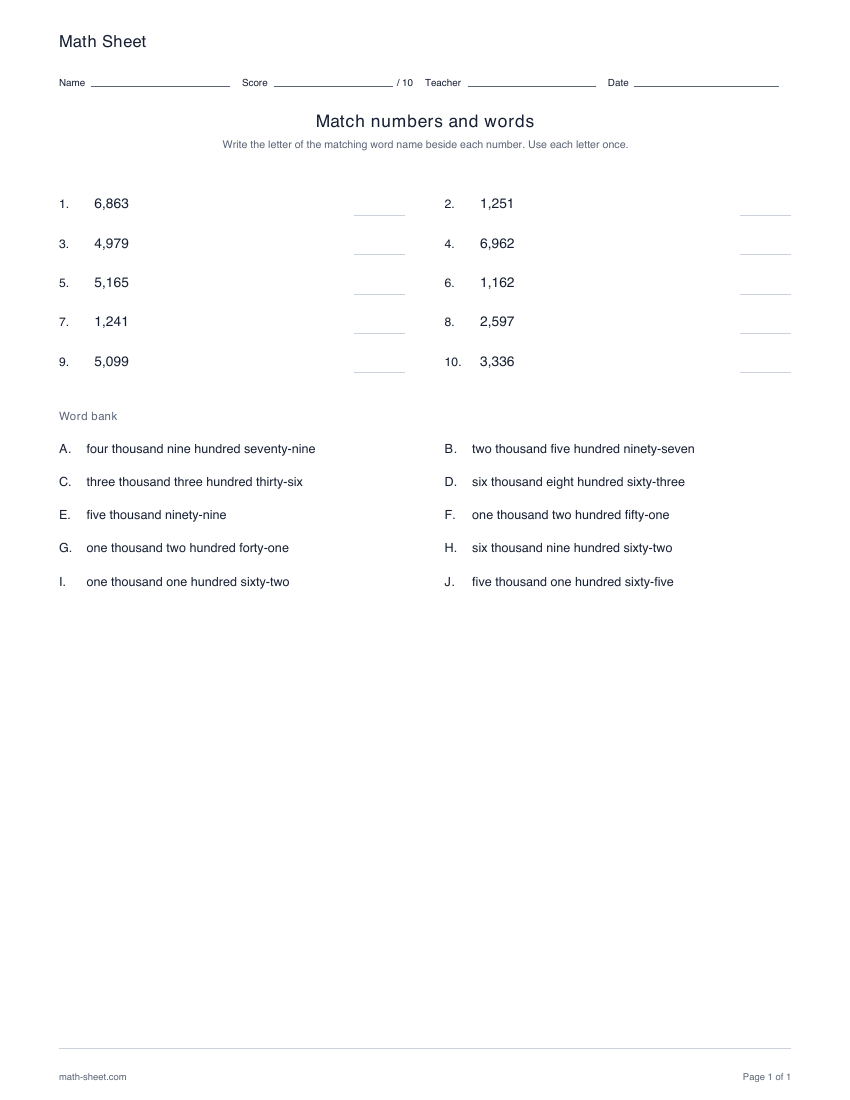
Place value
Match ten whole numbers to an A–J word bank. Choose 3–12 digits or mixed widths, including billions, with a shuffled bank and letter answers.
Preview and downloadDigits and their units
Connect tenths, hundredths and thousandths with exact written decimals. Preserve zero placeholders and practice both reading and writing.
Place value
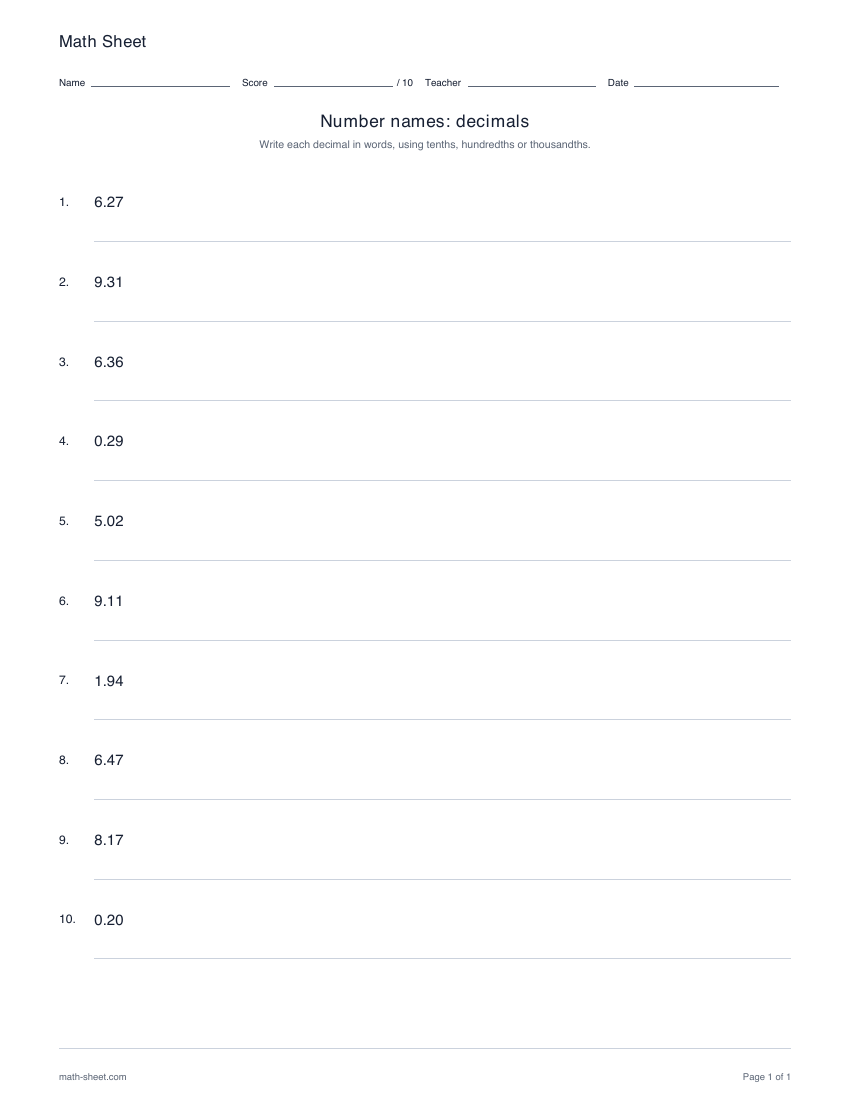
Write decimal names using tenths, hundredths or thousandths. Keep one whole-number digit and choose 1–3 decimal places, with ten unique values and answers.
Preview and download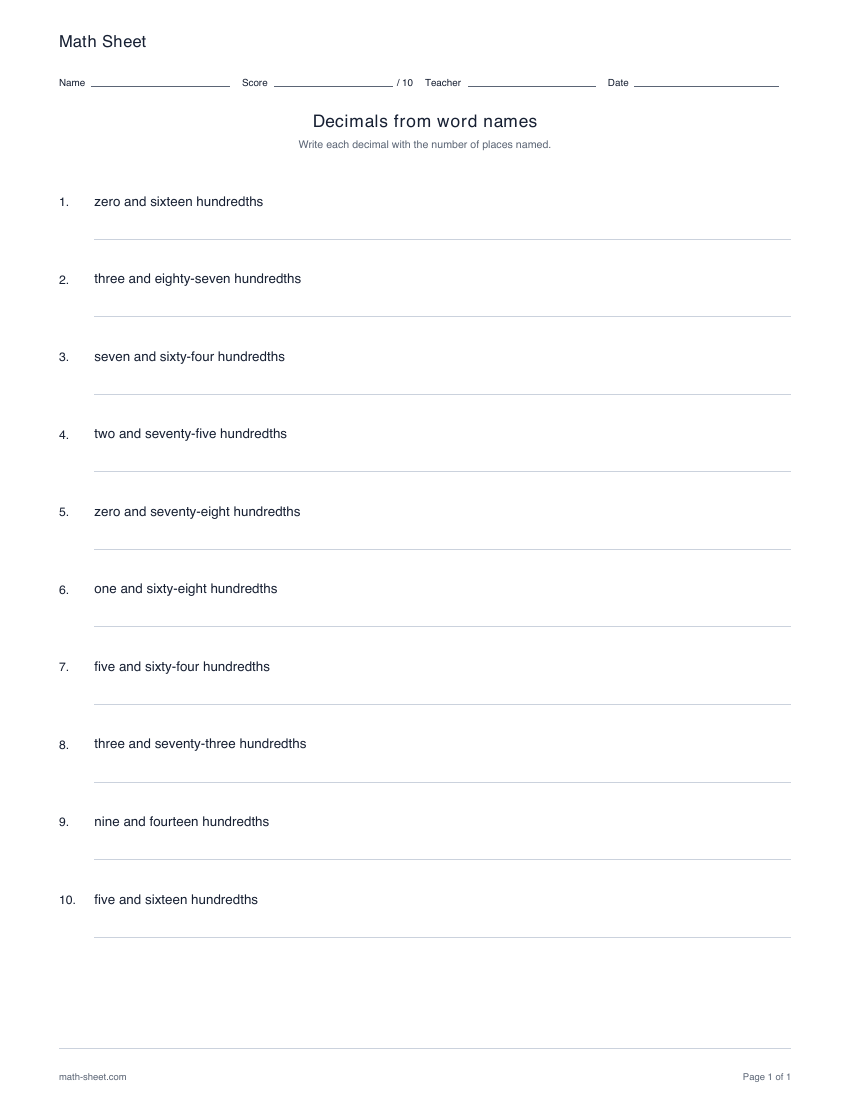
Place value
Convert fractional-unit names into decimal notation. Choose tenths, hundredths or thousandths and practice ten values with one whole digit and a separate key.
Preview and download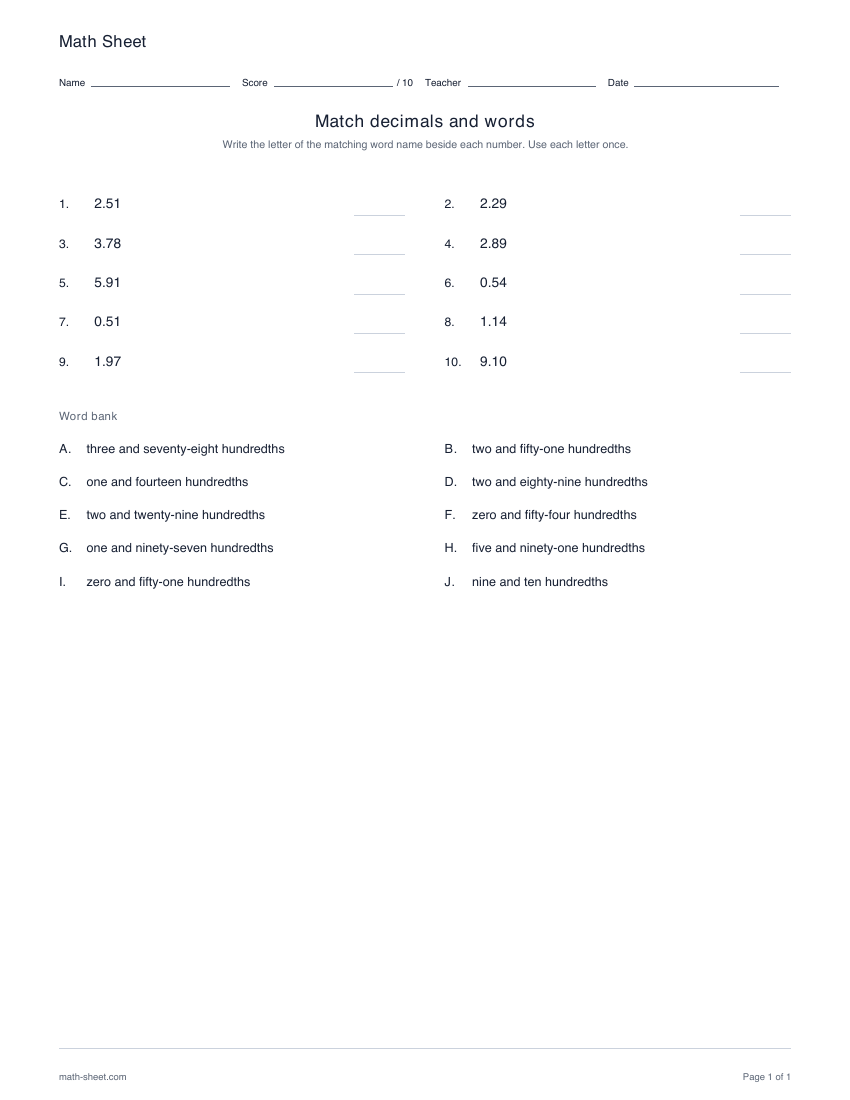
Place value
Match ten decimals to their fractional-unit word names. Start with hundredths or choose tenths and thousandths, with a complete A–J bank and separate letter key.
Preview and downloadDigits and their units
Follow the underlined digit, name its position and explain what it contributes. Practice with whole numbers, decimals or US dollar amounts.
Place value
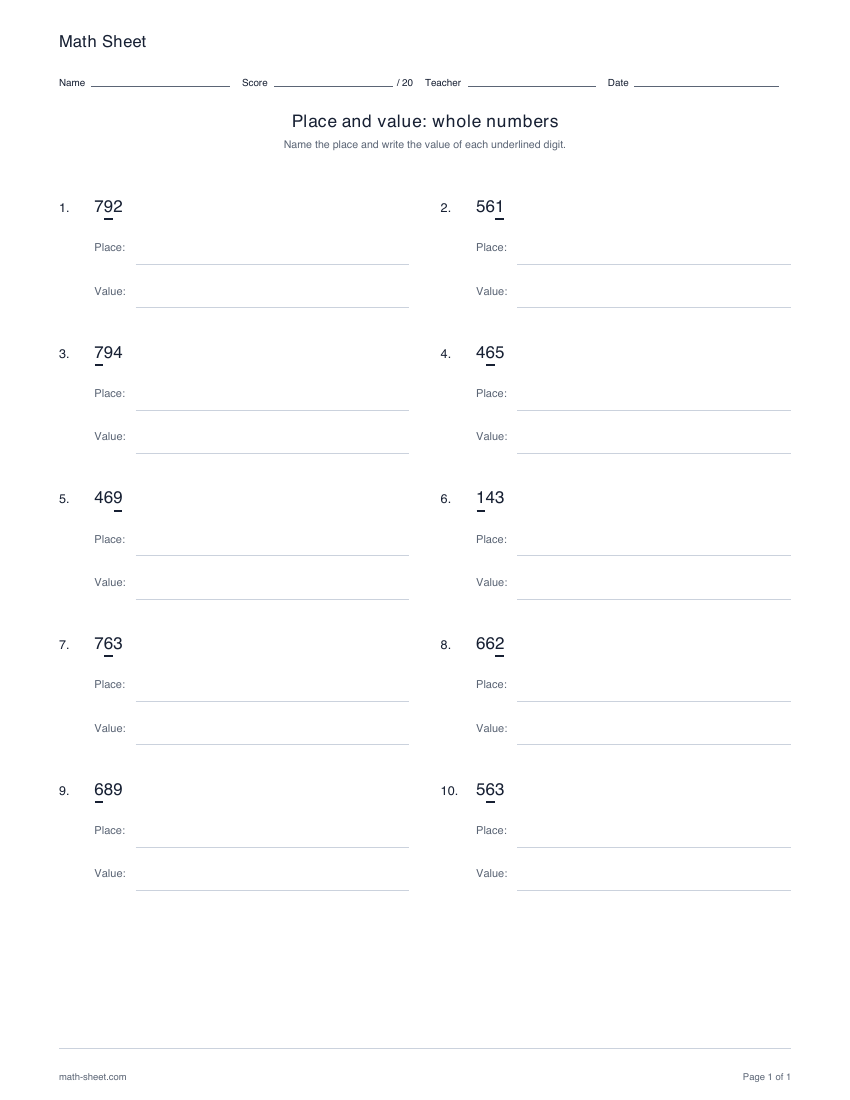
Name the position of an underlined digit and write its value. Choose 3–10 digit whole numbers, with or without zero digits, and print ten questions with answers.
Preview and download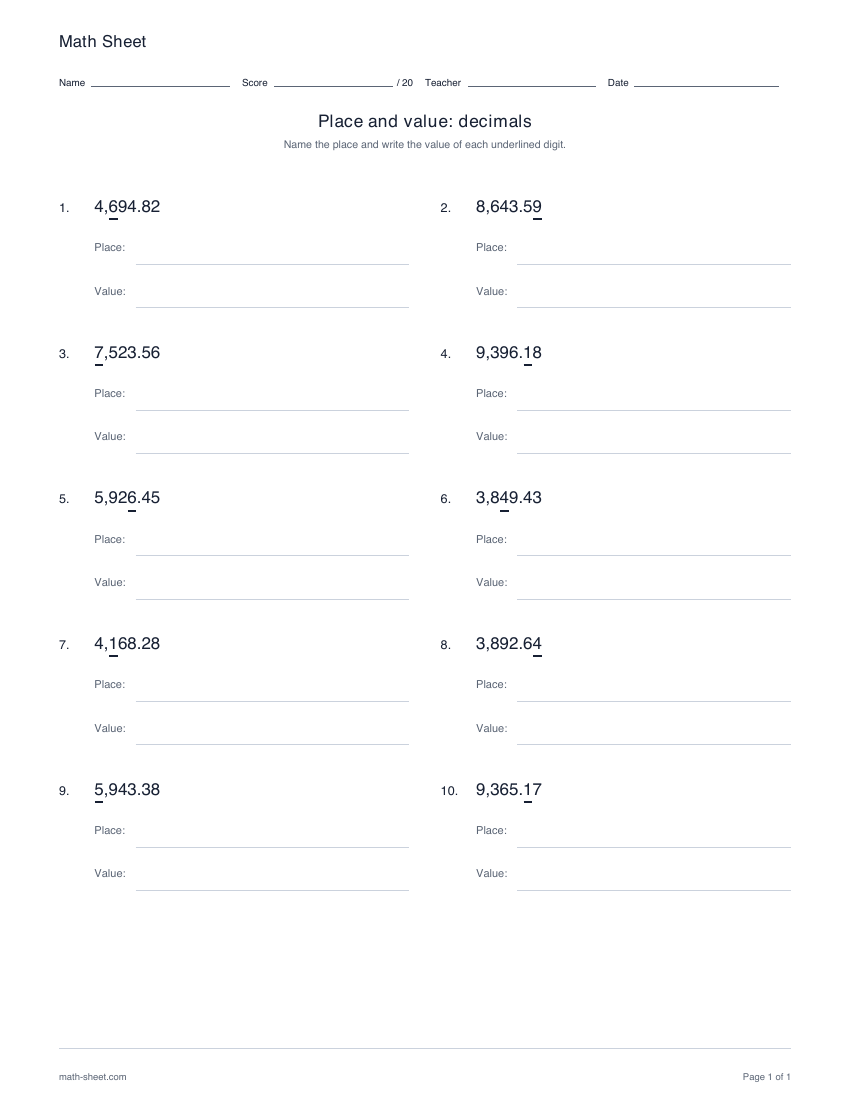
Place value
Identify whole and fractional places in decimal numbers. Choose 4–6 whole digits and 1–4 decimal places, then name each marked position and write its value.
Preview and download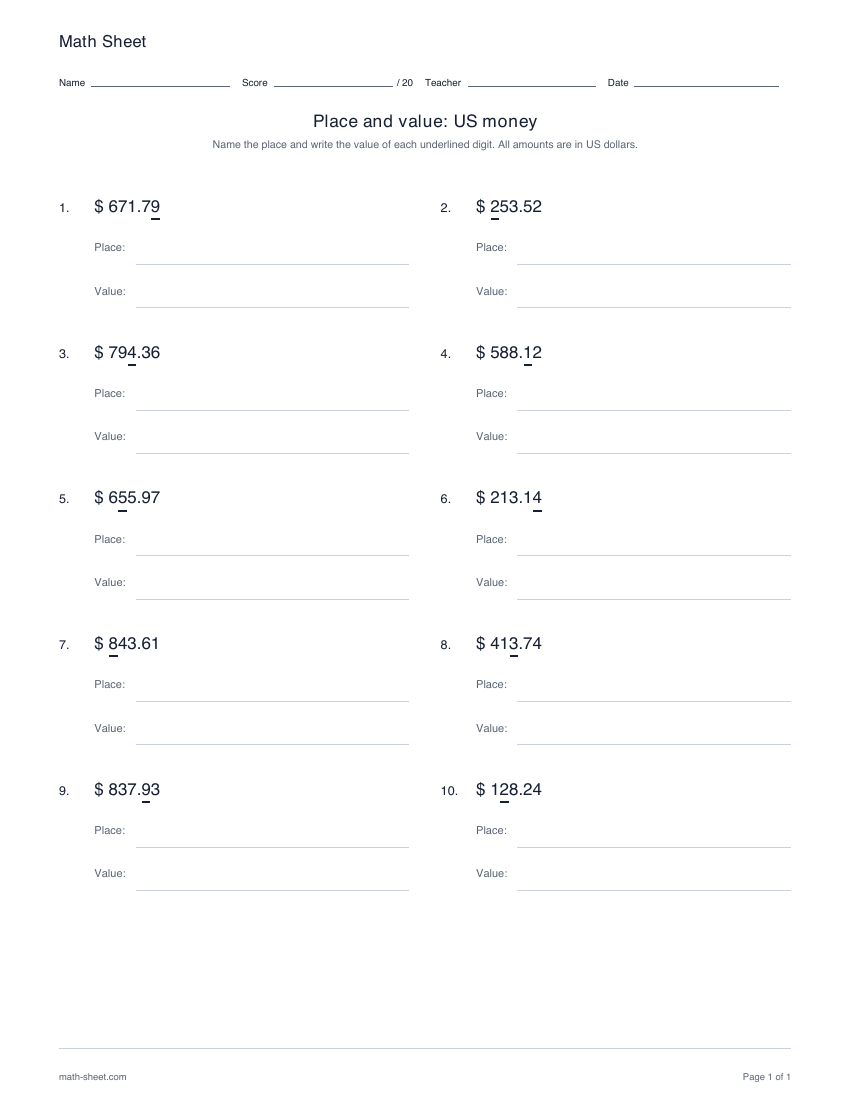
Place value
Connect place value with US dollar amounts. Identify the marked position and its dollar value, using 3–6 whole-number digits and exactly two cents digits.
Preview and downloadDigits and their units
Connect numerals, place-value sums and digit-times-unit products. Choose two digits first, then extend or mix selected widths through twelve digits.
Place value
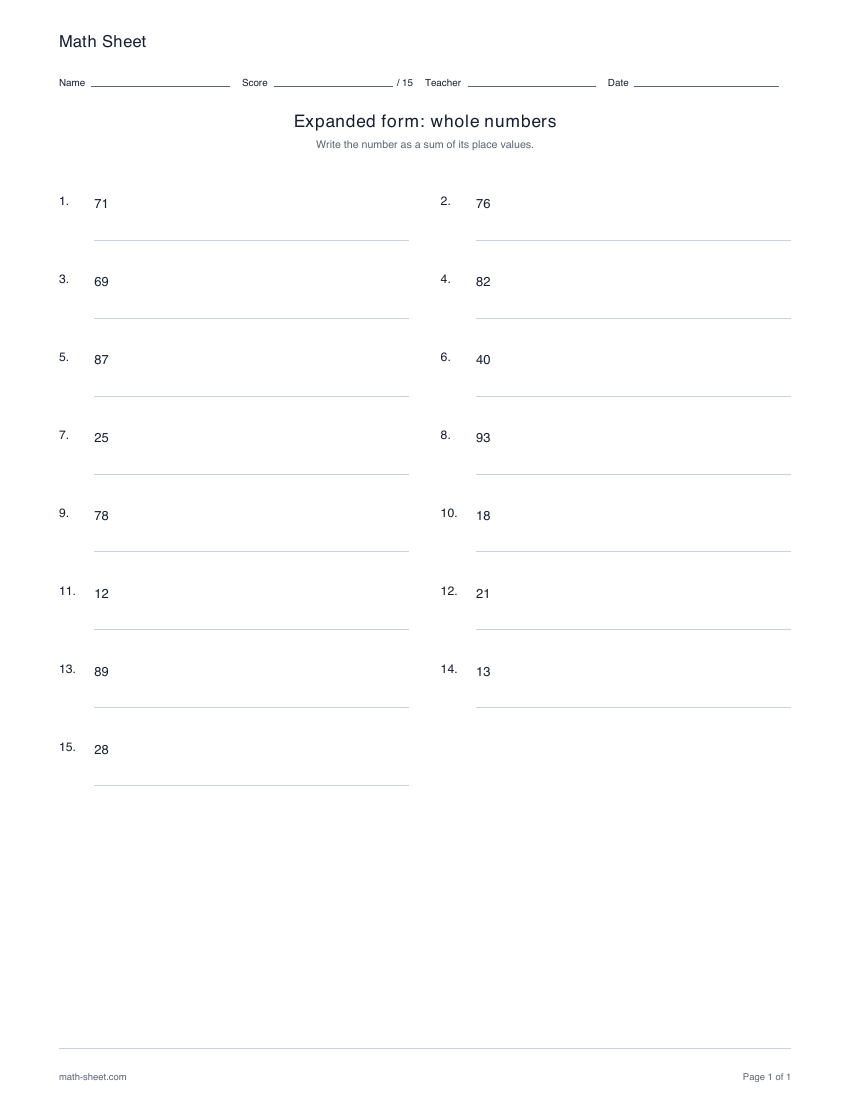
Break whole numbers into a sum of place values. Choose 2–12 digits or mix selected widths, including numbers through hundred billions.
Preview and download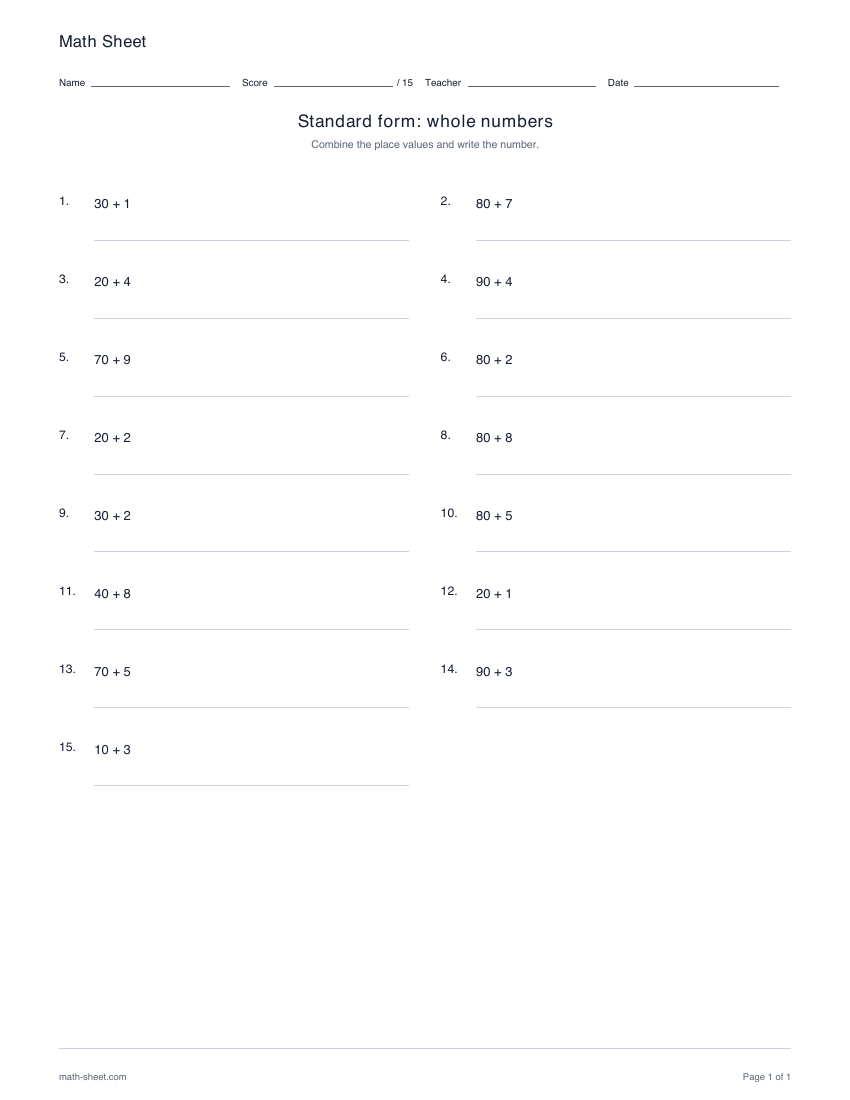
Place value
Combine expanded sums into whole numbers. Practice fixed widths from 2 to 12 digits or selected mixed widths with an optional zero-digit challenge.
Preview and download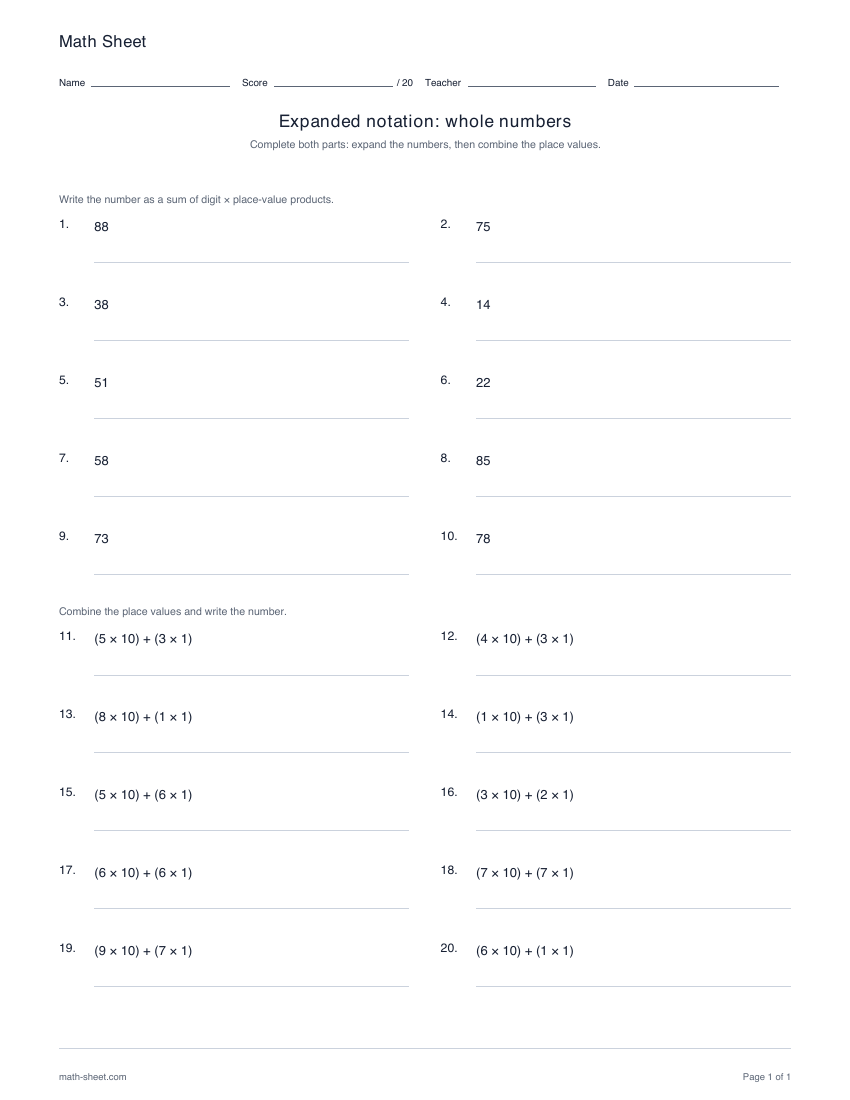
Place value
Practice both directions of digit-times-place notation. Expand whole numbers into products, then turn products back into numerals, using 2–12 digits.
Preview and downloadDigits and their units
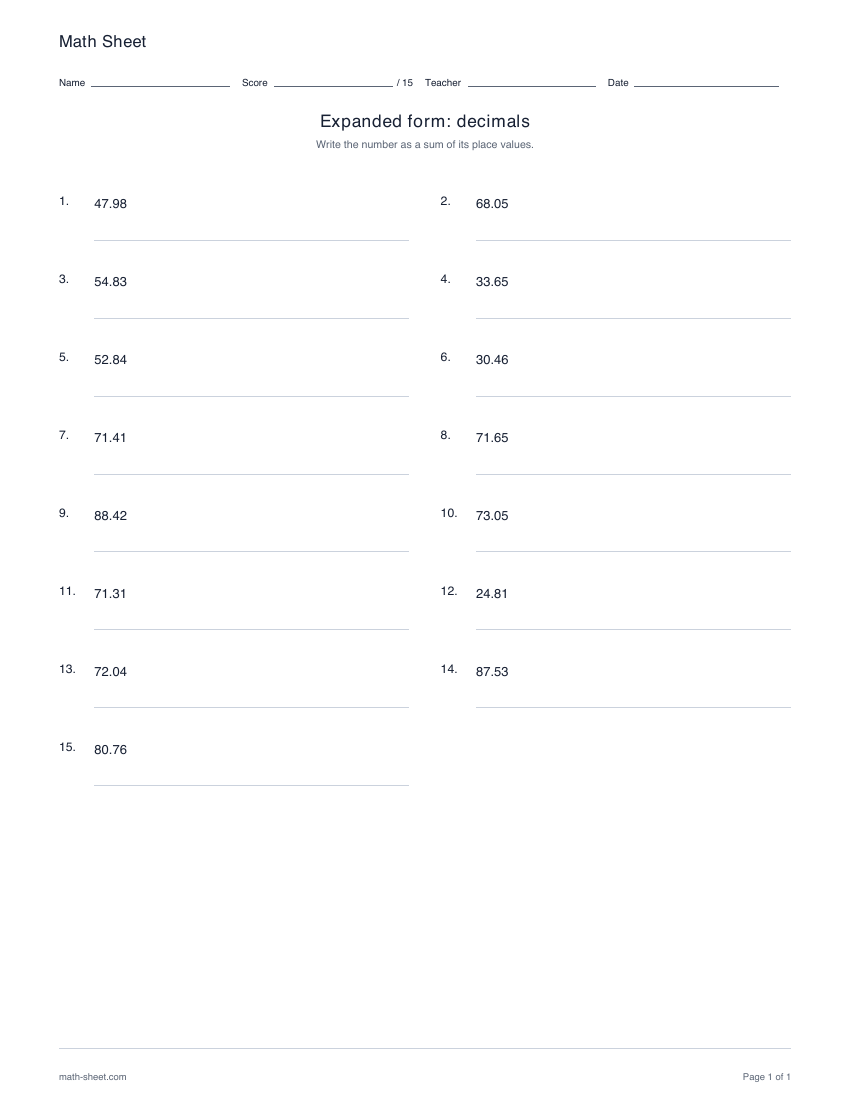
Work with tenths, hundredths and thousandths, including zero placeholders and both directions of multiplicative notation.
Place value
Decompose decimals into whole and fractional place values. Choose two or three whole-number digits and tenths, hundredths or thousandths.
Preview and download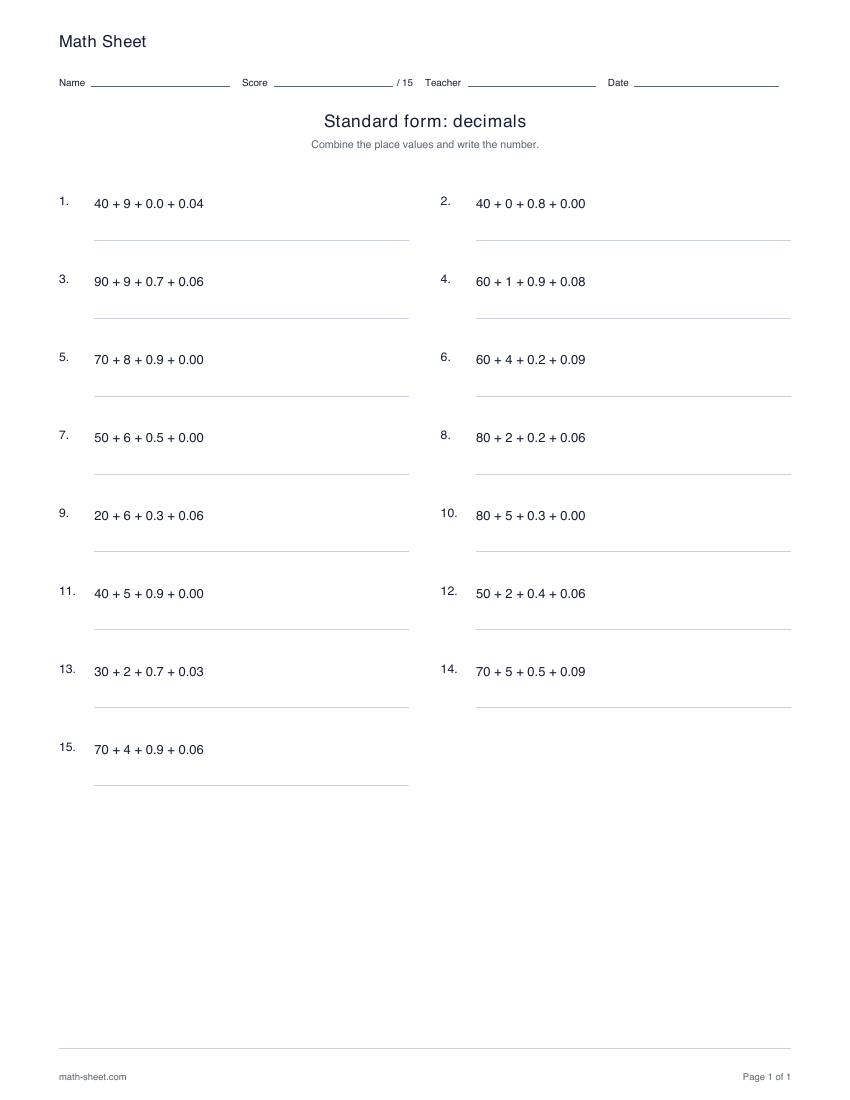
Place value
Rebuild decimals from place-value sums. Practice tenths through thousandths with two or three whole-number digits and optional zero digits.
Preview and download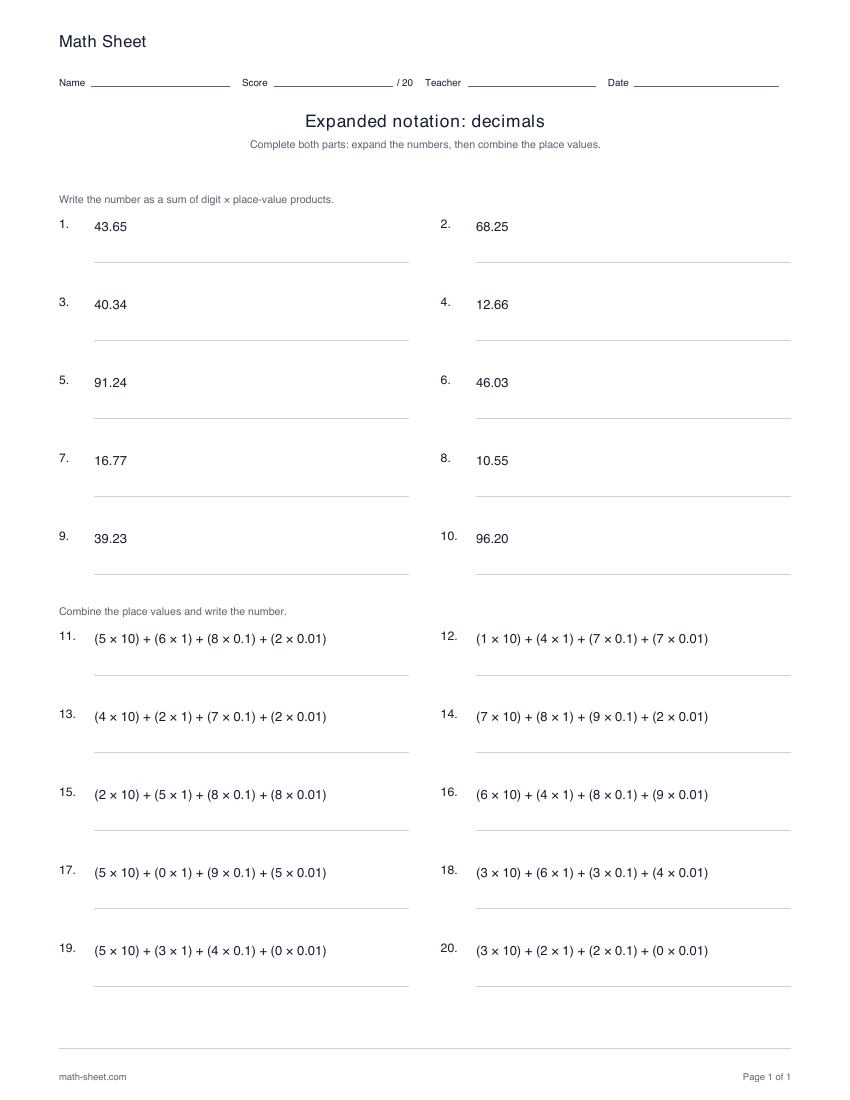
Place value
Expand decimals into digit-times-place products and reverse the process. Select 2–4 whole-number digits, 1–3 decimal places, and whether zero digits may appear.
Preview and downloadDigits and their units
Make a group of ten meaningful before naming tens, then extend the same relationship to hundreds and thousands.
Place value
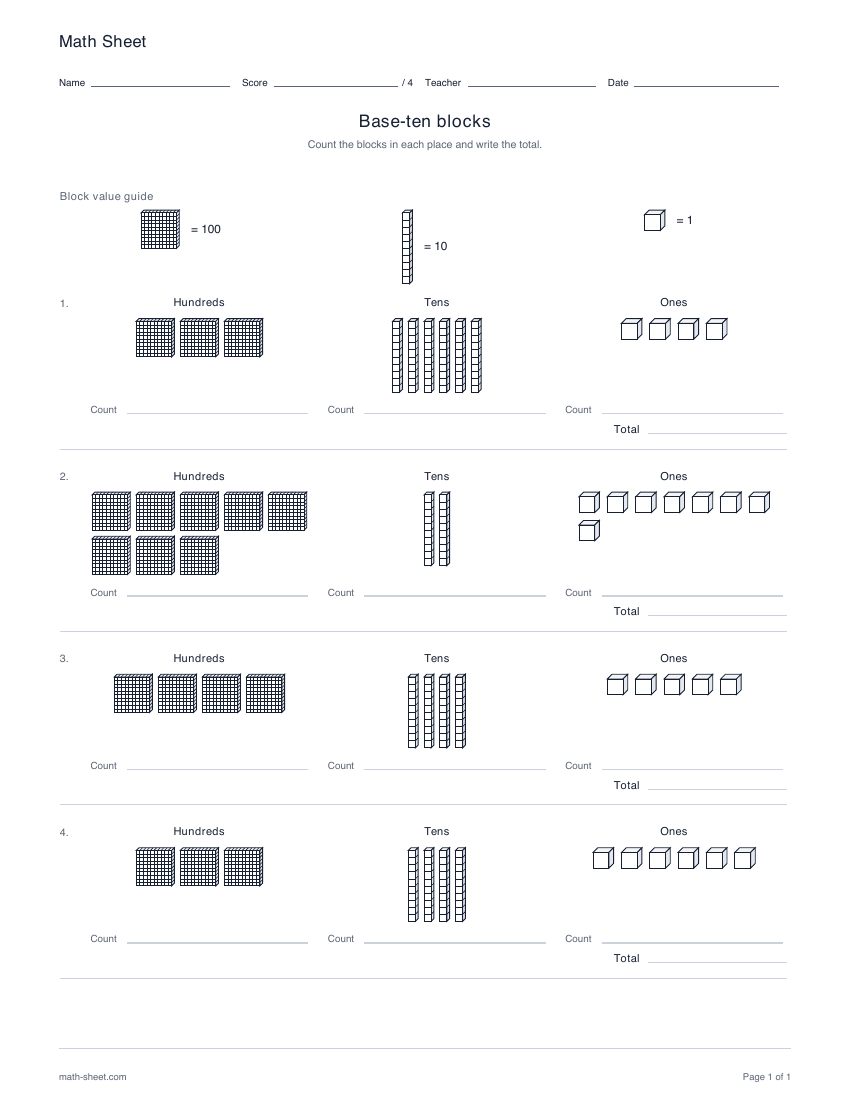
Count original unit cubes, ten-rods, hundred-flats and thousand-cubes. Choose the active places and block counts, then record each count and the whole-number total.
Preview and downloadDigits and their units
Use a completed reference for whole-number periods or extend it through five decimal places. These are teaching charts, not blank drills.
Place value
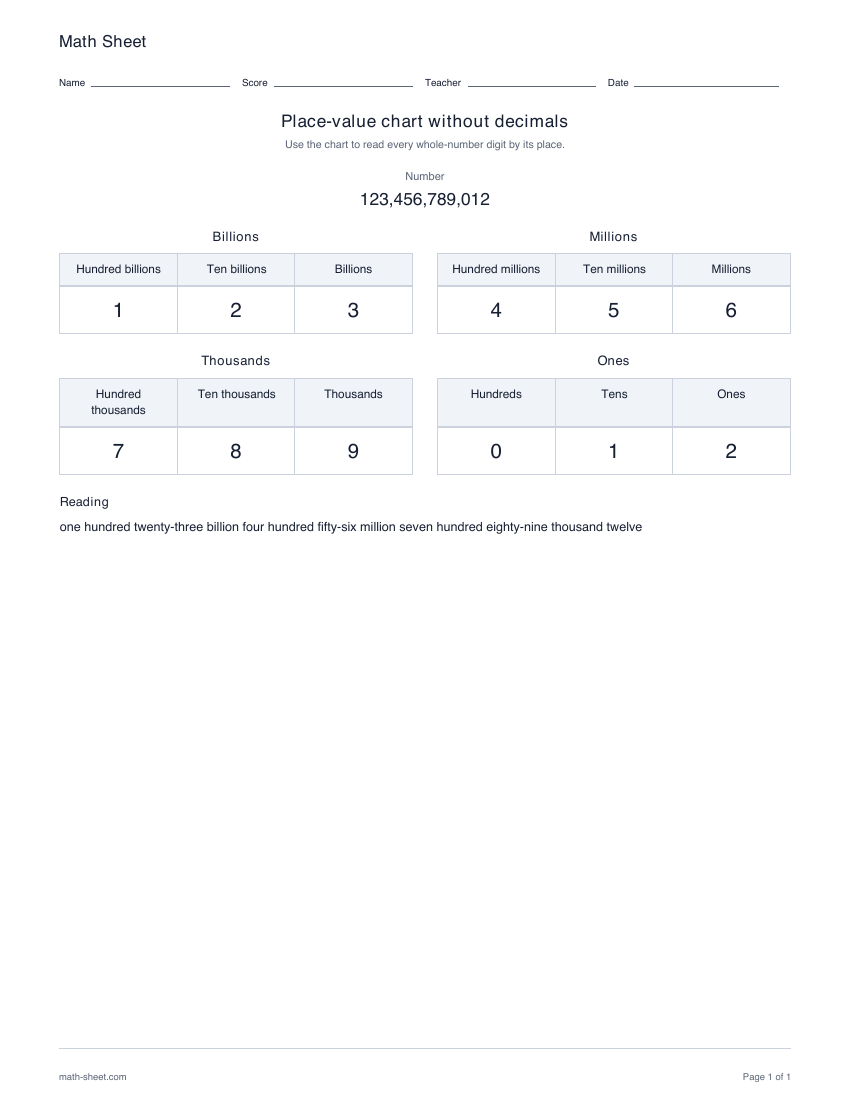
Read the twelve whole-number places from hundred billions through ones. A fixed example, 123,456,789,012, connects each digit with its place and the full number name.
Preview and download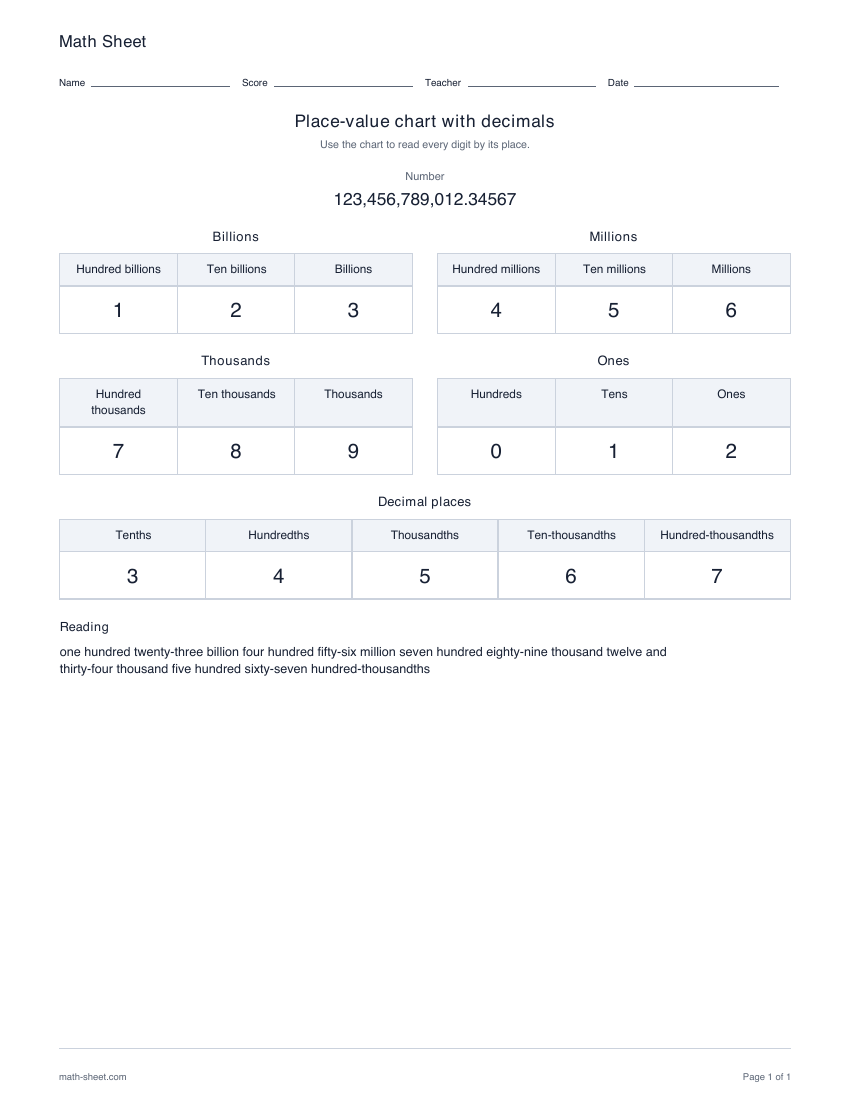
Place value
Connect twelve whole-number places with five fractional places, through hundred-thousandths. The fixed example 123,456,789,012.34567 includes a complete number reading.
Preview and downloadTeacher-led first steps
Touch one object for each number word. Once a learner can count a small group and connect it with a numeral, collect ten objects into one group and compare that group with the ten-rod. These presets keep the focus on ones and teen numbers; larger charts are later teaching references.
Point to each unit once and connect quantities from 1 to 9 with their written numerals.
Open this supported starter →Use after making a group of ten is familiar. Every task has one ten and 1–9 ones, for totals from 11 to 19.
Open this supported starter →Three hundred-flats are three objects, but their total value is three hundred. Naming both the count and the unit helps learners explain why a drawing represents 300 rather than 3.
The block worksheets keep the model key visible and provide separate count spaces for each active place. The answer version fills those counts and the total beside the same drawings, so it can support checking or a teacher demonstration.
The charts divide the whole-number example into four three-column panels: billions, millions, thousands and ones. Read across the first row, then the next. The complete numeral above the panels shows how those groups join into one number.
The decimal chart continues from tenths through hundred-thousandths. Use only the columns that match the current lesson, then extend to the finer places when the tenfold relationship is secure.
Use another representation
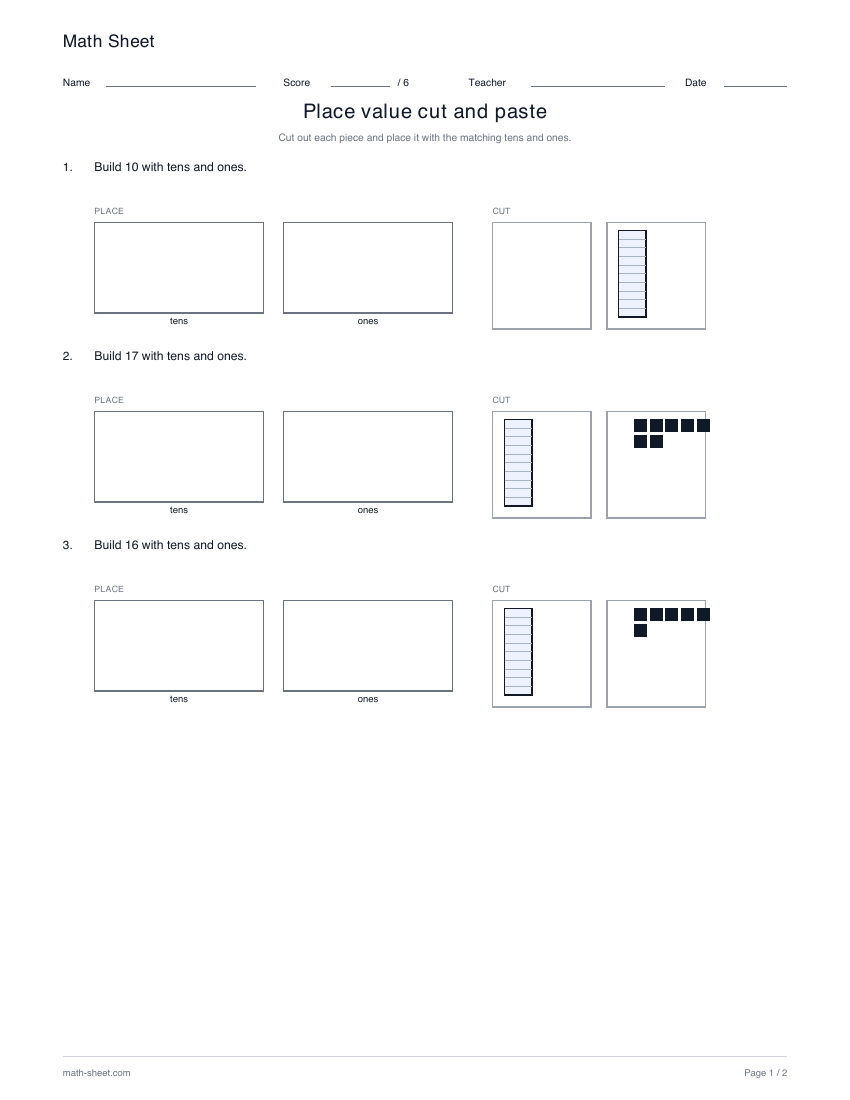
Use the existing cut-and-paste activity to compose tens and ones, or explore neighboring numbers on a hundreds chart. The place-name cut-out extension reaches millions; choose it after place labels are familiar.
Number recognition
Build tens and ones with cut-out models, or choose a place-name extension that labels seven digit positions from ones through millions.
Preview and download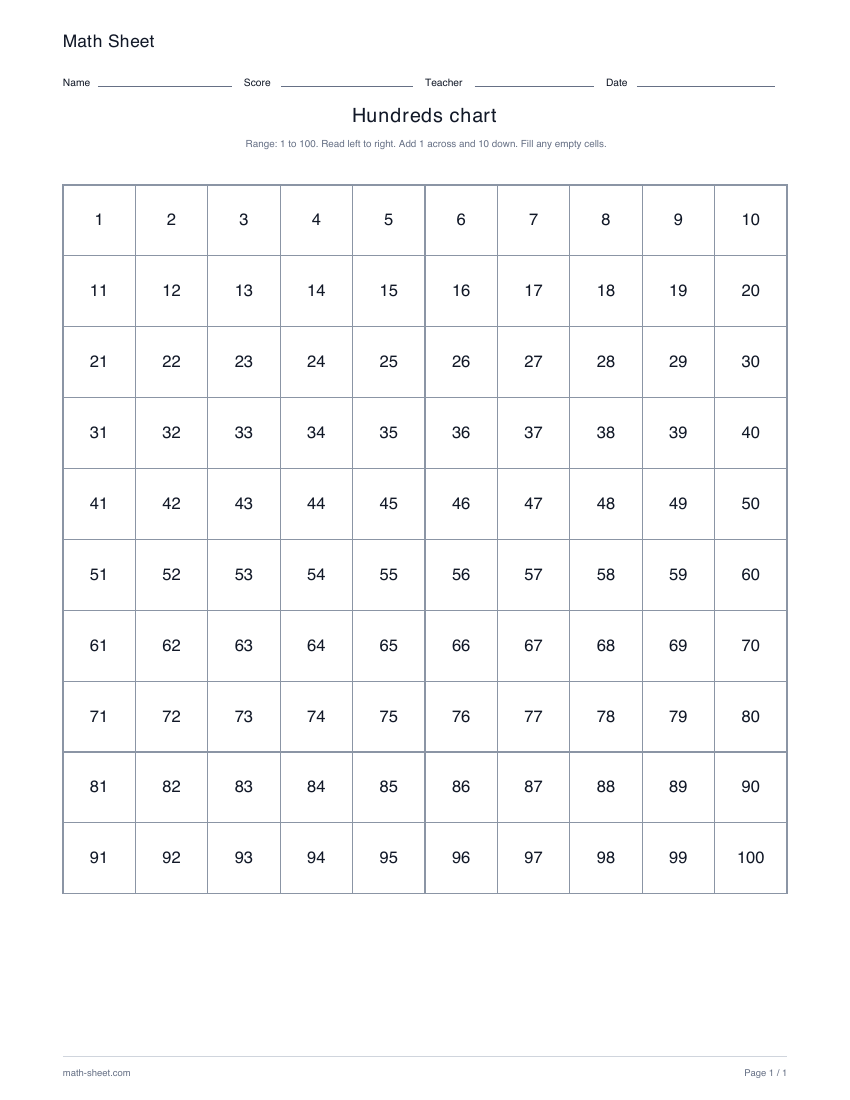
Hundreds chart
Print any exact hundred block from 0–99 through 901–1000, or choose one of 16 blank-cell percentages for missing-number practice.
Preview and download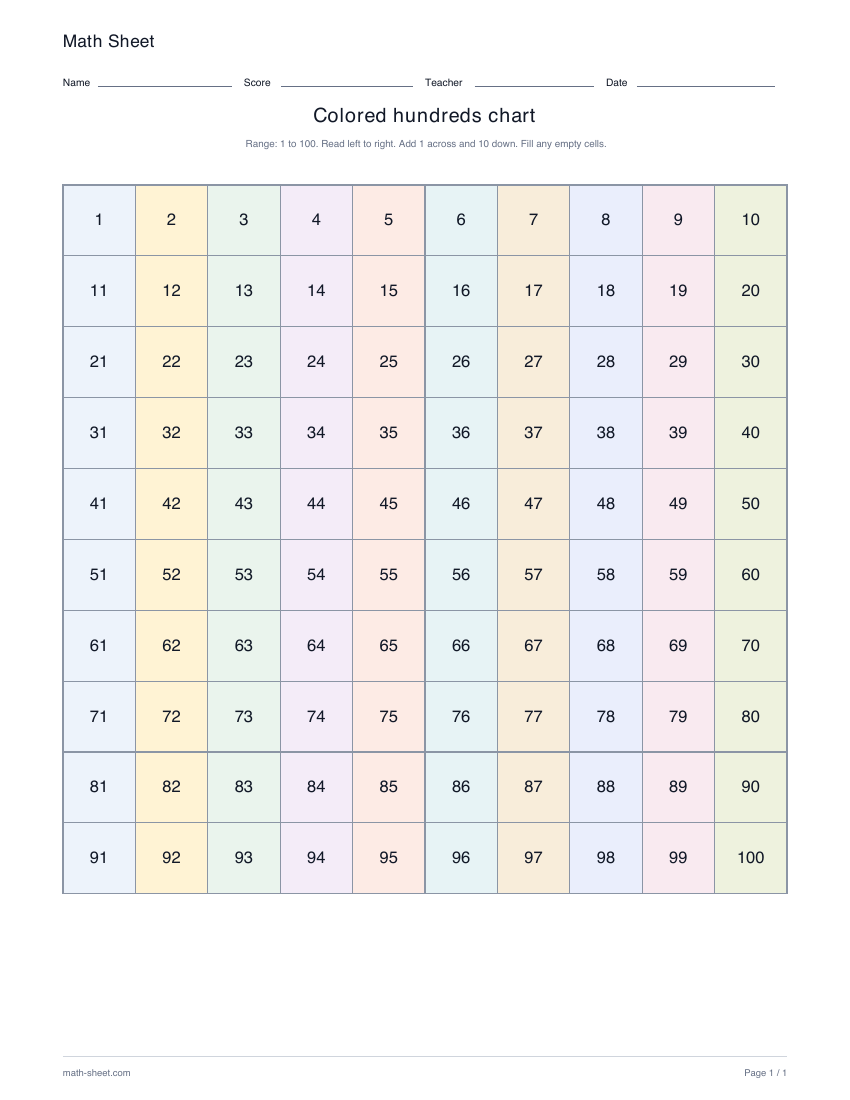
Hundreds chart
Explore a 1–100 or 0–99 chart with ten softly colored columns. Keep it complete or hide numbers for practice.
Preview and downloadOpen the place-name extension → · Explore all hundreds charts →
ones make a ten
A written digit makes more sense when the learner can show its unit. Connect the model, the place name and the value before moving to larger numbers.