
Number bonds
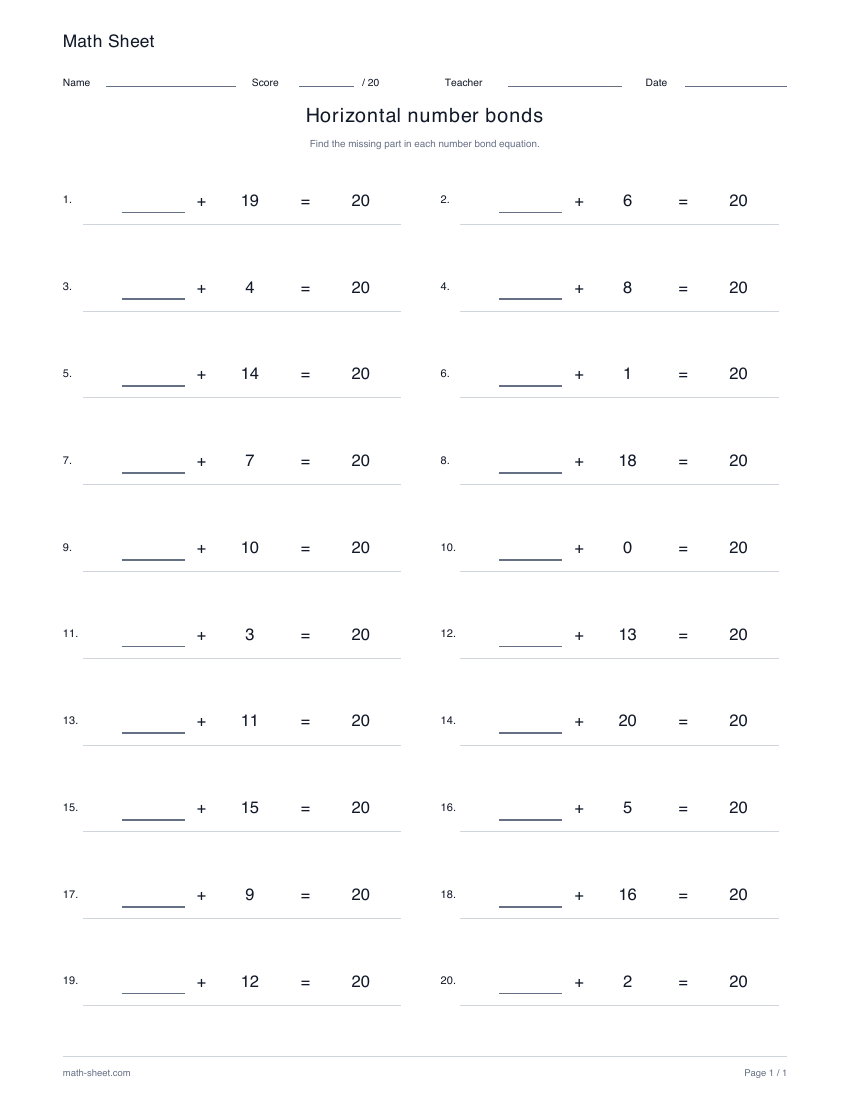
Horizontal number bonds
Find one missing part in two-part equations with a fixed whole from 5 to 100, six equation layouts and up to 30 problems.
Preview and downloadPractice by skill
See one number as a whole made from smaller parts. Start with sums to 10, connect diagrams to equations, and move to sums to 20 or larger wholes when the relationship is secure.
Find a worksheetNumber bonds practice
Choose which addend is blank and whether the whole appears on the left or right.
Number bonds
Find one missing part in two-part equations with a fixed whole from 5 to 100, six equation layouts and up to 30 problems.
Preview and downloadNumber bonds practice
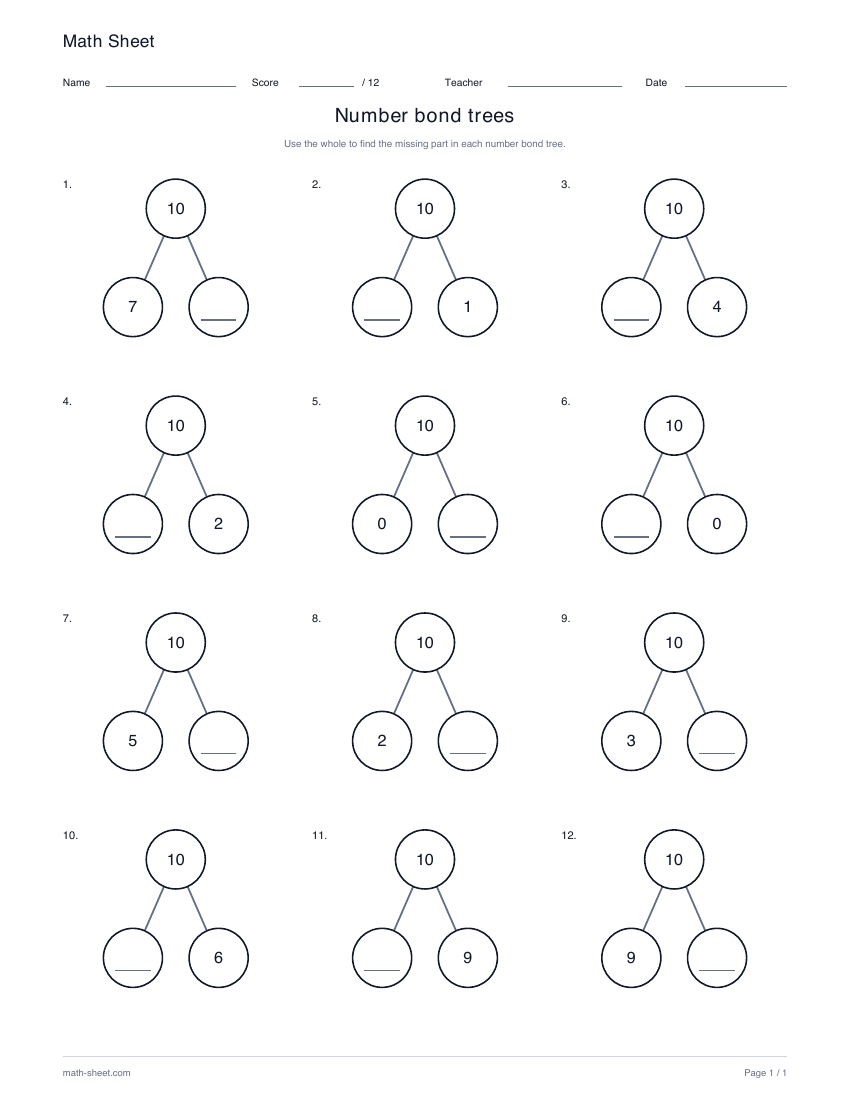
Read two-part or three-part trees and find one missing child.
Number bonds
Split a fixed whole from 5 to 100 into two or three parts, with a single missing child and an option to include or exclude zero.
Preview and downloadChoose by readiness
Use 10 when learners are building complements and making ten. Move to 20 for addition and subtraction within 20. Larger wholes help learners transfer the same part–whole idea after place value is secure.
one whole
The whole is the total. The connected numbers or addends are its parts. Only one part is blank, so the known values determine one answer.