
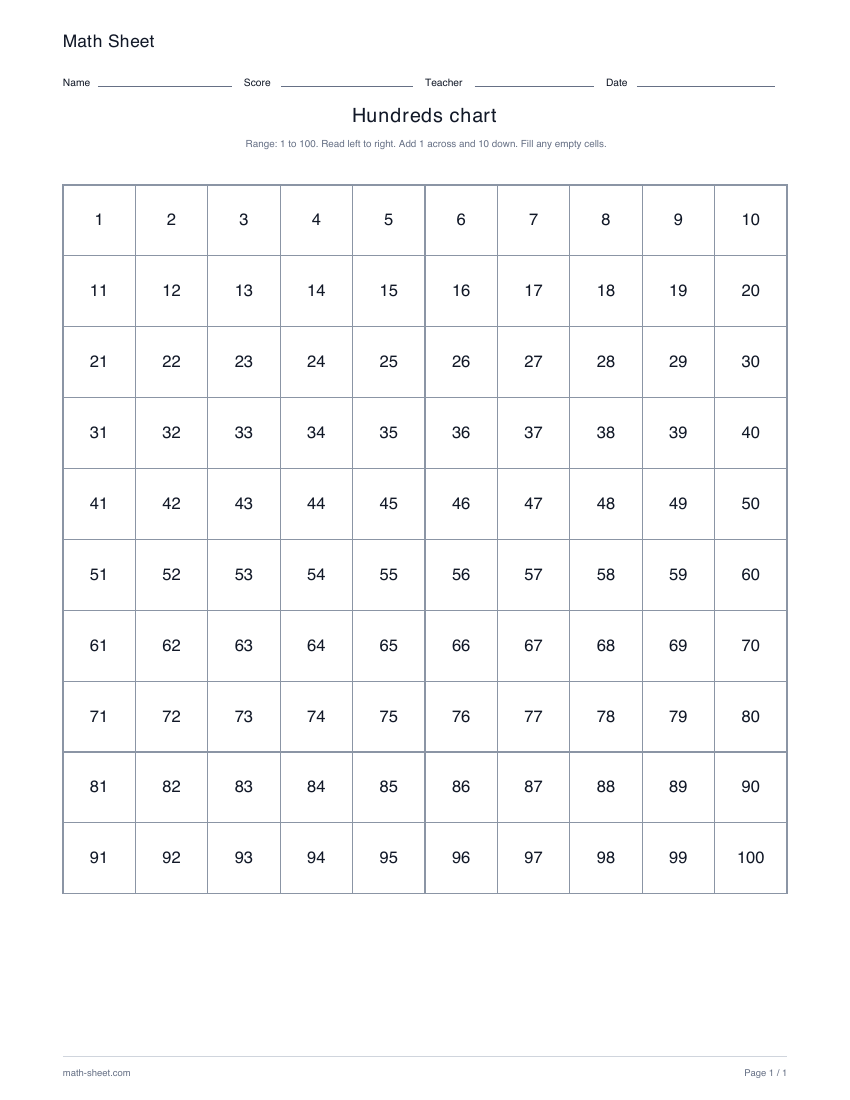
Hundreds chart
Hundreds chart
Print any exact hundred block from 0–99 through 901–1000, or choose one of 16 blank-cell percentages for missing-number practice.
Preview and downloadPractice by skill
Make number patterns visible. Read a full chart, fill missing values, solve chart fragments or follow numbers to reveal a picture. Choose a task that builds on what your learner already knows.
Find a worksheetHundreds chart practice
Start with a complete chart, then remove a manageable number of cells. Extend the same relationships beyond 100.
Hundreds chart
Print any exact hundred block from 0–99 through 901–1000, or choose one of 16 blank-cell percentages for missing-number practice.
Preview and download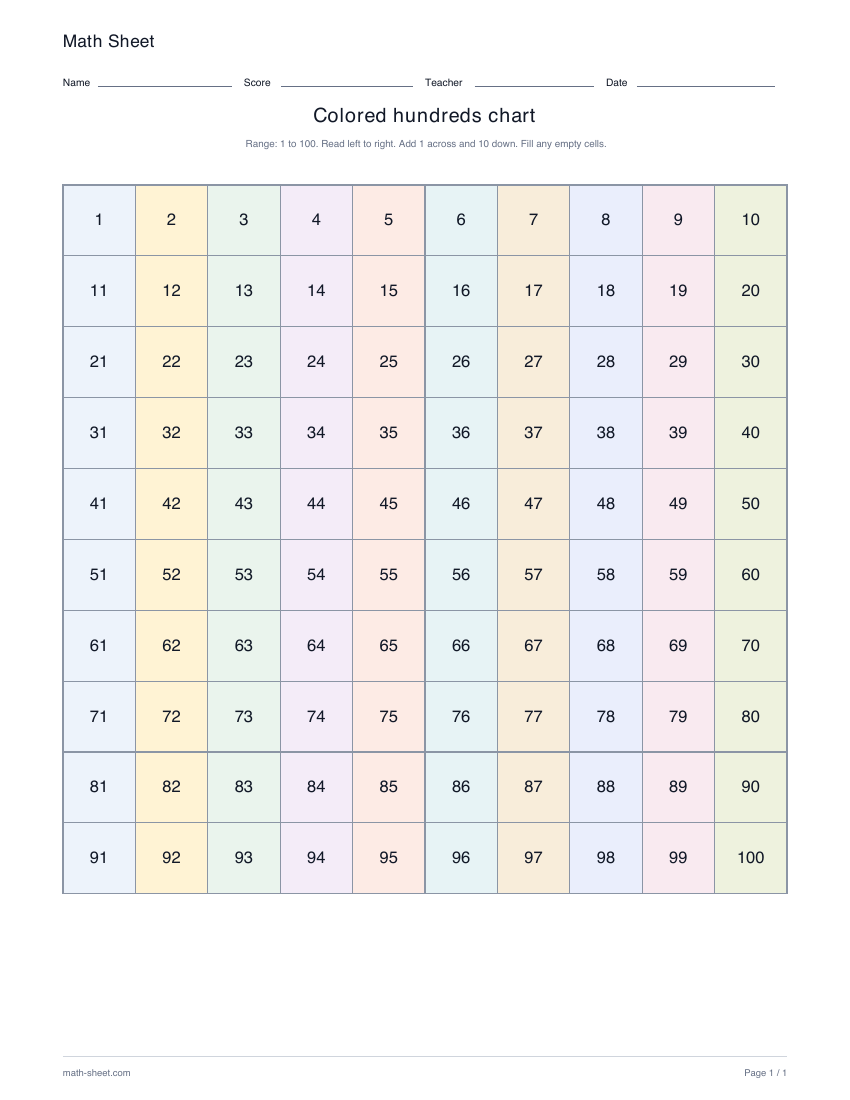
Hundreds chart
Explore a 1–100 or 0–99 chart with ten softly colored columns. Keep it complete or hide numbers for practice.
Preview and download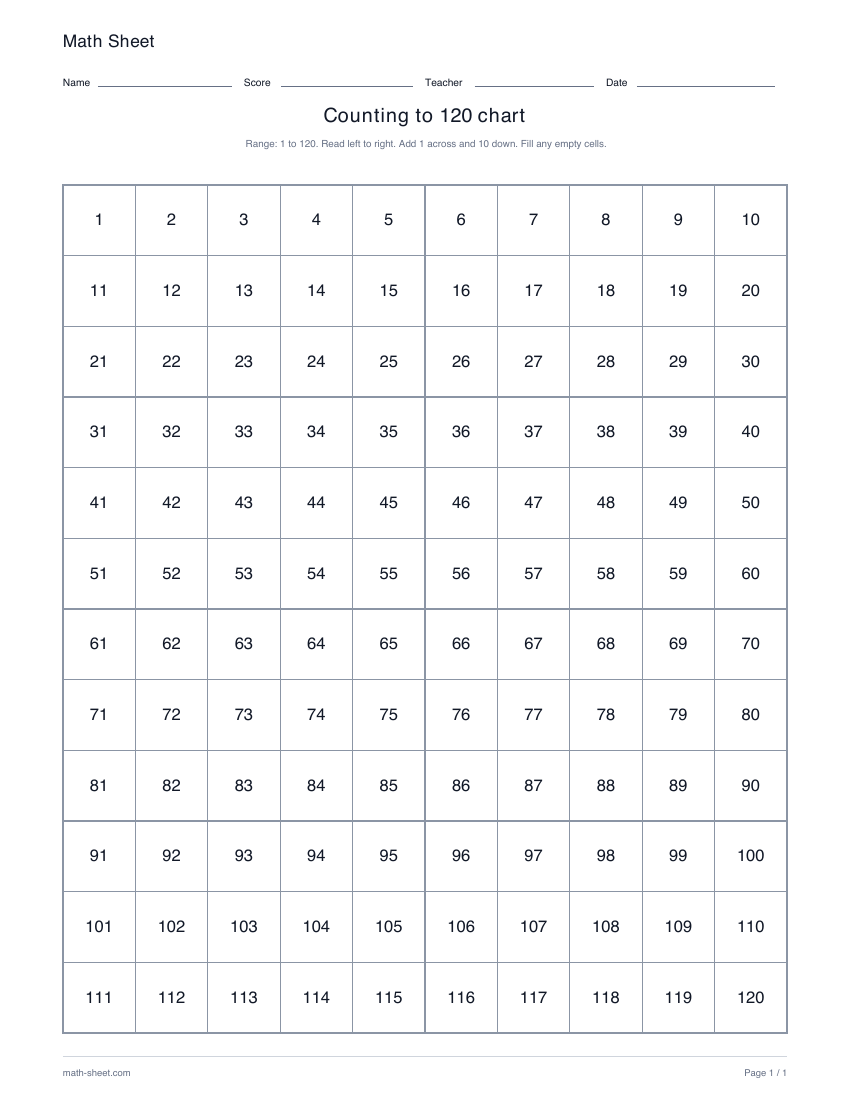
Hundreds chart
Extend counting beyond 100 with a ten-column, twelve-row chart from 1 to 120. Choose a complete chart or missing-number practice.
Preview and download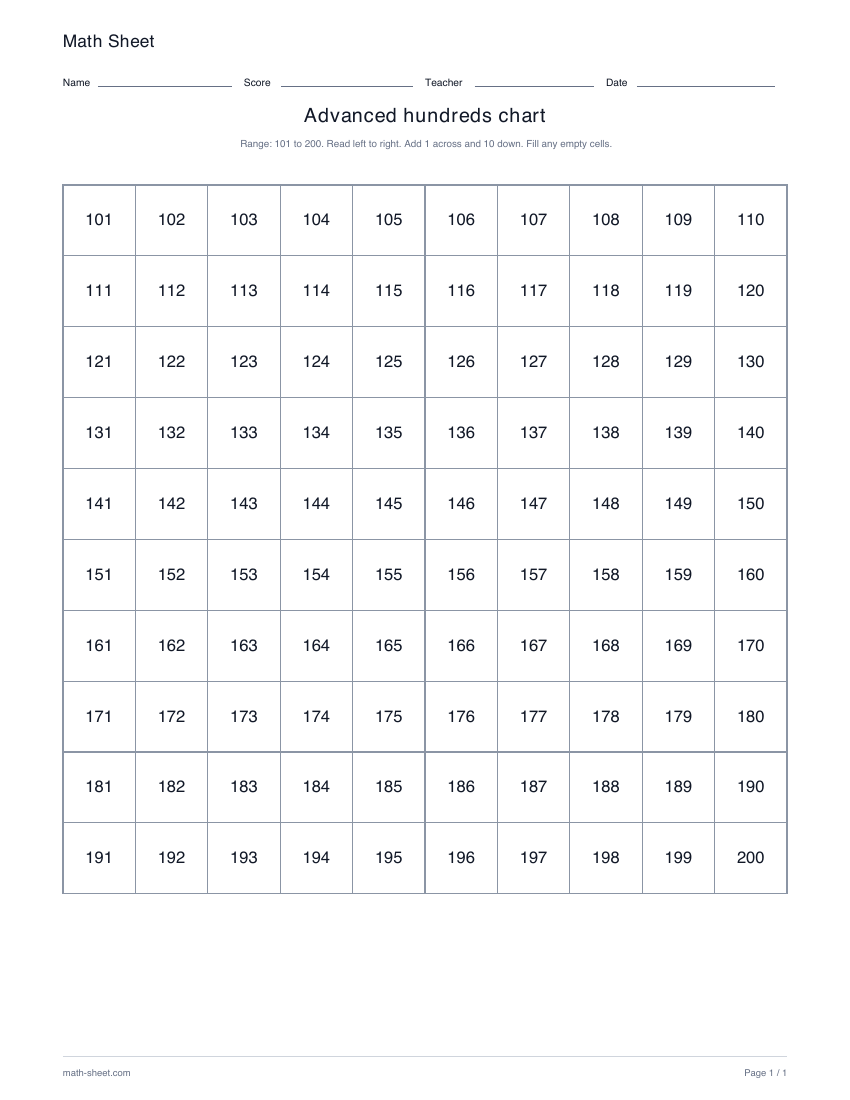
Hundreds chart
Work on one consecutive hundred block chosen within 100, 200, 500 or 1,000. Print a reference or hide selected numbers.
Preview and downloadHundreds chart practice
Use relative positions in chart fragments, or follow number lists to reveal original pictures, letters and digits.
Hundreds chart
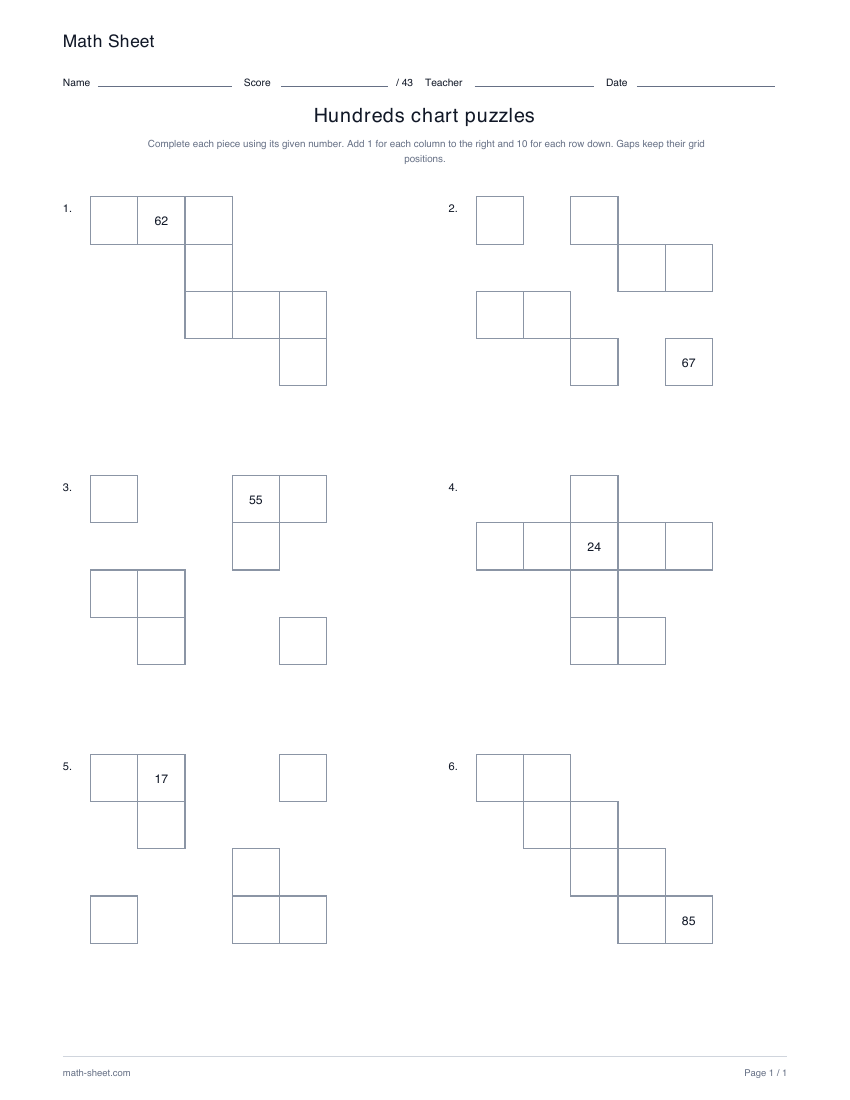
Complete six original chart fragments from one given number in each. Connected and separated pieces retain their grid positions.
Preview and download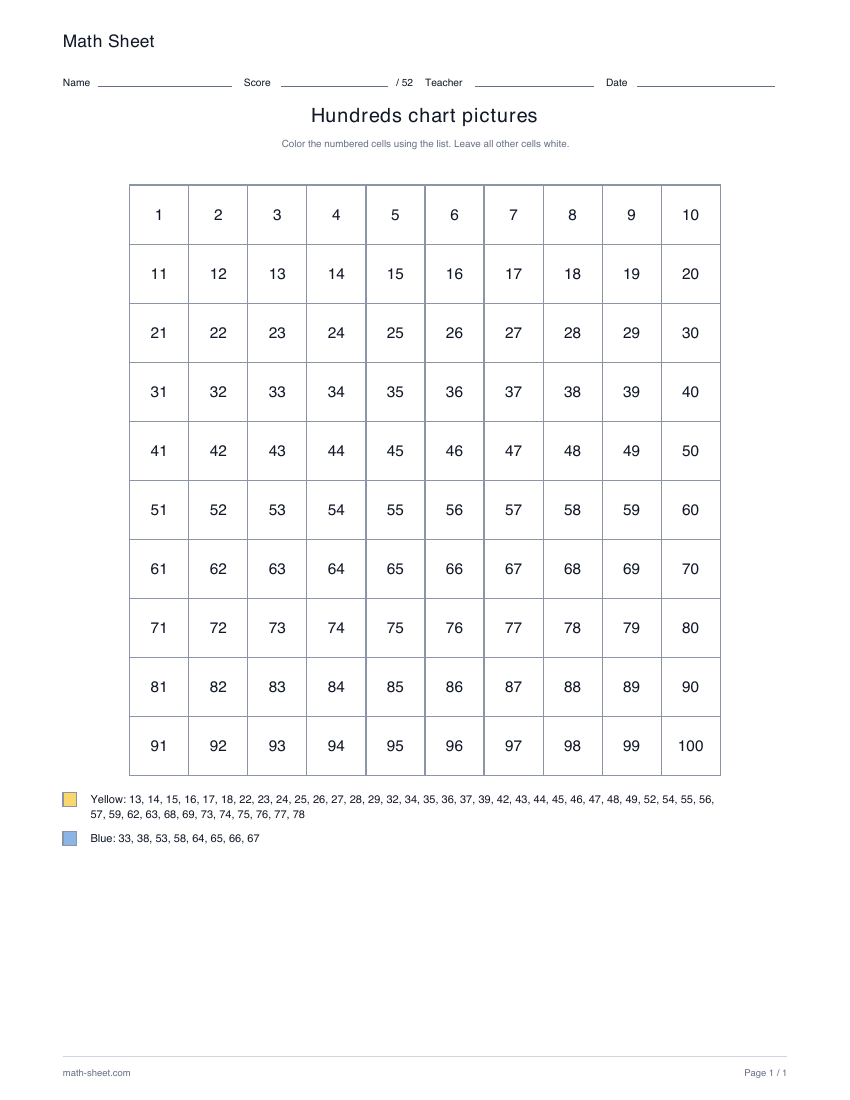
Hundreds chart
Color by number to reveal an original smiley face, a stylized American flag or a Christmas tree on a 1–100 grid.
Preview and download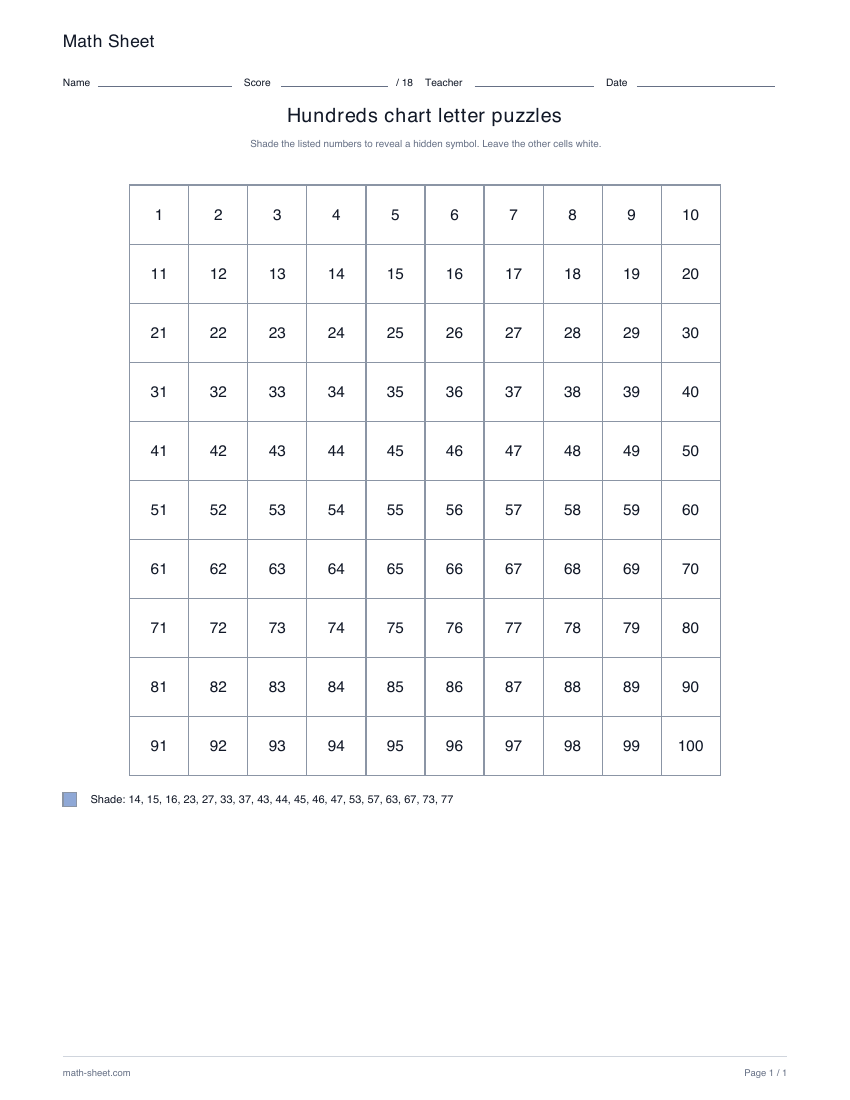
Hundreds chart
Choose any uppercase Latin letter A–Z and shade its listed numbers to reveal an original pixel letter on a 1–100 chart.
Preview and download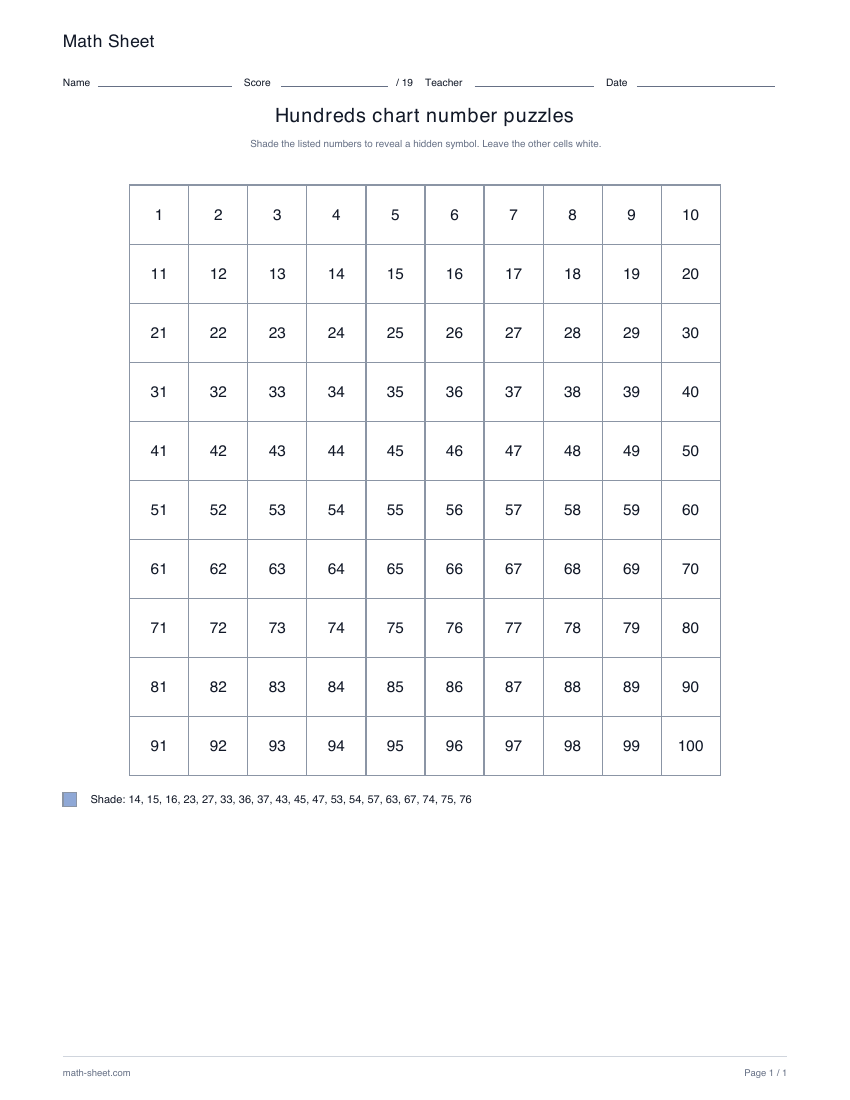
Hundreds chart
Reveal any digit 0–9 by shading its listed cells on a hundreds chart, with an original pixel design and a separate completed key.
Preview and downloadHundreds chart practice
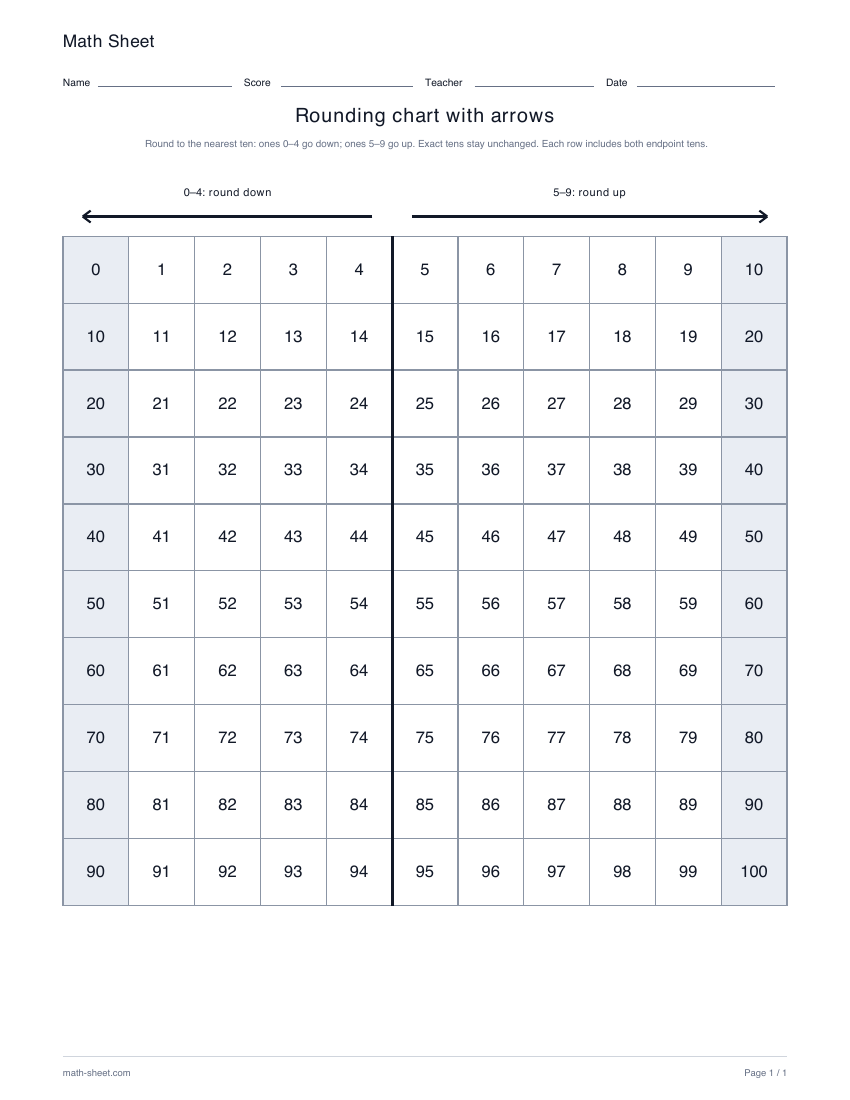
Reference charts show both neighboring tens, the halfway boundary and labeled directions. These are study aids, not scored question sheets.
Hundreds chart
Use an 11-column reference chart with directional arrows to round numbers from 0 to 100 to the nearest ten.
Preview and download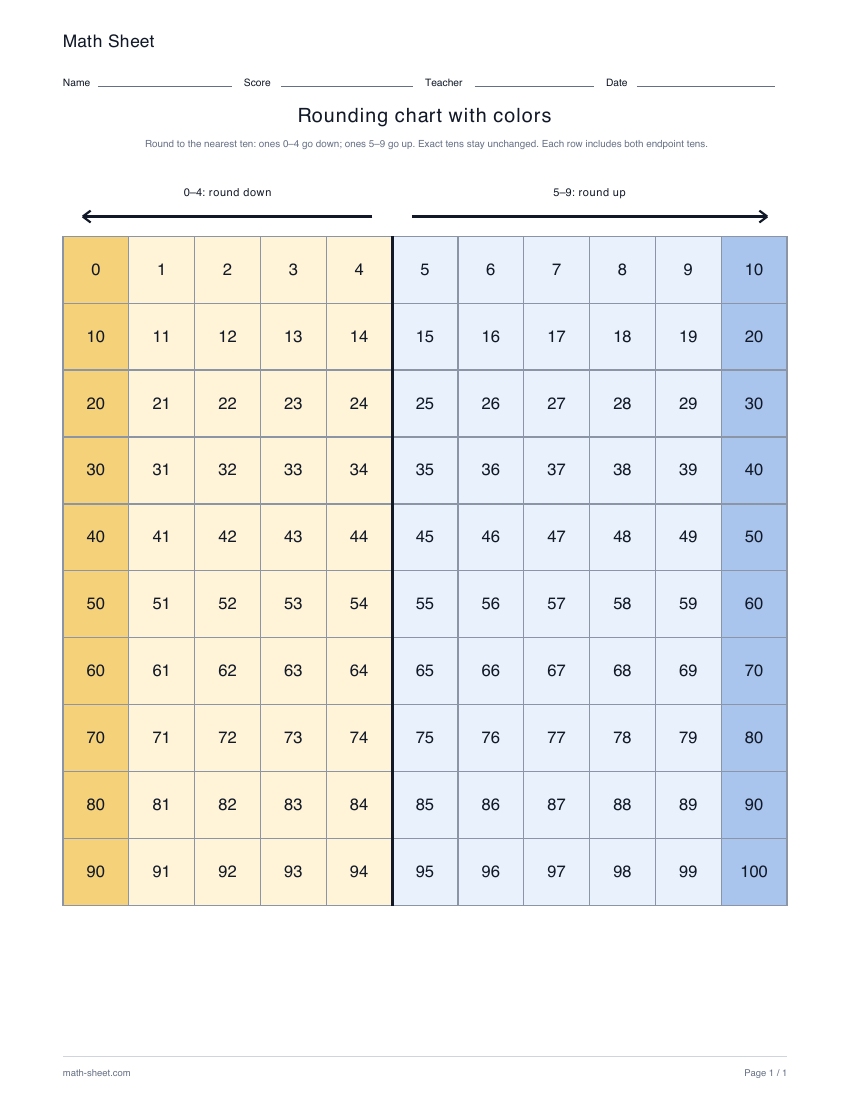
Hundreds chart
Read a labeled, softly colored 0–100 reference chart to see which numbers round down or up to the nearest ten.
Preview and downloadChoose by readiness
A complete 1–100 chart helps a learner trace counting paths. Try 5% or 10% blanks once rows and columns are familiar, then increase the missing cells. A 0–99 chart places multiples of ten in the first column; a 1–100 chart places them in the last.
one row down
Missing cells, advanced hundred blocks and puzzle anchors can change. Reference charts and original coloring designs are fixed; choose another picture, letter or digit for a different design. A new seed can still select the same block.