
Number line
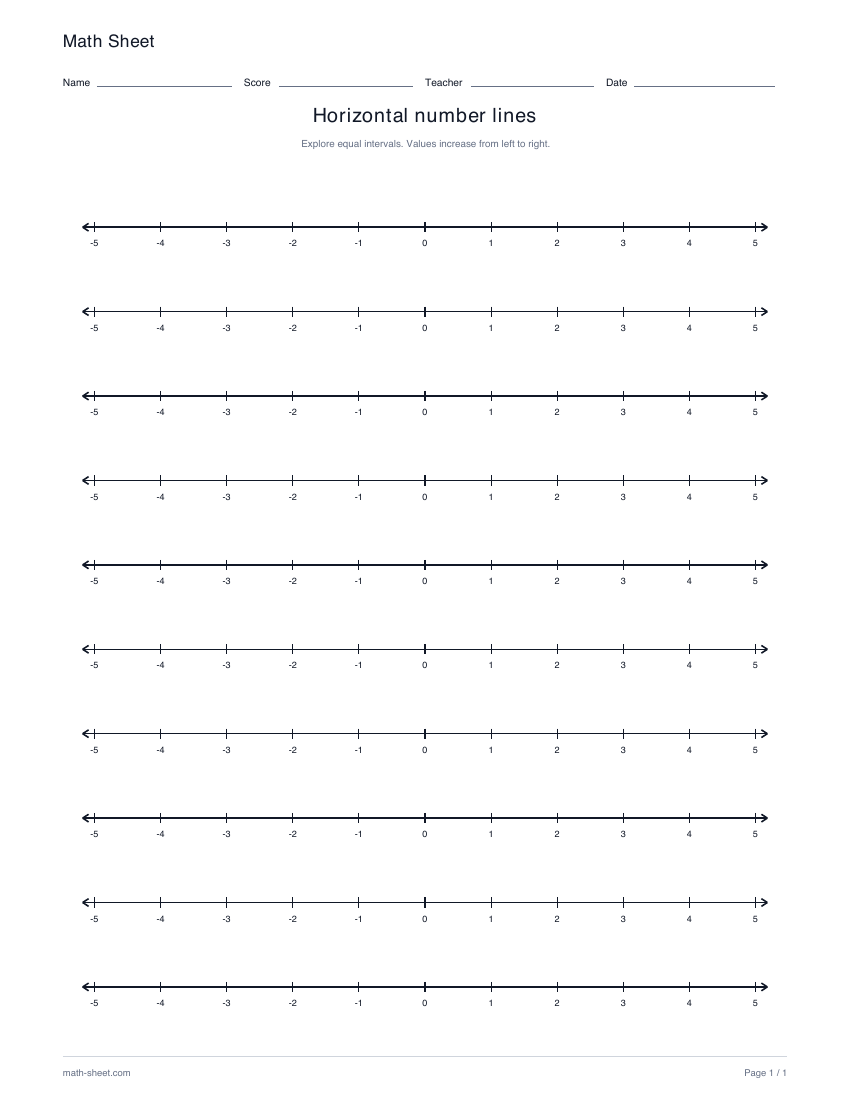
Horizontal number lines
Print ten horizontal number lines with your own endpoints, whole-number or fractional steps, and six choices of tick labels.
Preview and downloadPractice by skill
Make equal intervals and directed moves visible. Start with a simple scale, connect two hops to an equation, or locate values between whole numbers.
Find a worksheetNumber line practice
Choose the bounds, interval and labels for reusable reference paper. Start with whole numbers before introducing fractional or negative positions.
Number line
Print ten horizontal number lines with your own endpoints, whole-number or fractional steps, and six choices of tick labels.
Preview and download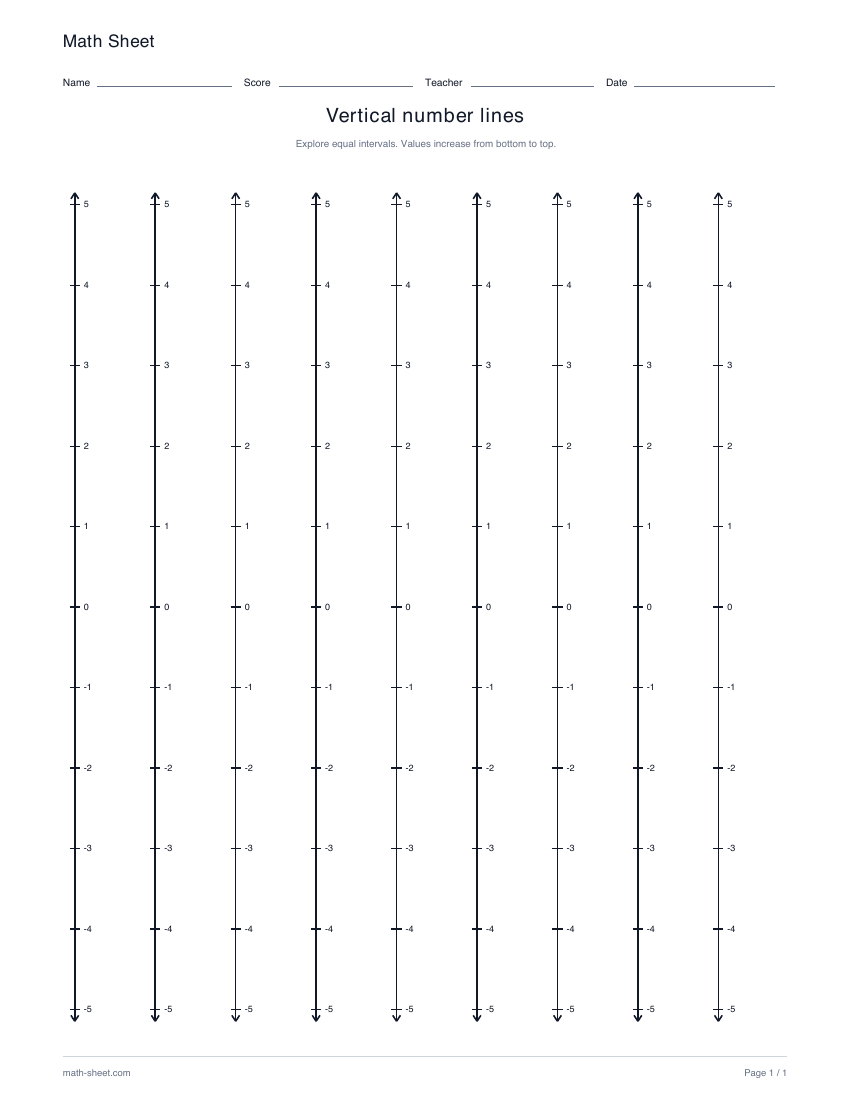
Number line
Make nine vertical number lines with values increasing upward. Choose endpoints, equal steps and the labels learners need.
Preview and downloadNumber line practice
Draw two directed hops from an equation, or recover an equation from its diagram. Begin within 10; signed arithmetic is a later option.
Number line
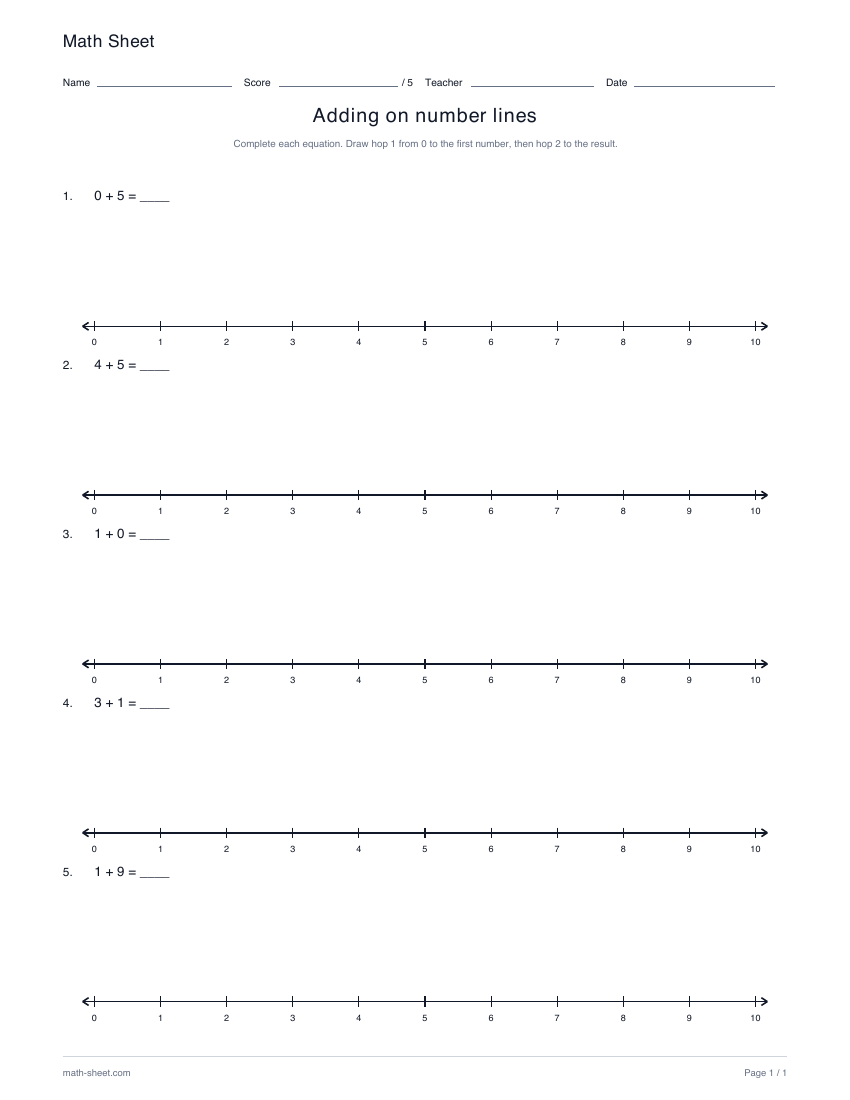
Solve five addition exercises by drawing two directed hops, or read the hops and complete the equation. Start within 10 or choose a larger range.
Preview and download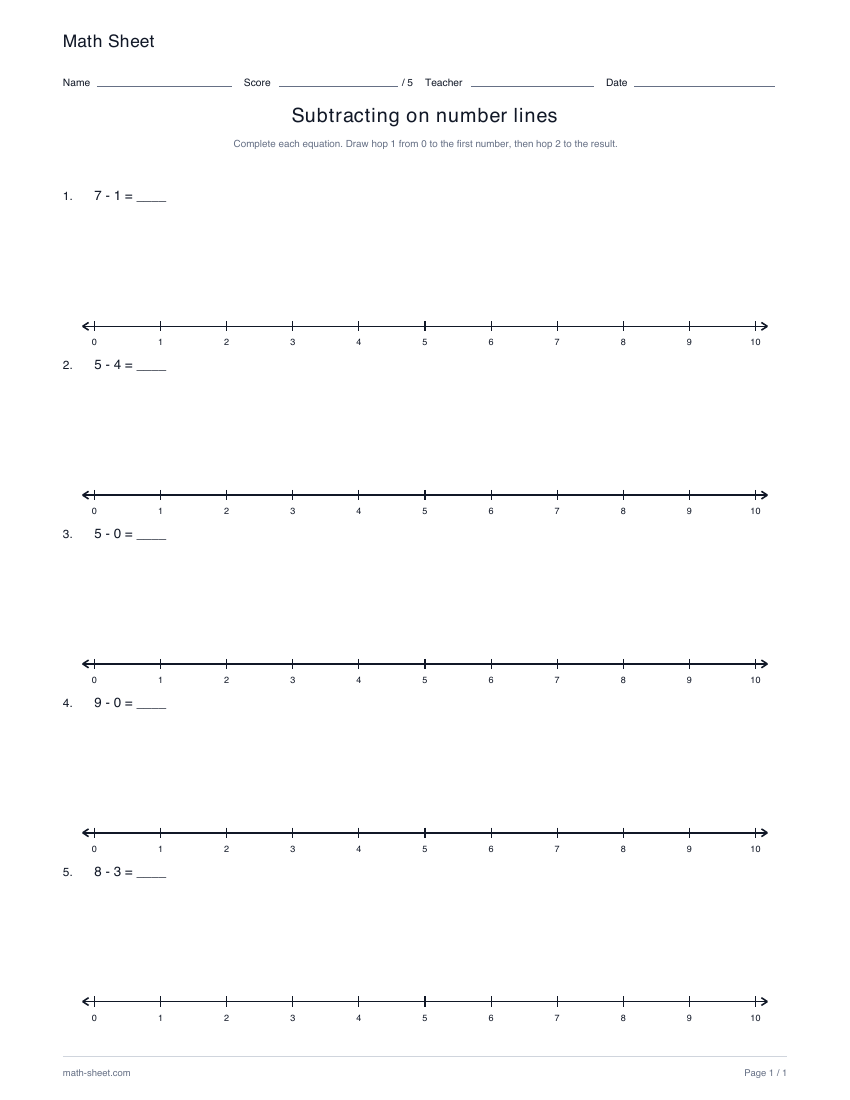
Number line
Use five number-line exercises to draw subtraction hops or recover an equation from a diagram. Choose positive practice or signed numbers.
Preview and downloadNumber line practice
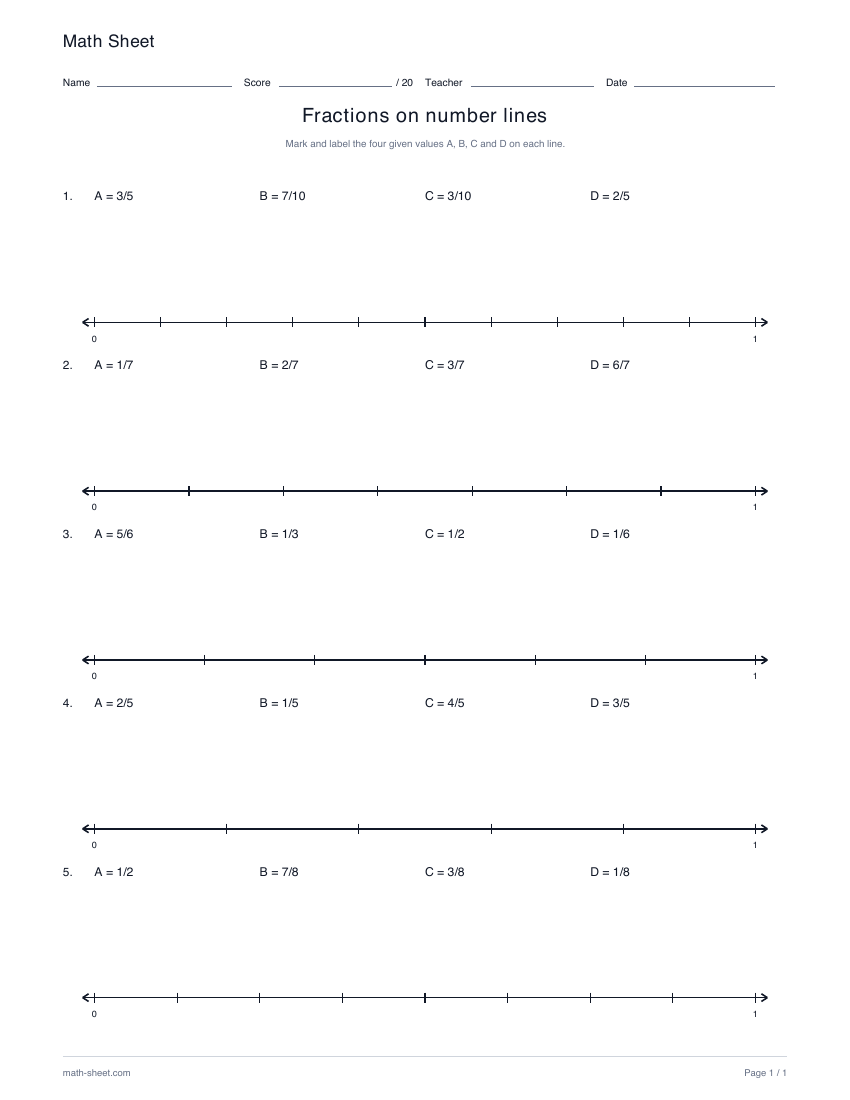
Partition equal intervals and work with four distinct labeled points per row. Choose fractions, decimals or mixed numbers.
Number line
Print five fraction number lines with four targets each and a separate key. Choose reading or marking, twelve denominator groups and positive or negative fractions.
Preview and download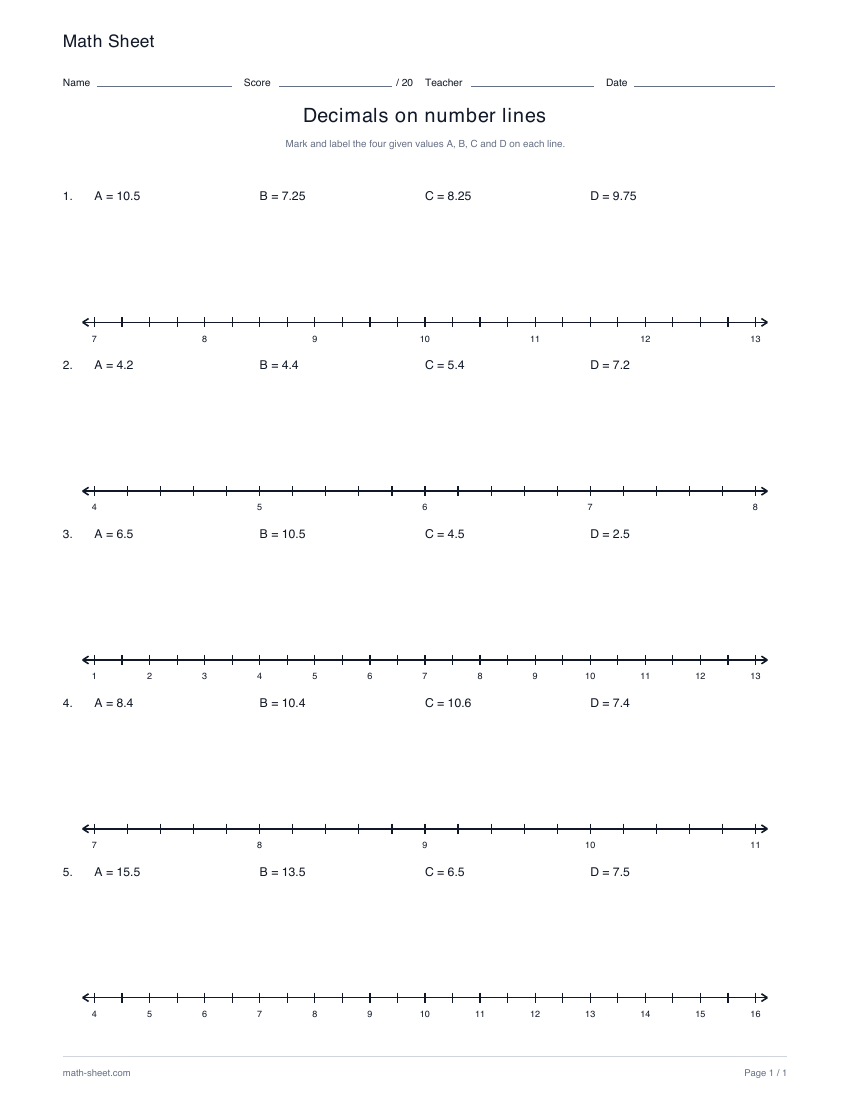
Number line
Locate four decimal values on each of five lines using halves, quarters, fifths, thirds, eighths or tenths. Choose plotting or reading practice.
Preview and download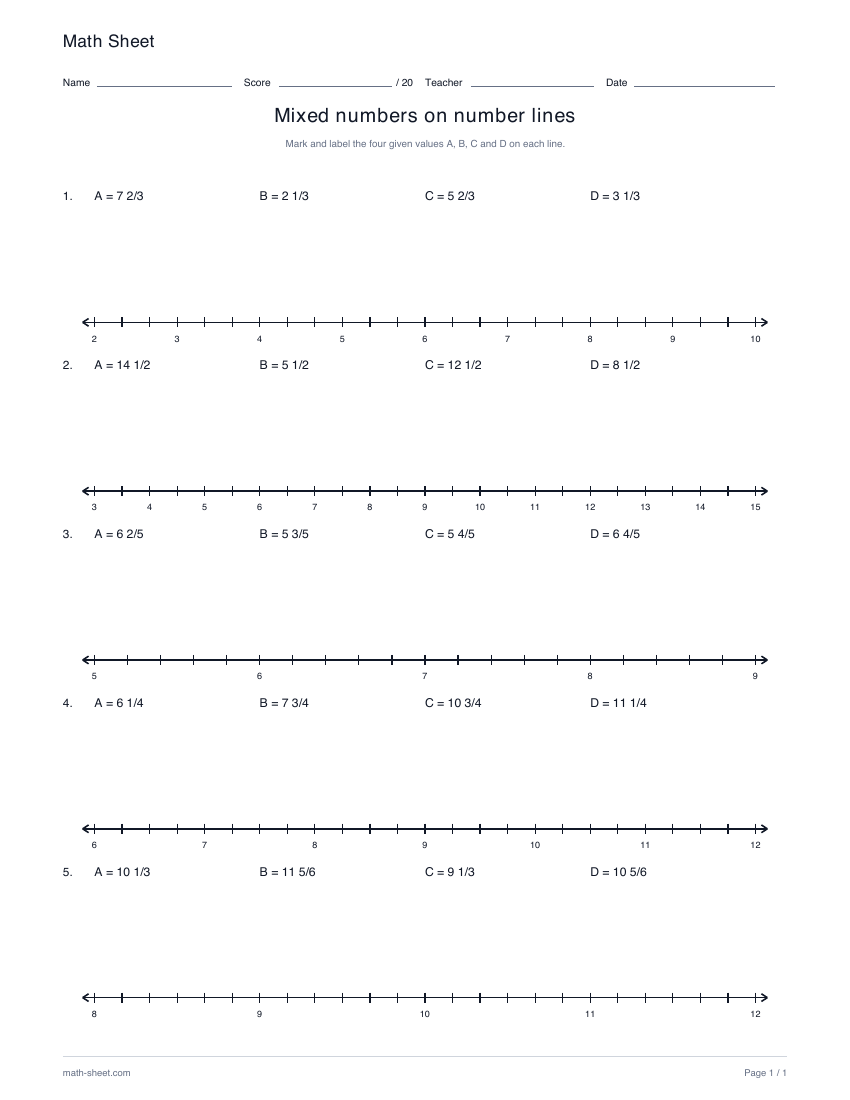
Number line
Plot or read four mixed numbers on each of five lines, with selectable denominators 2–10 and 12 and positive or mostly negative ranges.
Preview and downloadChoose by readiness
First connect a counter to a number, then move one equal space at a time. These presets keep the numbers small and nonnegative. Fractions and signed arithmetic are separate later choices, not requirements for a first lesson.
Use a counter and move one equal space at a time with a teacher.
Open this preset →Read a short vertical scale after horizontal counting feels familiar.
Open this preset →Connect two small groups with two hops on a 0–10 line.
Open this preset →After taking away objects feels familiar, draw a leftward hop with a teacher. Results stay within 0–10.
Open this preset →Enter signed decimal endpoints with at most three decimal places and absolute values no greater than 1,000. The end must exceed the start, the chosen increment must divide the span exactly, and the line must have 2–201 ticks. Unreadable labels are rejected: choose fewer labels, a larger increment or a shorter span. Requested labels are never silently removed.
Choose horizontal or vertical paper, then decide how much labeling to show. Both reference sheets have no assessment points. Their optional teaching models repeat the reference.
equal intervals
A point gives a position. A hop has a start, a direction and a length. Ask the learner to name those features before writing an answer. Changing the seed reshuffles exercises and points; reference axes keep the selected bounds and steps.