
Fact family
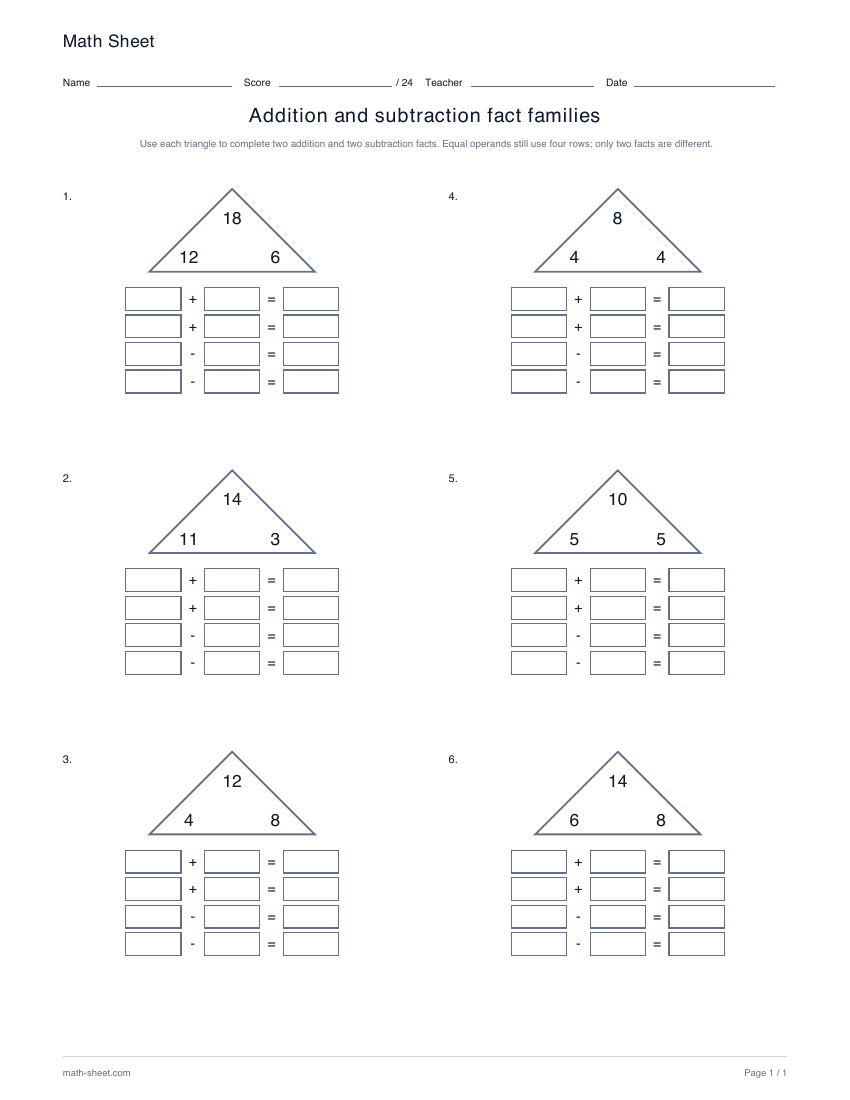
Addition and subtraction fact families
Use six number triangles to write two additions and two subtractions per family. Choose first addends from 1–12; the other addend is from 1–9.
Preview and downloadPractice by skill
Read one triangle and connect four equations. Join parts and undo addition, or connect factors with a product and its exact divisions.
Find a worksheetRelated facts
Use the same triangle for addition and subtraction. Choose the first addend, or narrow both addends for a focused lesson.
Fact family
Use six number triangles to write two additions and two subtractions per family. Choose first addends from 1–12; the other addend is from 1–9.
Preview and download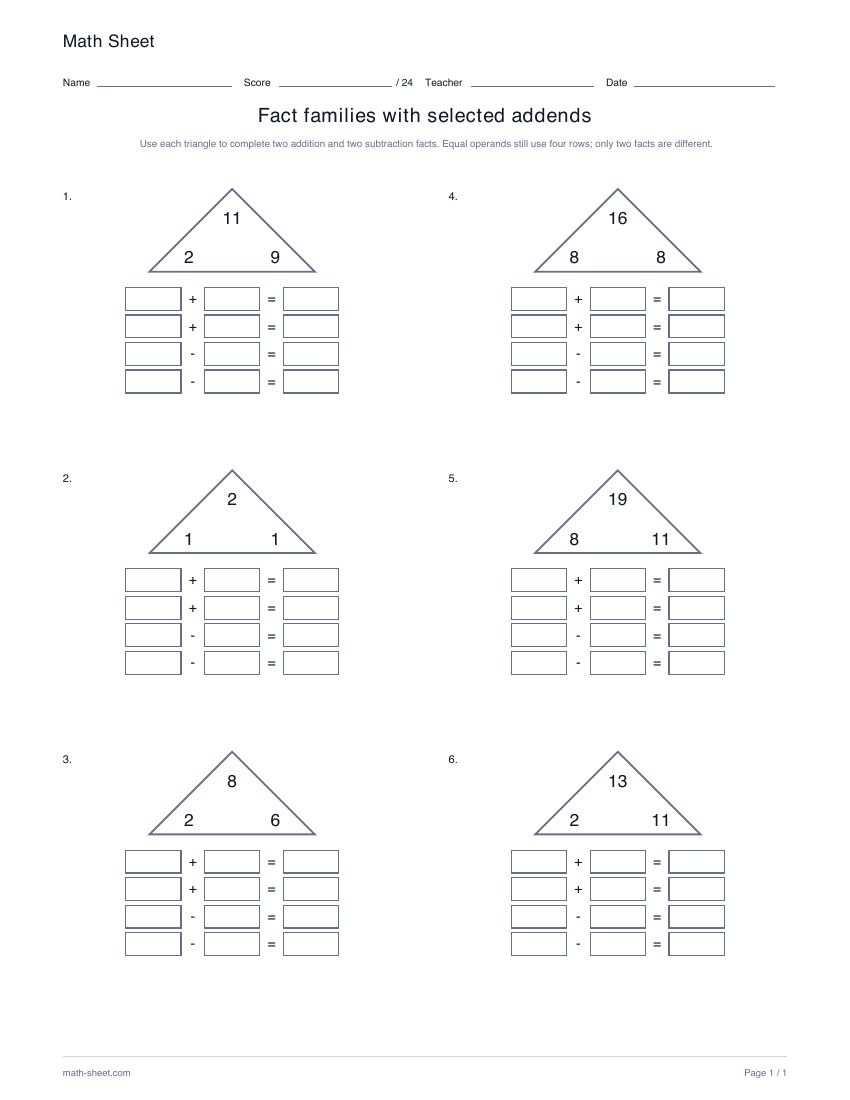
Fact family
Choose at least three addends from 1–12 and use only those choices for both parts of six addition and subtraction triangles.
Preview and downloadRelated facts
Use familiar arrays or equal groups to explain how two multiplications and two divisions share a relationship.
Fact family
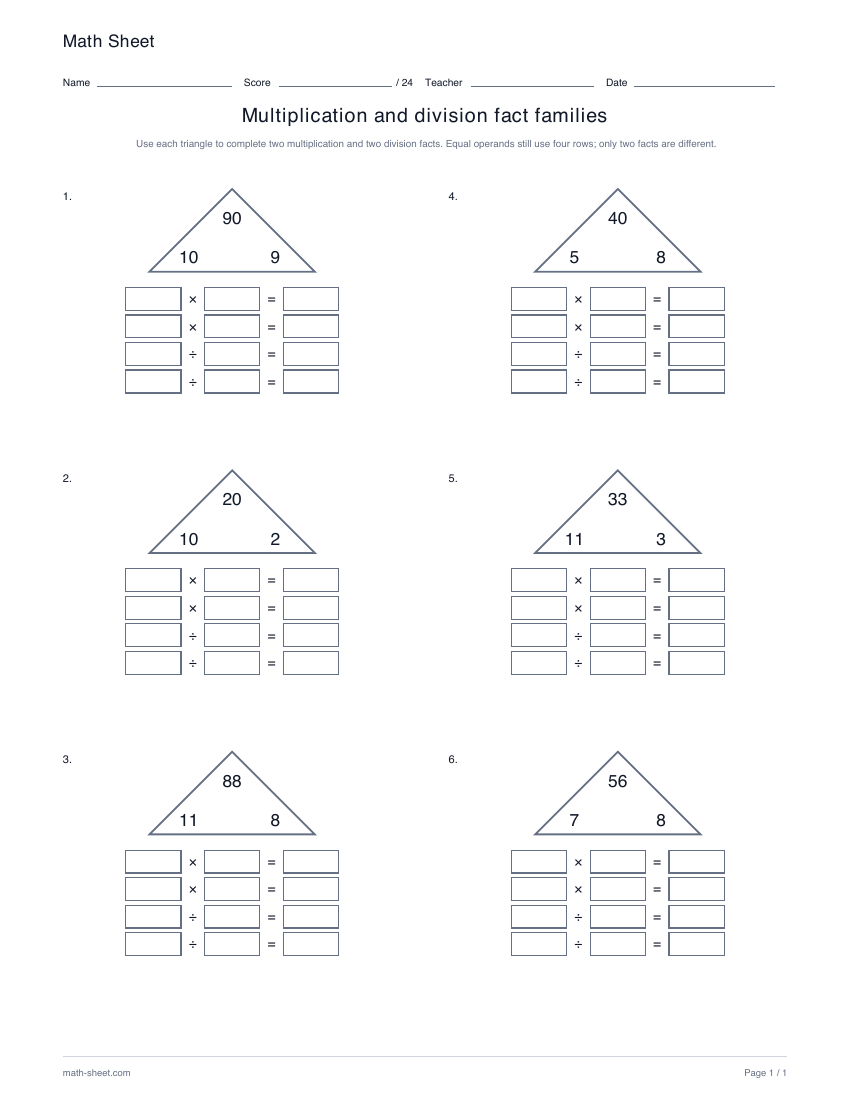
Connect two multiplication facts with two exact divisions in each of six triangles. Choose first factors from 2–11; the other factor is from 2–9.
Preview and downloadChoose by readiness
For teacher-led first practice, choose both addends from 1, 2 and 3 after the learner can compose and decompose quantities. Show the same whole being joined and separated. Reading and writing the symbols can follow the hands-on explanation.
Use counters with a teacher after composing and decomposing quantities is familiar. Both addends stay within 1–3 and sums within 2–6.
Open this small-parts preset →Choose one or more first addends from 1–12. The other addend comes from 1–9, whether or not it is checked. Sums can reach 21. To restrict both addends, choose the separate both-addends activity.
Choose at least three different addends from 1–12. Both parts of every triangle come from that set, with doubles allowed. Sums can reach 24; the sum itself does not need to be selected.
Choose one or more first factors from 2–11. The other factor comes from 2–9, whether or not it is checked. Products can reach 99, and every division is exact.
Connect representations
A number bond makes the parts and whole visible before equation writing. An array shows equal groups and helps explain why turning the arrangement leaves the product unchanged.
Number bonds
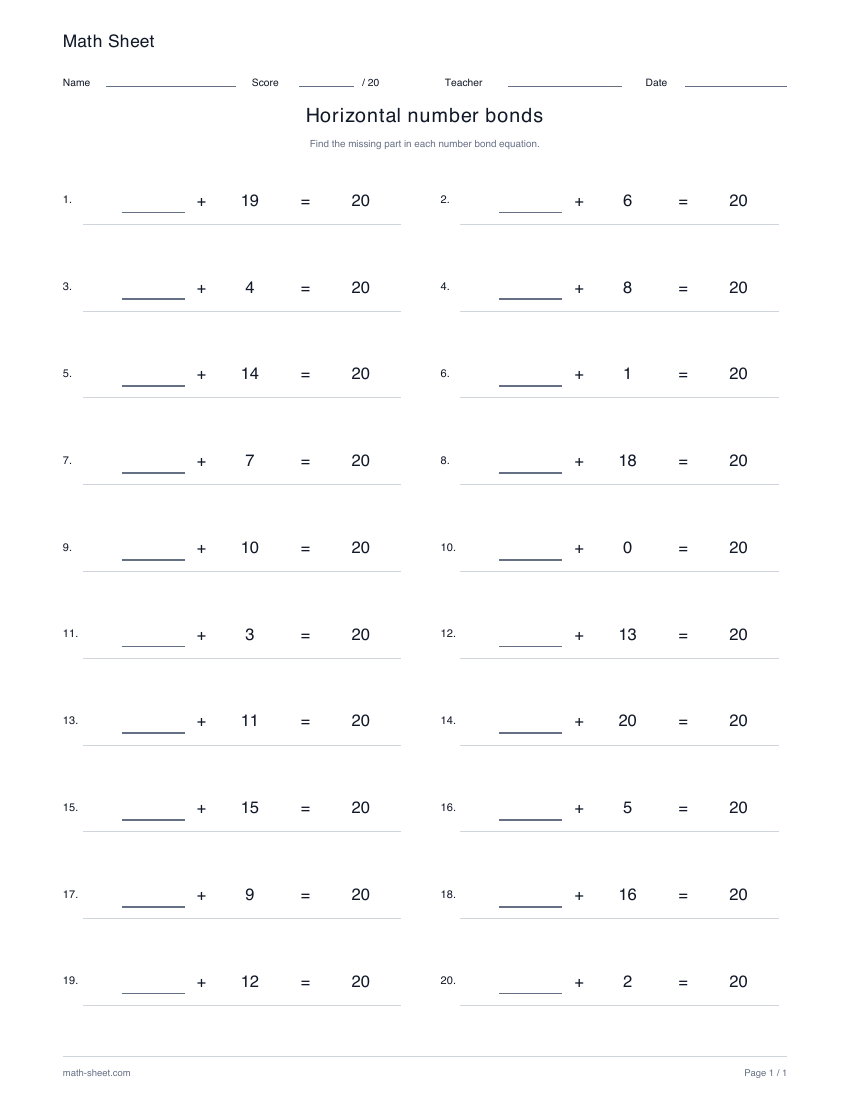
Find one missing part in two-part equations with a fixed whole from 5 to 100, six equation layouts and up to 30 problems.
Preview and download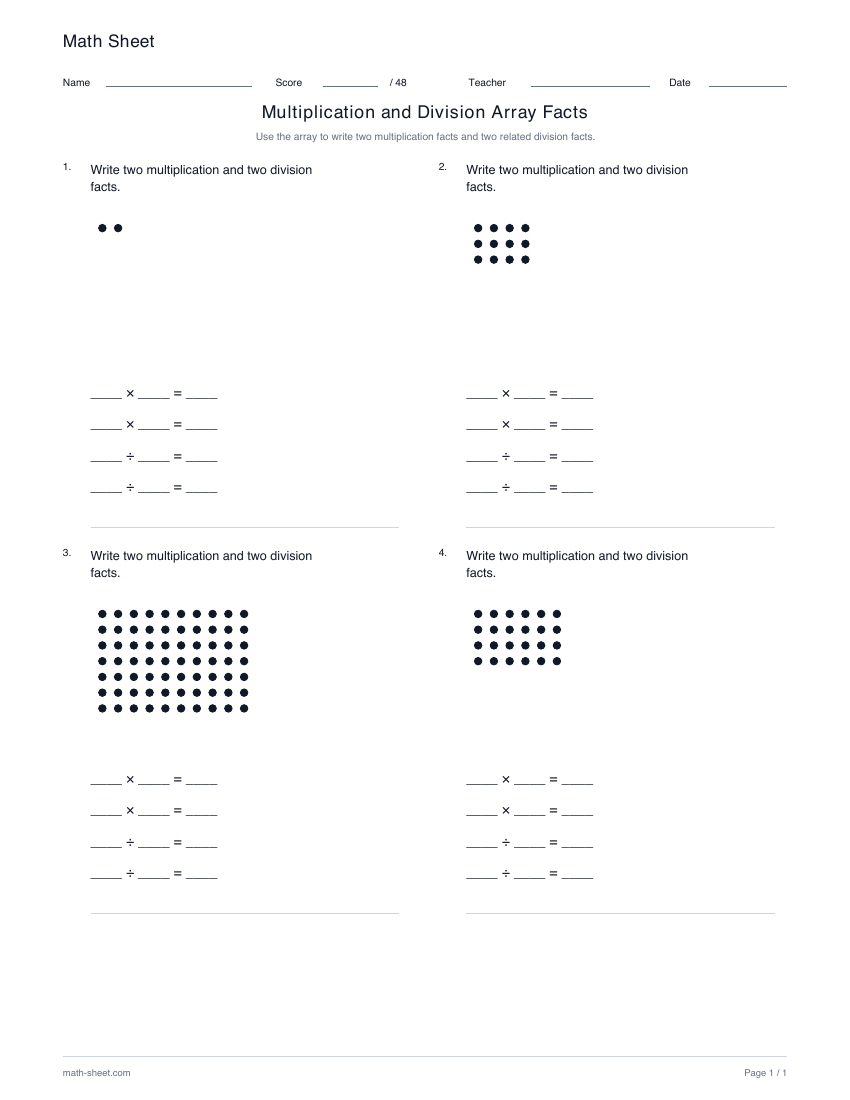
Multiplication
Use one rectangular array to write two multiplication equations and two related division equations.
Preview and downloadrelated facts
Every printable has six family panels and four equation rows per panel. The triangle gives the numbers; the learner completes the number boxes. Student and answer pages keep the same arrangement for easy checking.