
Estimation
Estimating sums and differences
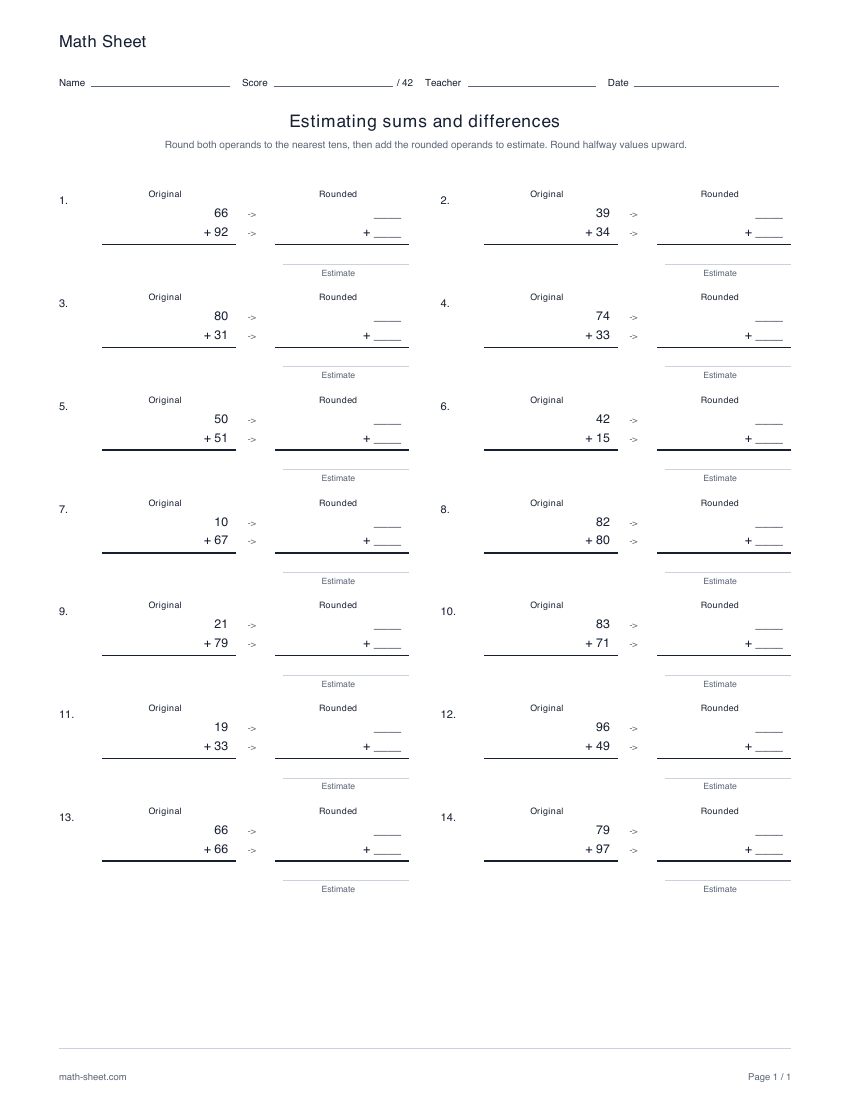
Estimate addition and subtraction with two-, three- or four-digit numbers. Choose rounding guides or horizontal practice, an optional worked example and a separate answer key.
Preview and downloadPractice by skill
Round each number. Choose the operation. Make a useful estimate, then explain what it tells you.
Choose an estimation skillEstimated sum: 90
Exact sum: 85
Round, calculate, explain
Make the intermediate steps visible with rounding guides, or choose horizontal practice for a shorter response.
Estimation
Estimate addition and subtraction with two-, three- or four-digit numbers. Choose rounding guides or horizontal practice, an optional worked example and a separate answer key.
Preview and download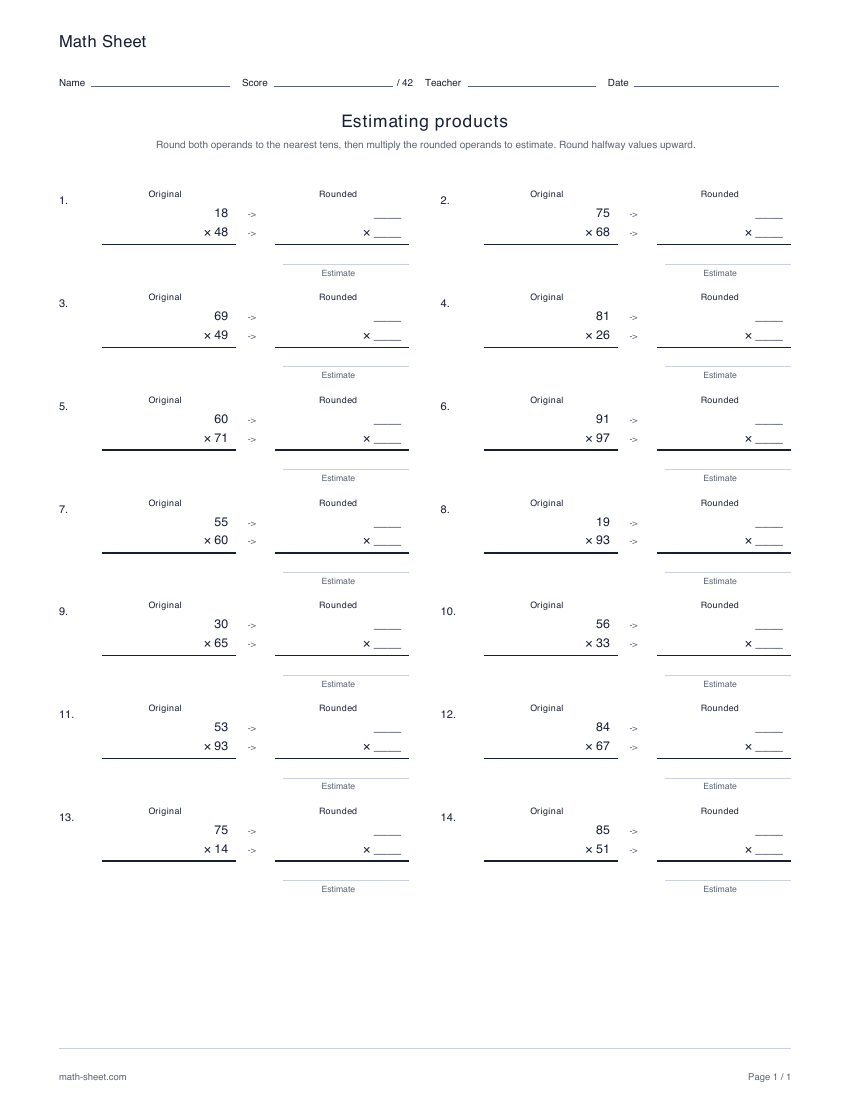
Estimation
Round two- and three-digit factors, then estimate their product. Practice guided or horizontal multiplication, including mixed three-by-two-digit factors and nearest-hundred rounding.
Preview and downloadRound, calculate, explain
Interpret a short story, identify the operation and give an approximate answer with its unit.
Estimation
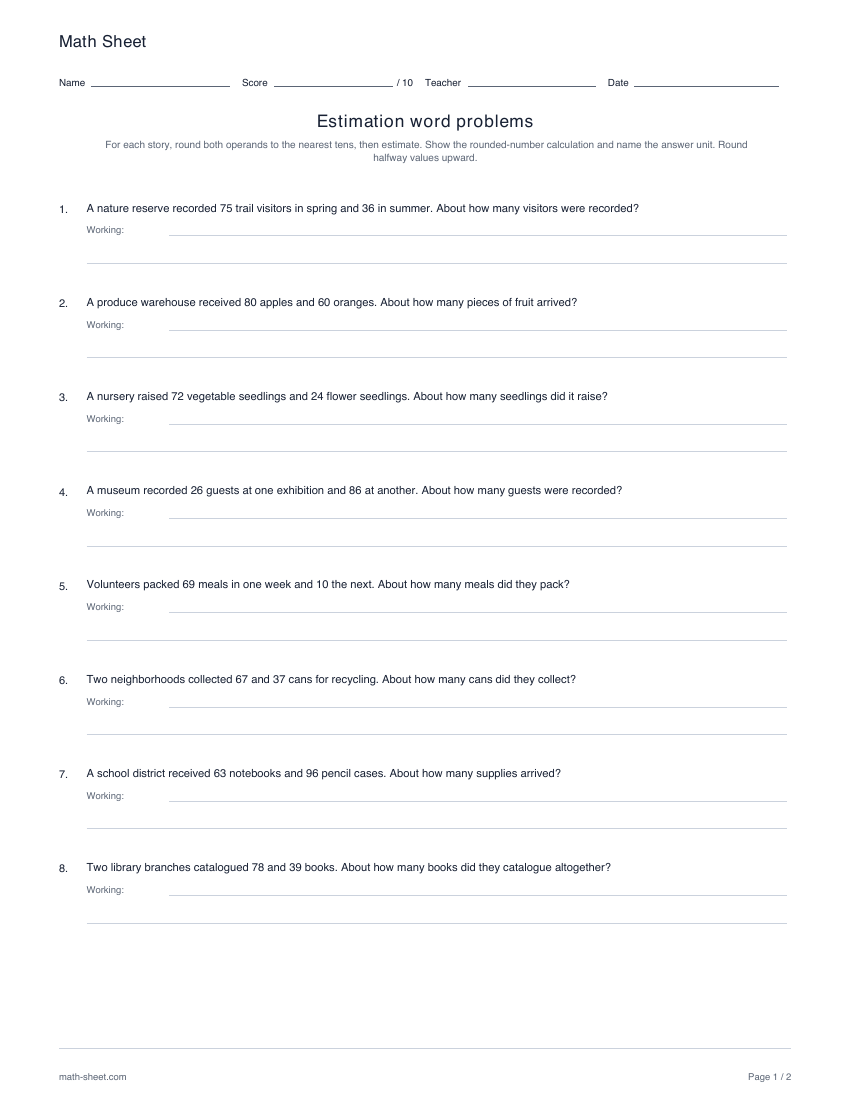
Read original addition and subtraction stories, round the quantities to a stated place and give an estimated answer with its unit. Choose two-, three- or four-digit quantities.
Preview and downloadRound, calculate, explain
These existing resources help students compare neighboring multiples before combining rounded quantities.
Rounding
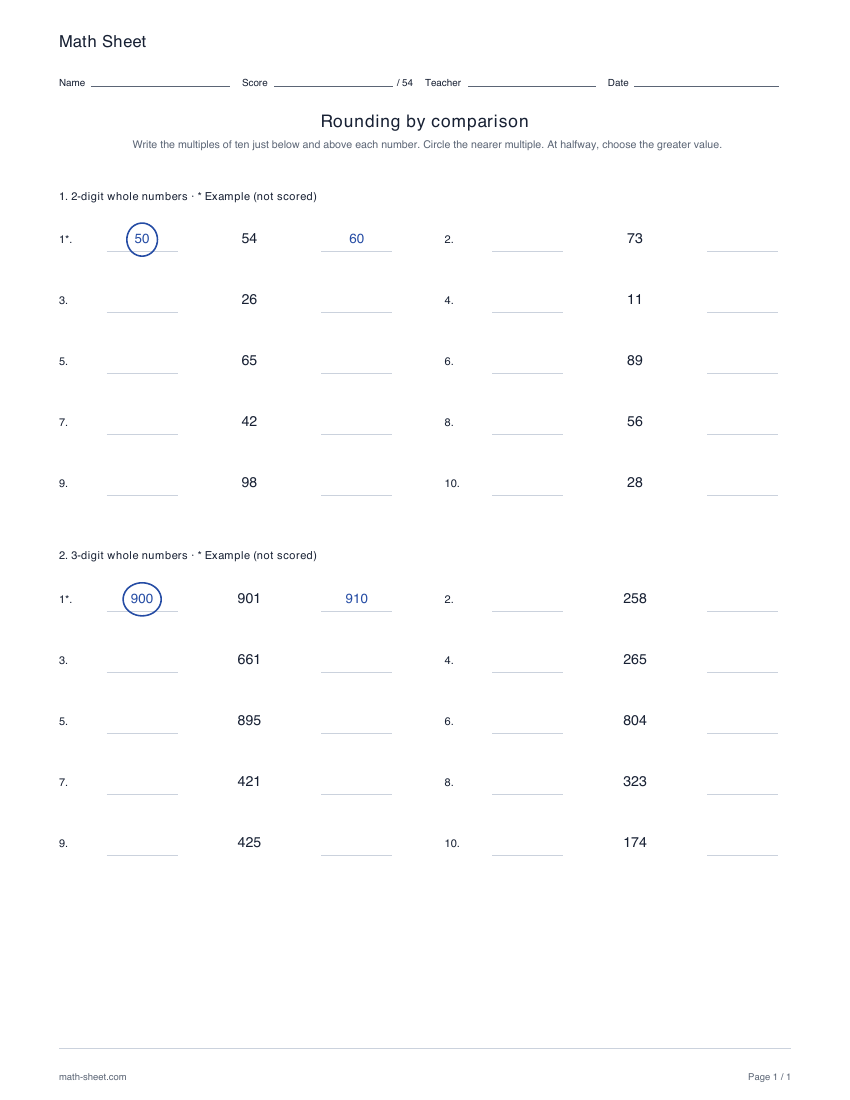
Fill in the multiples immediately below and above each number, then circle the nearer value. Practice tens, hundreds or thousands with an optional worked example in each group.
Preview and download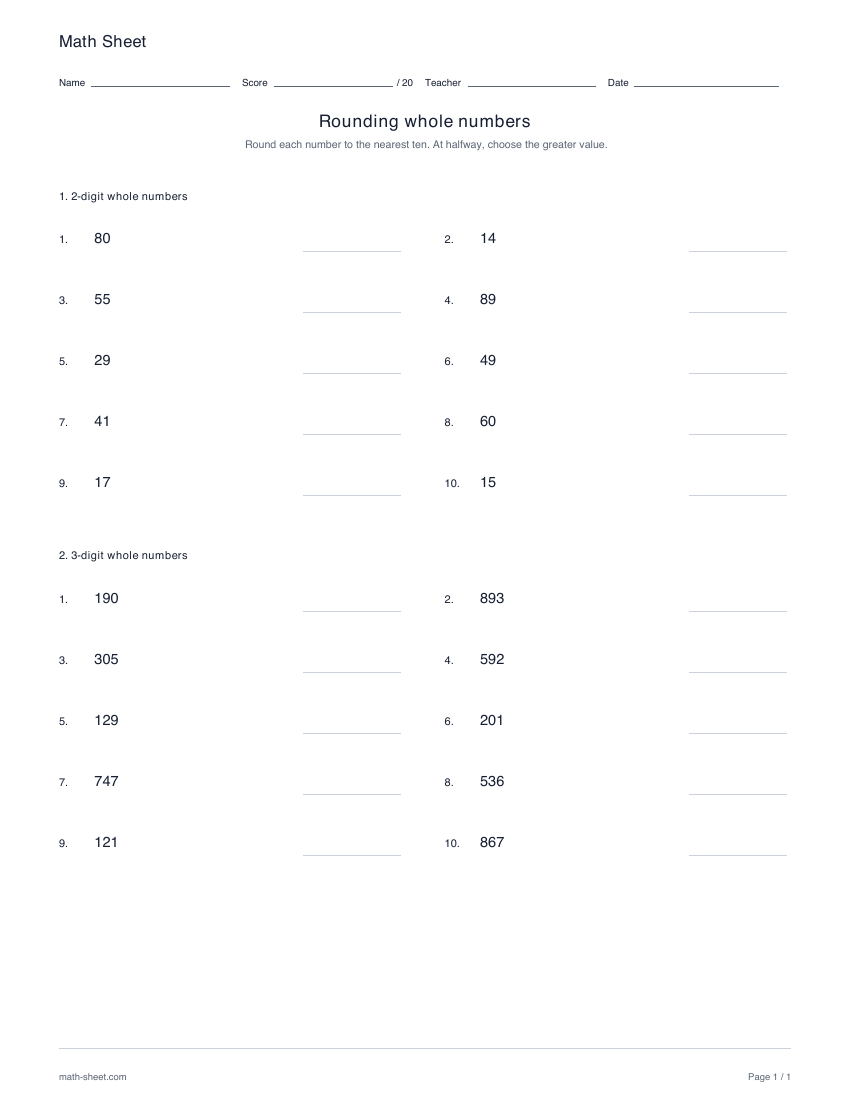
Rounding
Round positive whole numbers to the nearest ten, hundred or thousand. Choose fixed or mixed digit ranges, 10, 20 or 30 questions, and a separate answer key.
Preview and downloadChoose by readiness
The same estimation method works with different number ranges. These starting points describe prerequisite skills; they do not claim alignment with a particular national curriculum.
Begin after nearest-ten rounding is secure. Use one worked example and six scored positions.
Open this focused practice →Round a three-digit factor and a two-digit factor to tens before multiplying.
Open this focused practice →Round to thousands, then explain what detail this coarser estimate leaves out.
Open this focused practice →To estimate 44 + 44 to the nearest ten, first replace each addend with 40. The estimated sum is 80. Calculating 88 and then rounding to 90 follows a different method. These worksheets consistently ask students to round each operand before calculating.
For subtraction, use the same rounding place for both numbers. For multiplication, round both factors, even when they have different numbers of digits. In 237 × 42 to the nearest ten, use 240 × 40.
Students record both rounded operands and the estimated result. The original and rounded calculations stay beside each other, making the method easy to follow.
Add a separate exact answer so students can compare the estimate with the result of the original calculation. The two answers are labeled separately.
Students read a compact expression and supply an estimated answer. Turn on the first worked example when a reminder of the rounding steps would help.
Numeric sheets offer 7, 14 or 21 positions. An optional worked example uses the first position and earns no marks. Teacher keys include the exact reference result for guided sheets; it is scored only when students are asked to calculate it.
The requested precision matters. For 246 + 318, rounding each number to tens gives 250 + 320 = 570. Rounding to hundreds gives 200 + 300 = 500. Both follow a valid method, but answer the question at different levels of detail.
These activities specify the rounding place so the answer key can check that method. In an open discussion, students may use other useful strategies, such as compatible numbers. Ask them to explain their choices instead of treating every different estimate as a calculation error.
Stories add a decision before the arithmetic: are the quantities being combined or compared? Students then round each quantity to the stated place and write an approximate answer with the relevant unit.
The story generator offers 5, 10 or 15 original addition and subtraction questions. There is space to show working, and the answer key records both the rounded calculation and the estimated answer. Choose two-, three- or four-digit quantities to match learners’ number knowledge.
Every activity includes English PDFs in Letter and A4, with a student-only file and a version containing a separate answer key. Use the generator for a different number range, format, question count, seed or teacher note.
Printed worksheets support English, German, Albanian, Spanish, Italian, French, Turkish and Norwegian Bokmål. Language and paper changes preserve the mathematics. Every page includes Name, Score, Teacher and Date fields and the math-sheet.com footer.