
Patterns
Complete the pattern
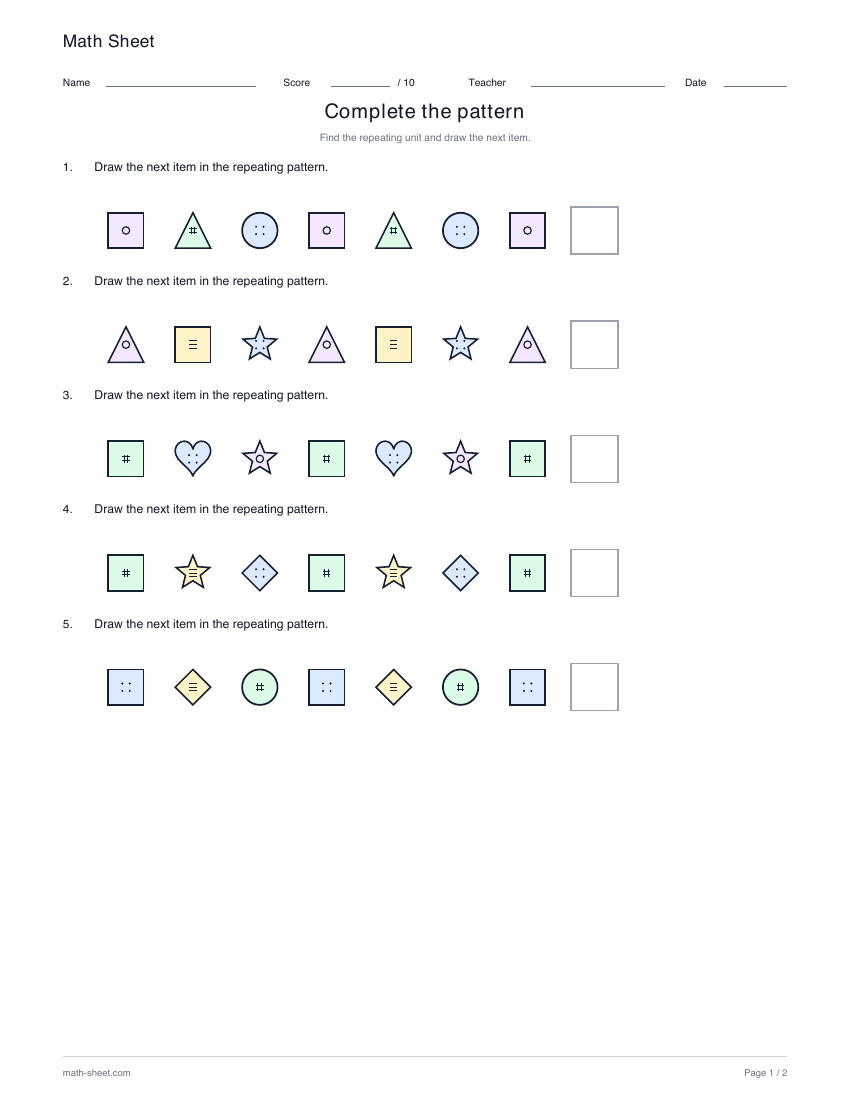
Extend shape, color or combined patterns with three- or four-item units. Choose distinct items or repeated shapes and colors, then draw the next item or finish the unit.
Preview and downloadNotice · continue · explain
Find what stays the same as a row continues. Begin with a repeating shape-and-color unit, move to number order, then investigate numerical rules that change the operation from one step to the next.
Choose a pattern activityA repeating visual unit, a consecutive number sequence and an alternating calculation rule ask for different kinds of thinking. Start with an example the learner can explain aloud.
Patterns
Extend shape, color or combined patterns with three- or four-item units. Choose distinct items or repeated shapes and colors, then draw the next item or finish the unit.
Preview and download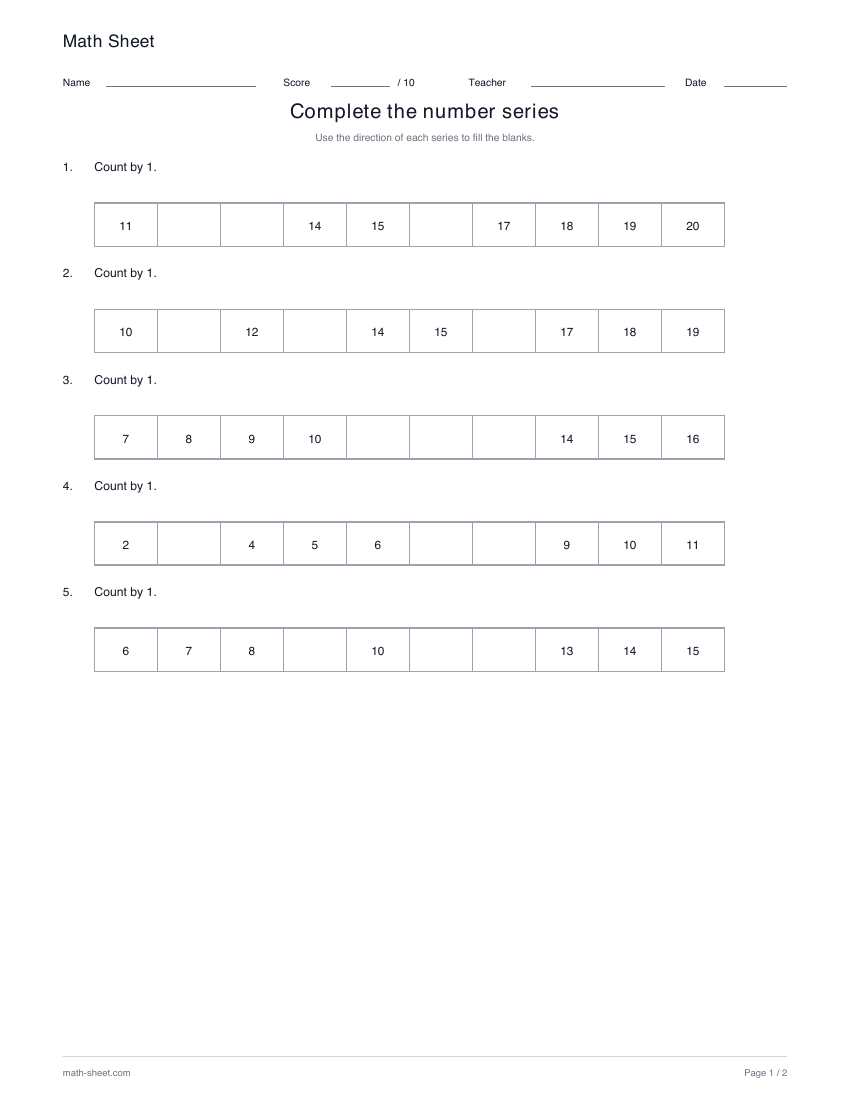
Patterns
Restore missing values in ascending or descending consecutive series across chosen positive or advanced negative ranges.
Preview and download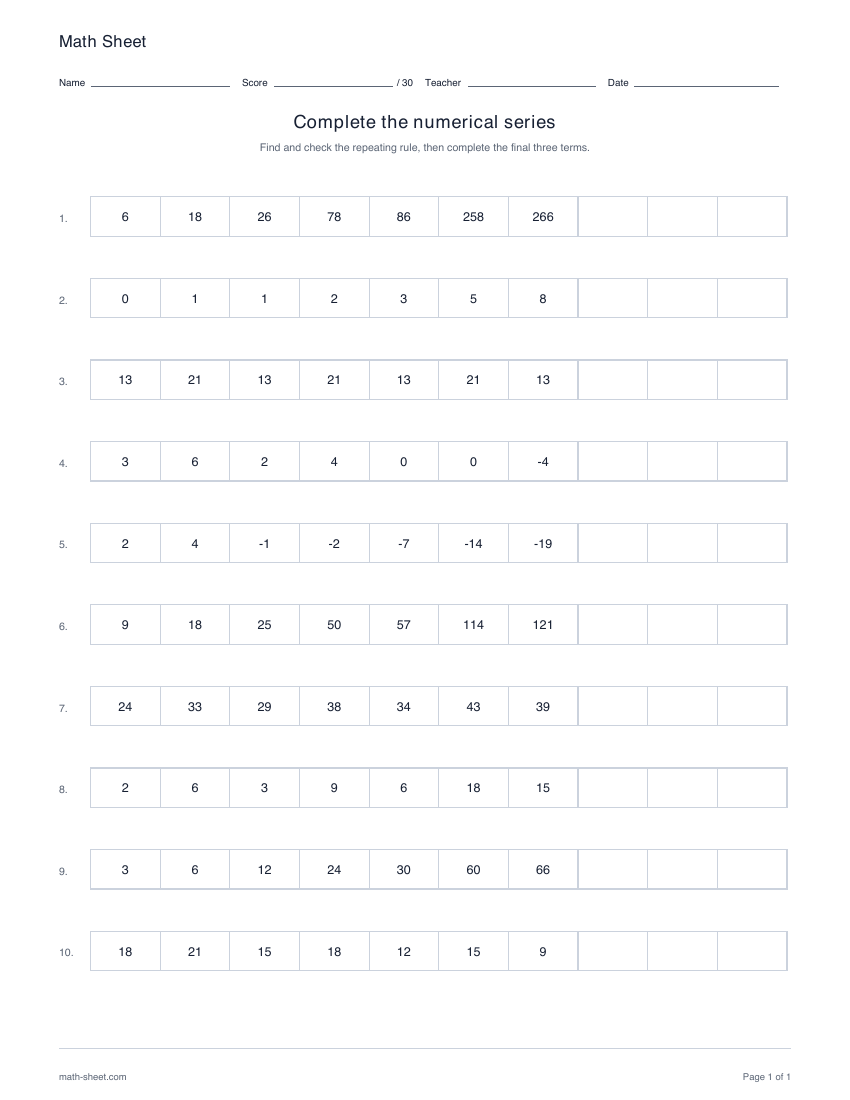
Numerical patterns
Find and check a repeating numerical rule, then complete the last three terms. Choose Fibonacci, alternating addition and subtraction, or alternating multiplication with addition or subtraction.
Preview and downloadSupported first steps
With a teacher, arrange real shapes or colored counters before drawing. A shape or color can appear more than once within the unit. Ask the learner to point to the entire group that repeats, then complete the remainder of that group.
Try a three-item unit after matching shapes is familiar. The first item of the next unit is already given; draw the remaining items.
Open this teacher-led pattern →Use a four-item unit with repeated features. Name both the shape and its color or printed texture for each position.
Complete a four-item unit →Once number order through twenty is comfortable, use three given clues to complete an eight-term consecutive sequence.
Open consecutive-number clues →In a numerical-rule row, seven given terms provide evidence for the next three. An alternating rule repeats two operations in order; Fibonacci uses the two previous terms instead. The key shows the completed sequence and a rule explanation.
A short list of numbers does not determine one mathematically unique rule. Use the selected rule families as the task boundary, and check that a proposed rule agrees with every given transition. Negative terms require signed-number readiness.
For a picture row, name the repeated unit. For consecutive numbers, name the direction and step of one. For numerical rules, say which operation comes next and why. This explanation is more useful than a guess that happens to fill one blank correctly.
Keep the original worksheet links when sharing a specific set. Custom settings remain private query variations of the same activity, and printable answer keys are separate from student pages.