
Mixed operations
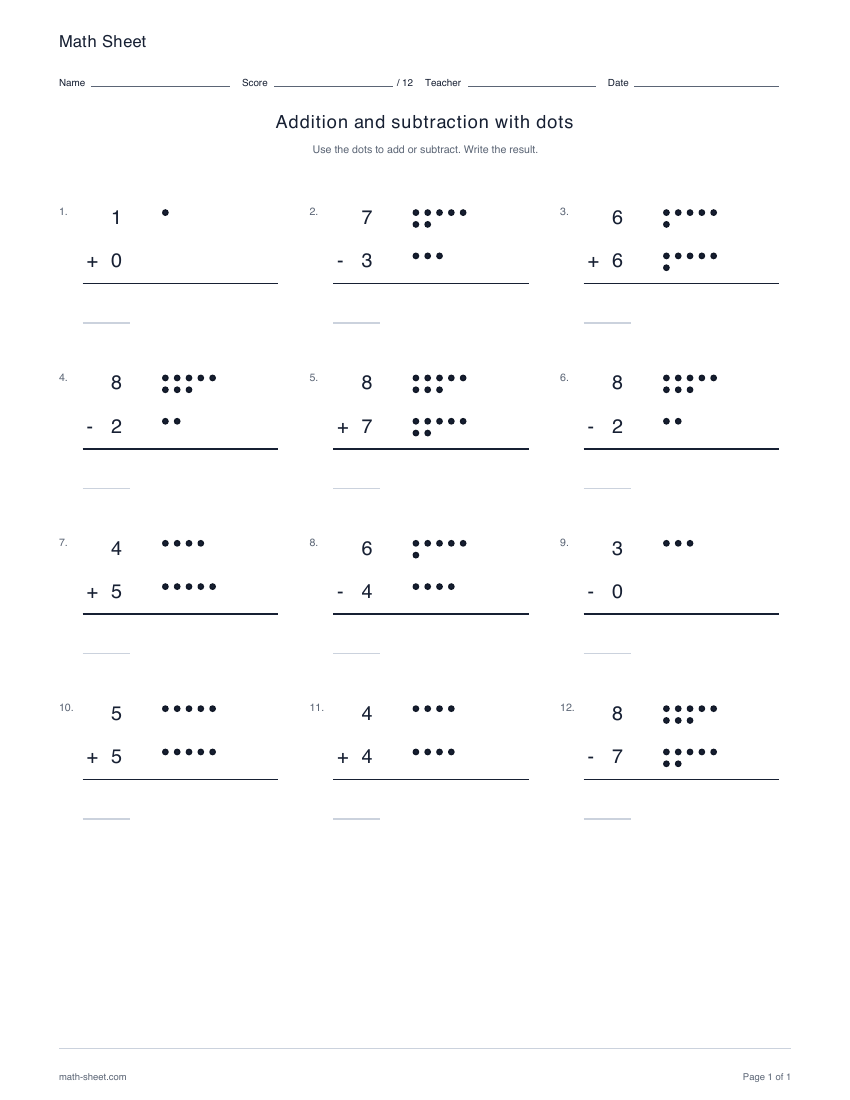
Addition and subtraction with dots
Count dots beside both operands in twelve mixed addition and subtraction problems. Optional result dots provide additional counting support.
Preview and downloadPractice by skill
Look at the sign before choosing the method. Combine familiar facts, written calculations or missing-number questions in one coherent worksheet, then check each answer against the separate key.
Choose a mixed activityChoose the next skill
Move from supported addition and subtraction to mixed facts and horizontal calculations.
Mixed operations
Count dots beside both operands in twelve mixed addition and subtraction problems. Optional result dots provide additional counting support.
Preview and download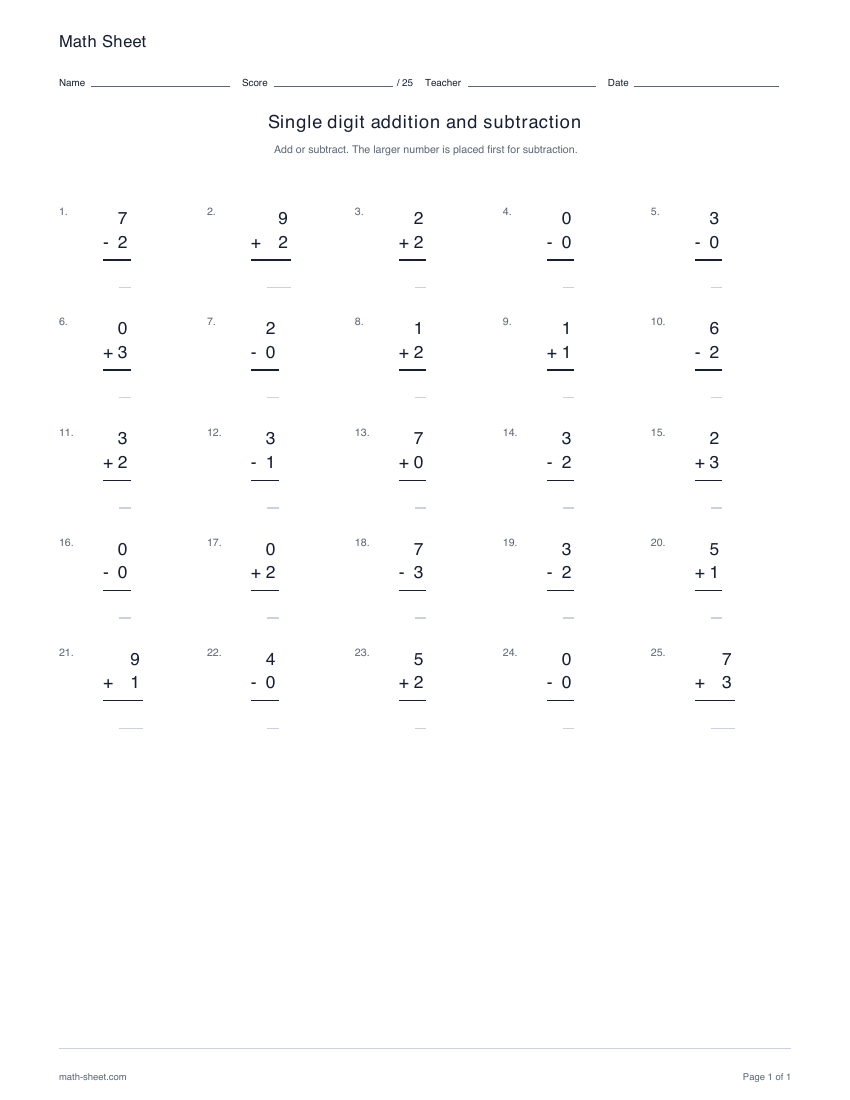
Mixed operations
Mix addition and subtraction on one page using two selected digit pools. Choose 12 to 30 problems and a separate answer key.
Preview and download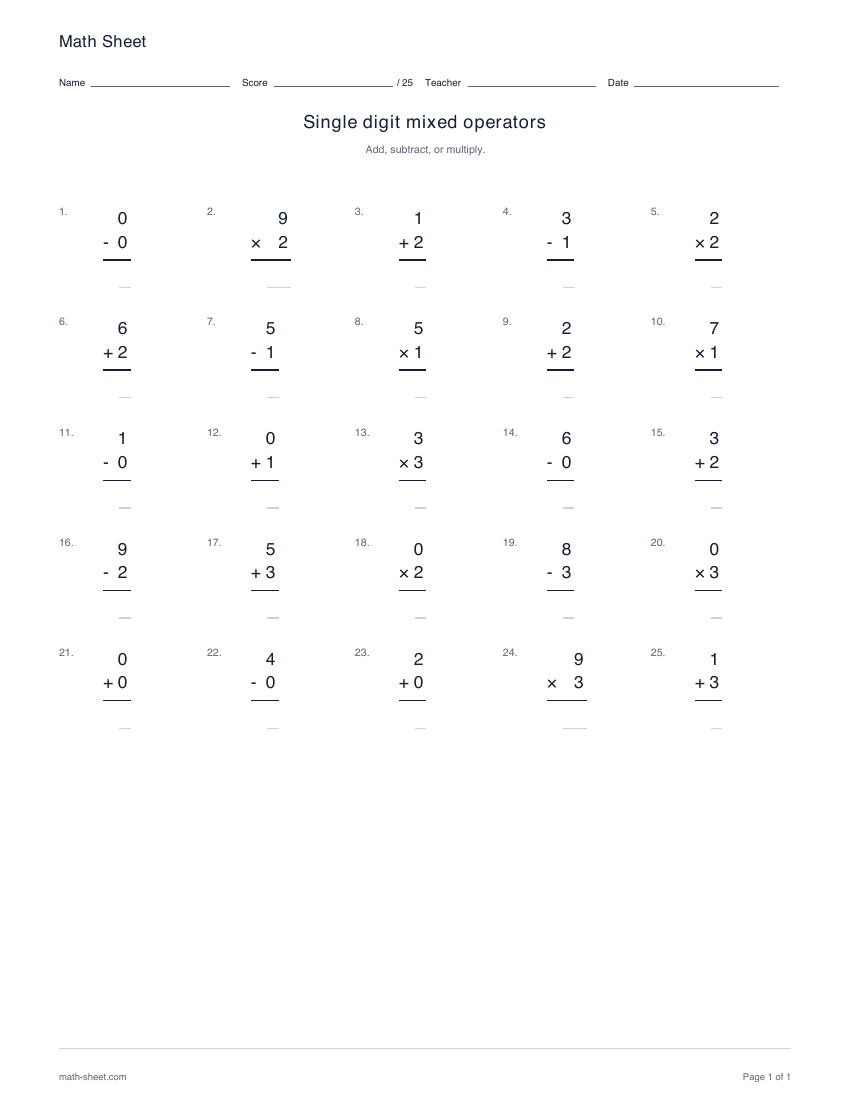
Mixed operations
Practice addition, subtraction and multiplication together with selected digits. Balanced operation choices encourage checking each sign.
Preview and download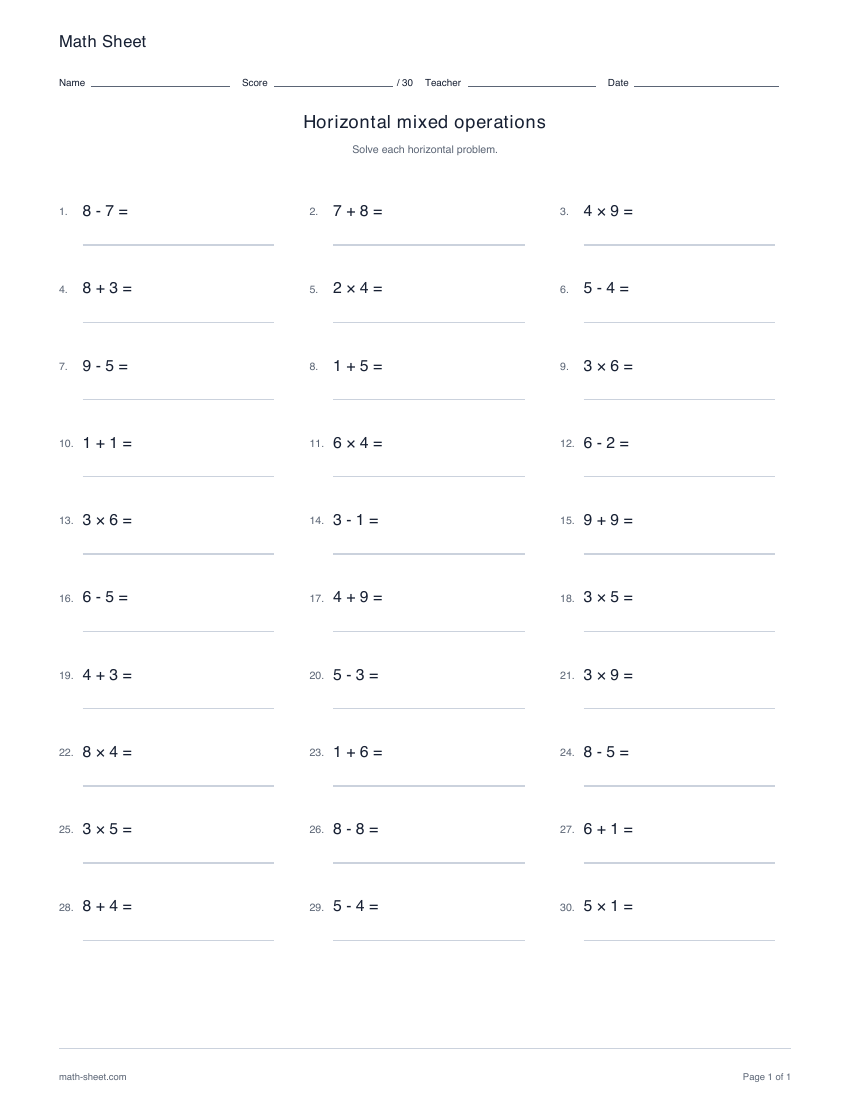
Mixed operations
Solve addition, subtraction and multiplication in horizontal form, choosing one-digit, two-digit or mixed operand widths.
Preview and download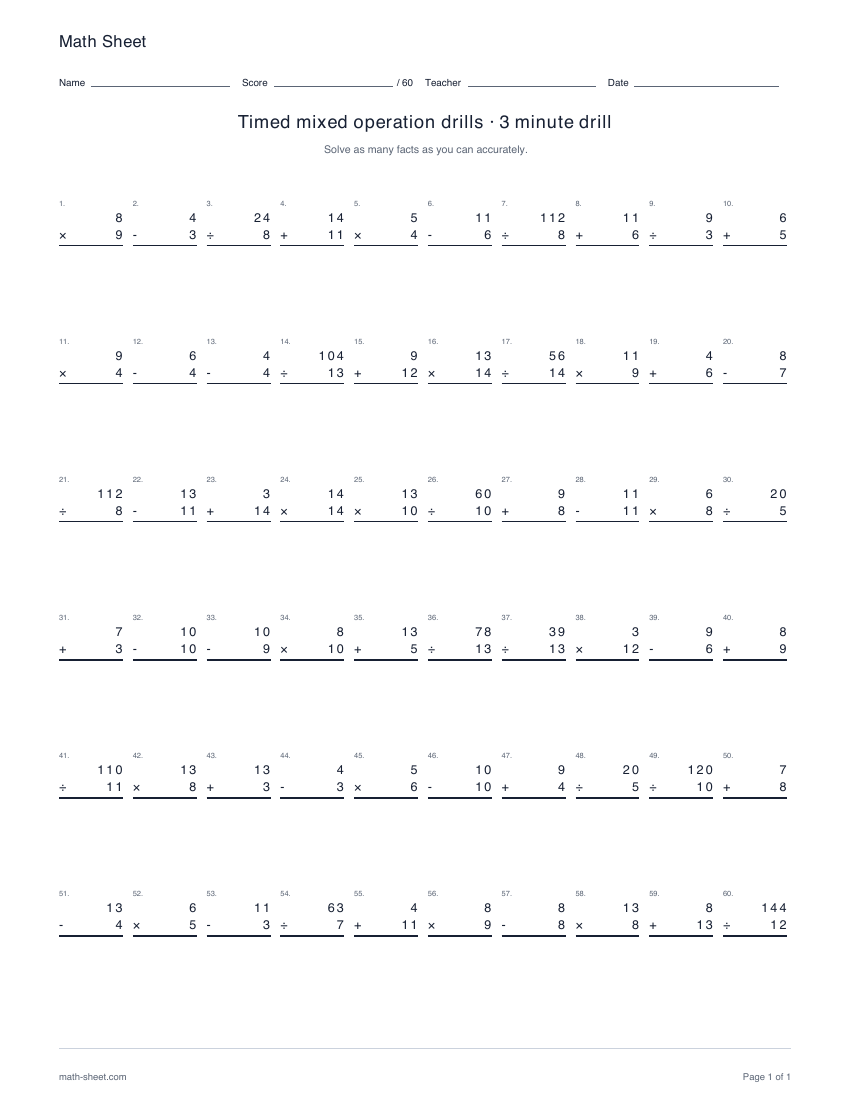
Mixed operations
Choose addition, subtraction, multiplication and division for 20-, 60- or 100-problem timed practice, or 25 or 30 untimed problems.
Preview and downloadChoose the next skill
Align columns, regroup carefully, and use complete working for multiplication and long division.
Mixed operations
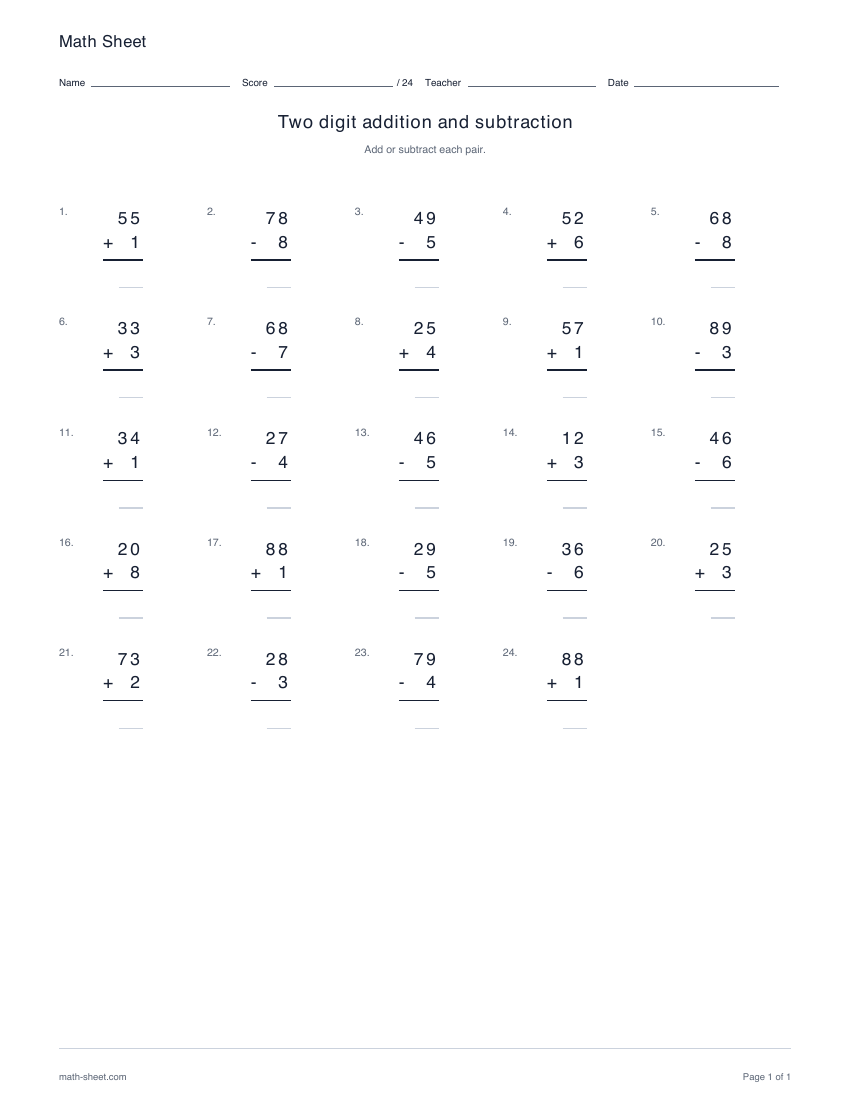
Use a two-digit first operand and a one- or two-digit second operand in mixed vertical practice, with optional regrouping.
Preview and download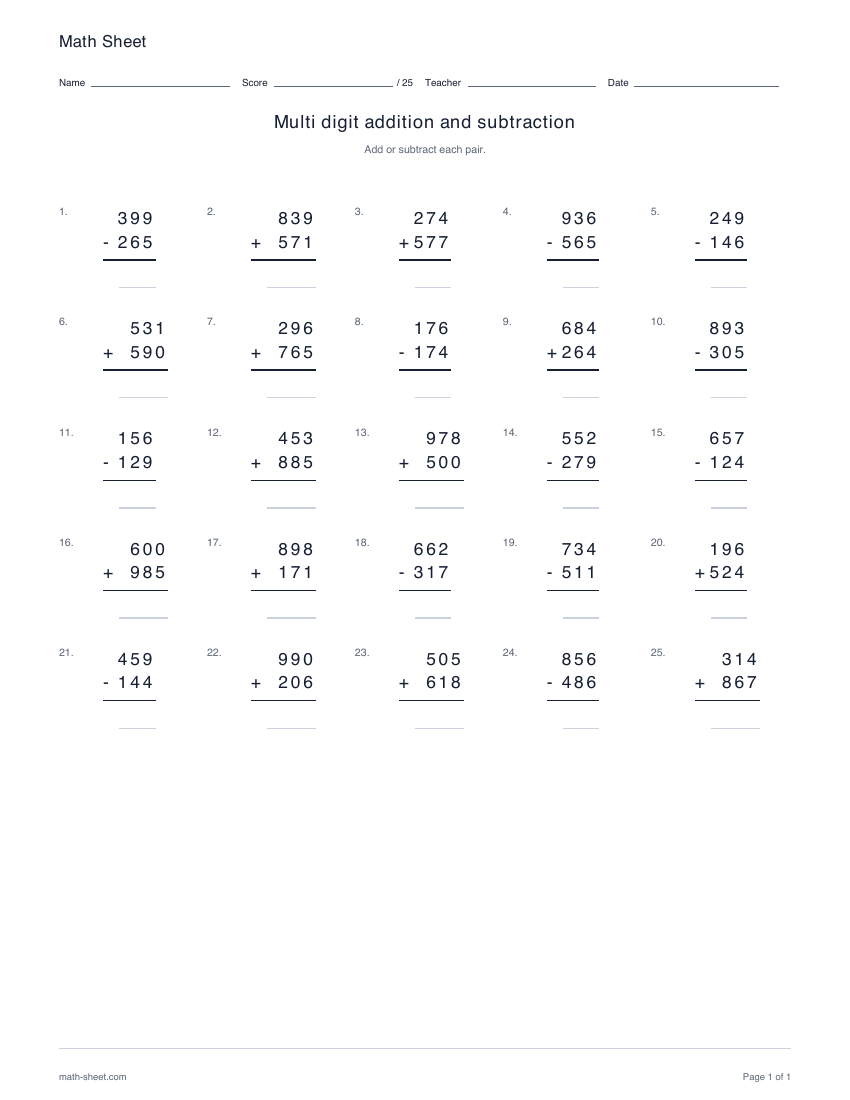
Mixed operations
Mix vertical addition and subtraction with two through six digits, including focused no-regrouping and borrowing-into-zero practice.
Preview and download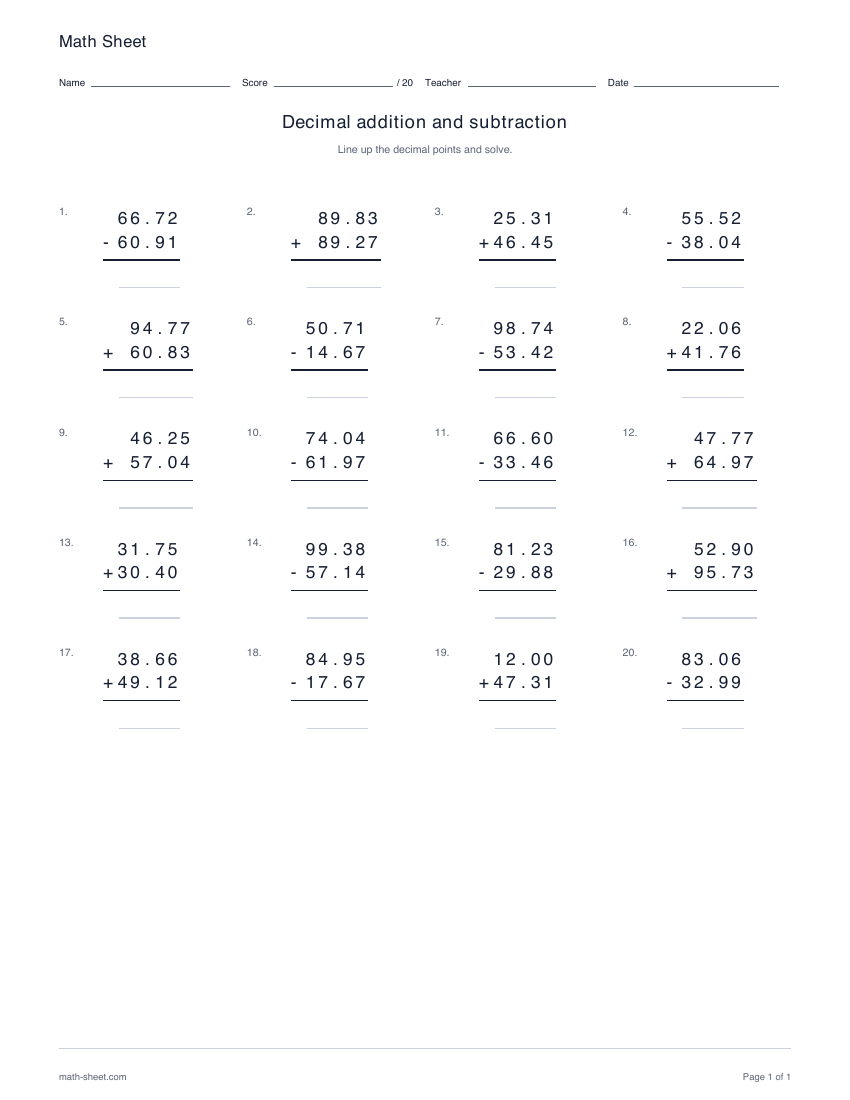
Mixed operations
Add and subtract exact fixed-place decimals with one to three fractional digits and up to four digits left of the decimal.
Preview and download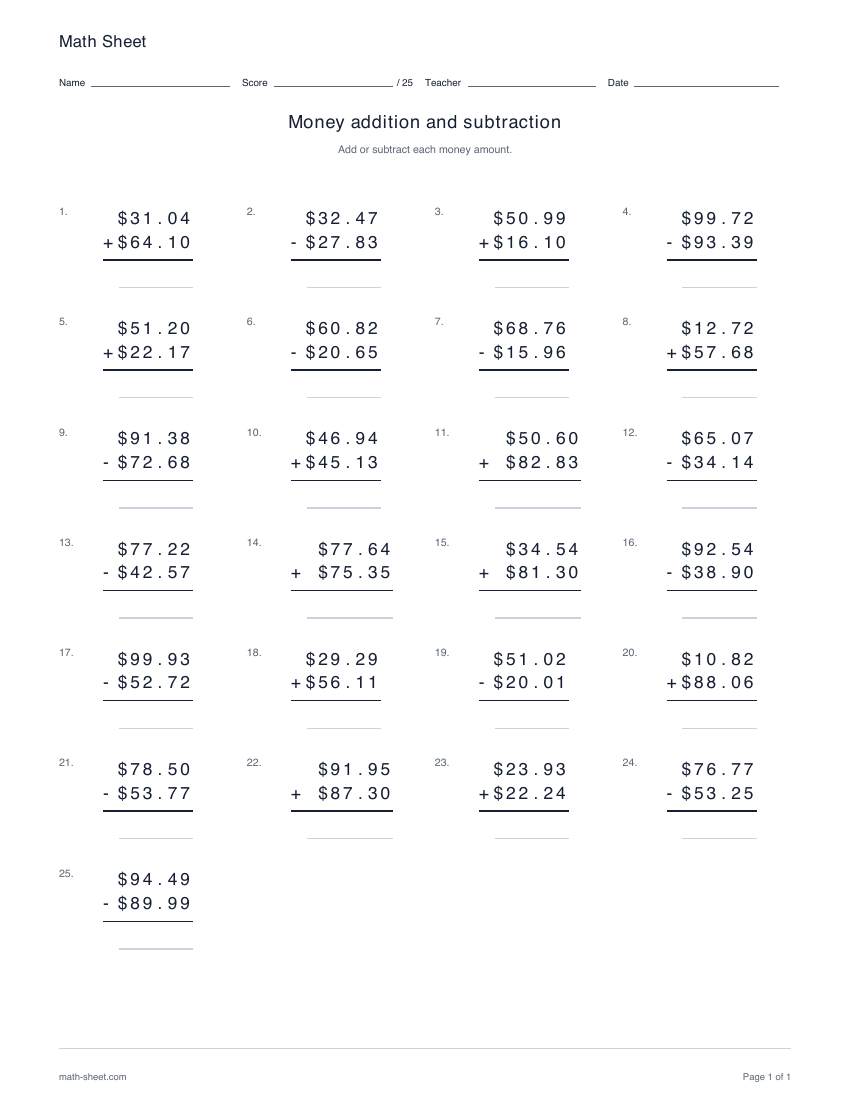
Mixed operations
Practice exact two-decimal arithmetic with dollar, pound, euro or yen symbols, including a genuine 25-problem option.
Preview and download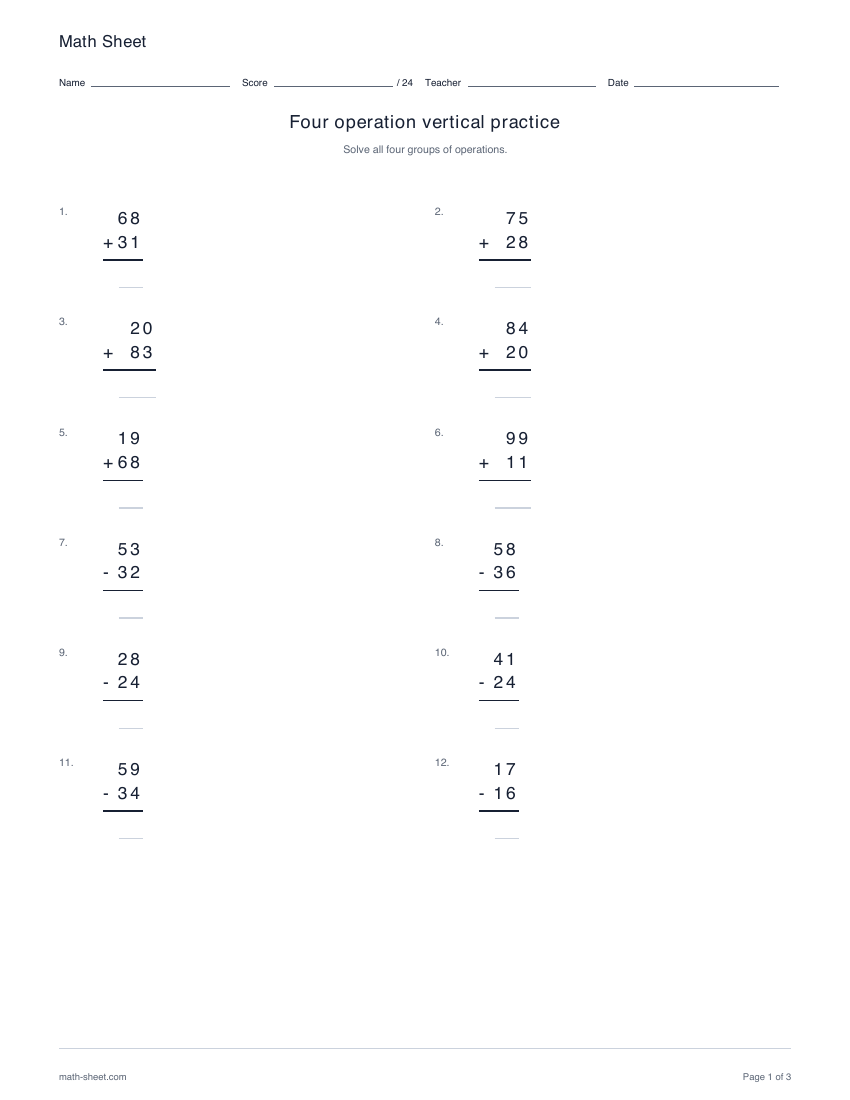
Mixed operations
Practice six problems per operation in one document, with independent digit widths, regrouping settings and long-division remainder options.
Preview and downloadChoose the next skill
Use equality, inverse operations and column constraints to recover what is missing.
Mixed operations
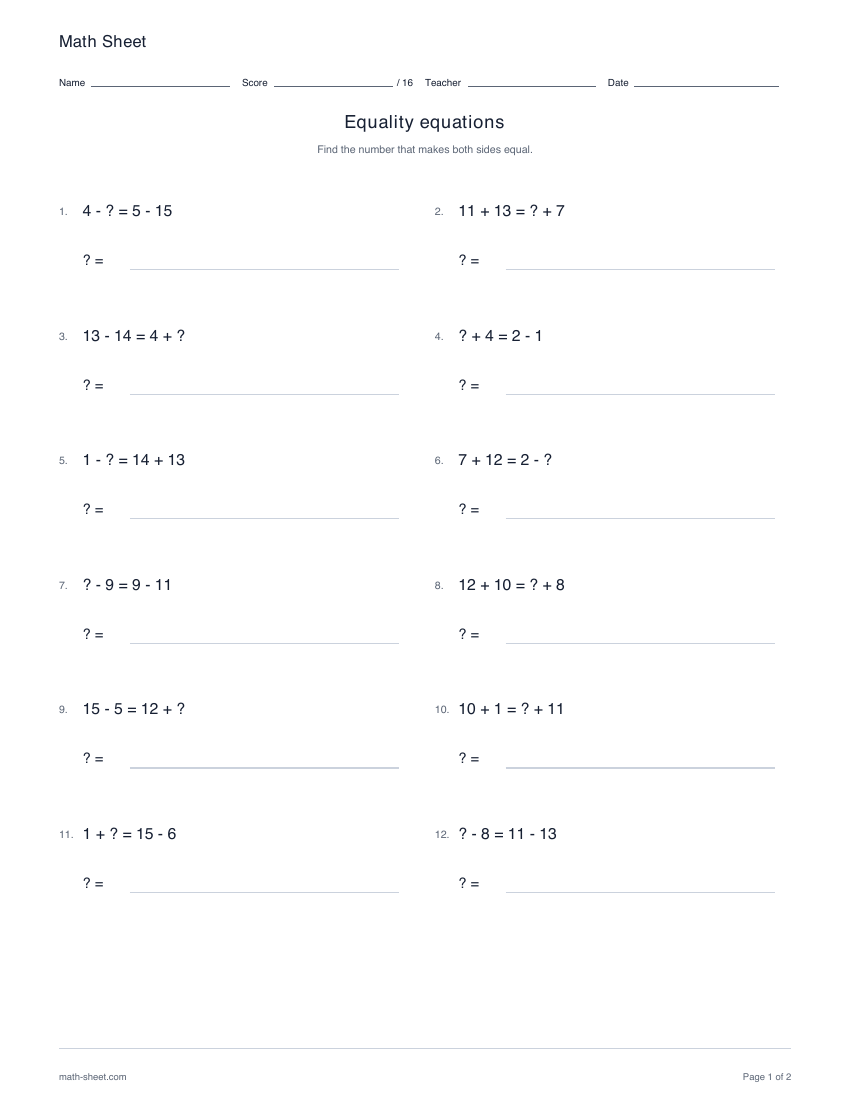
Find one missing number in equations with addition or subtraction on both sides. Select operation pairs and a band for the known numbers.
Preview and download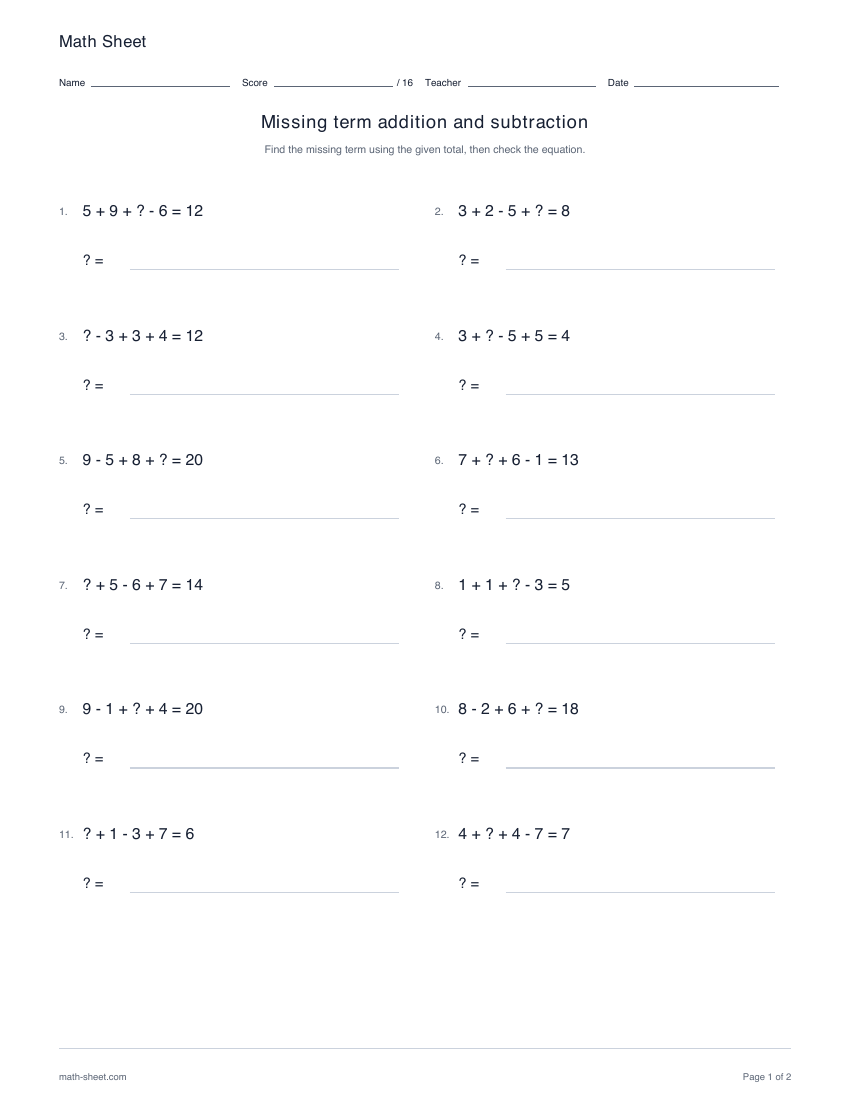
Mixed operations
Recover one missing term in a four-term expression containing two additions and one subtraction. Choose one-digit, two-digit or mixed terms.
Preview and download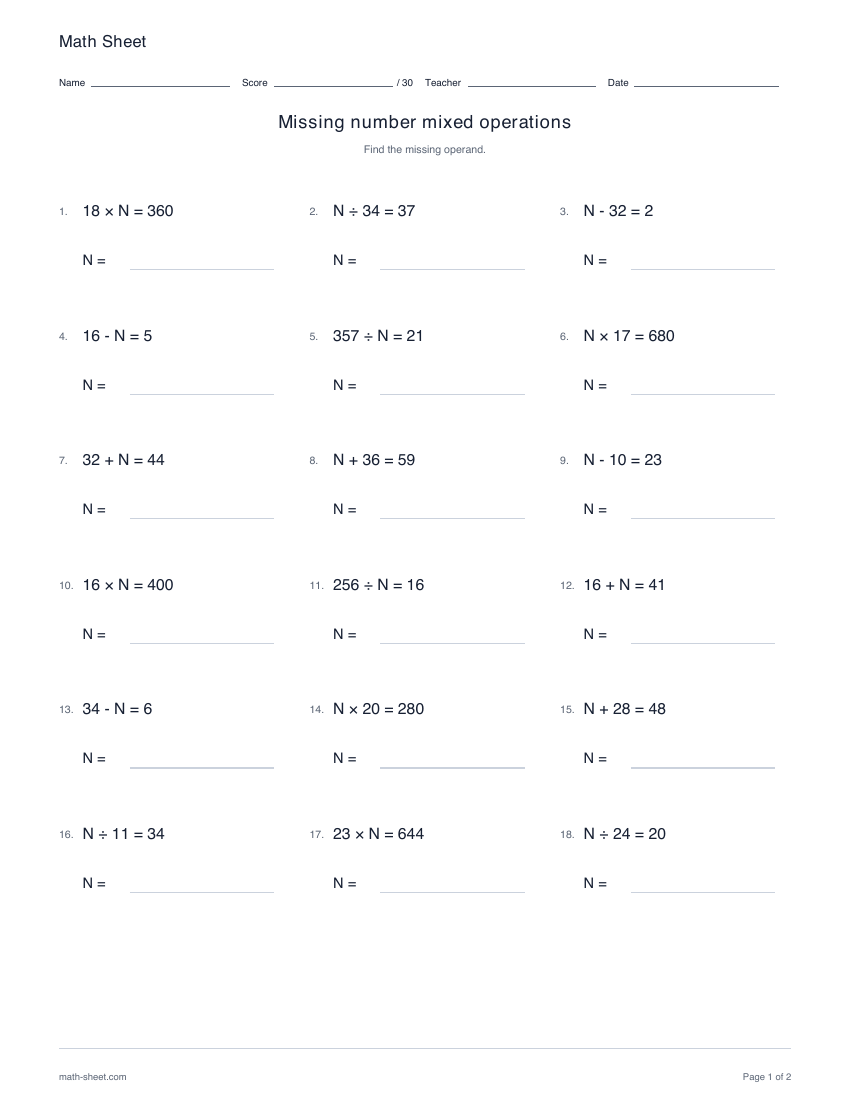
Mixed operations
Recover a missing operand in exact addition, subtraction, multiplication and division facts using a selected letter symbol.
Preview and download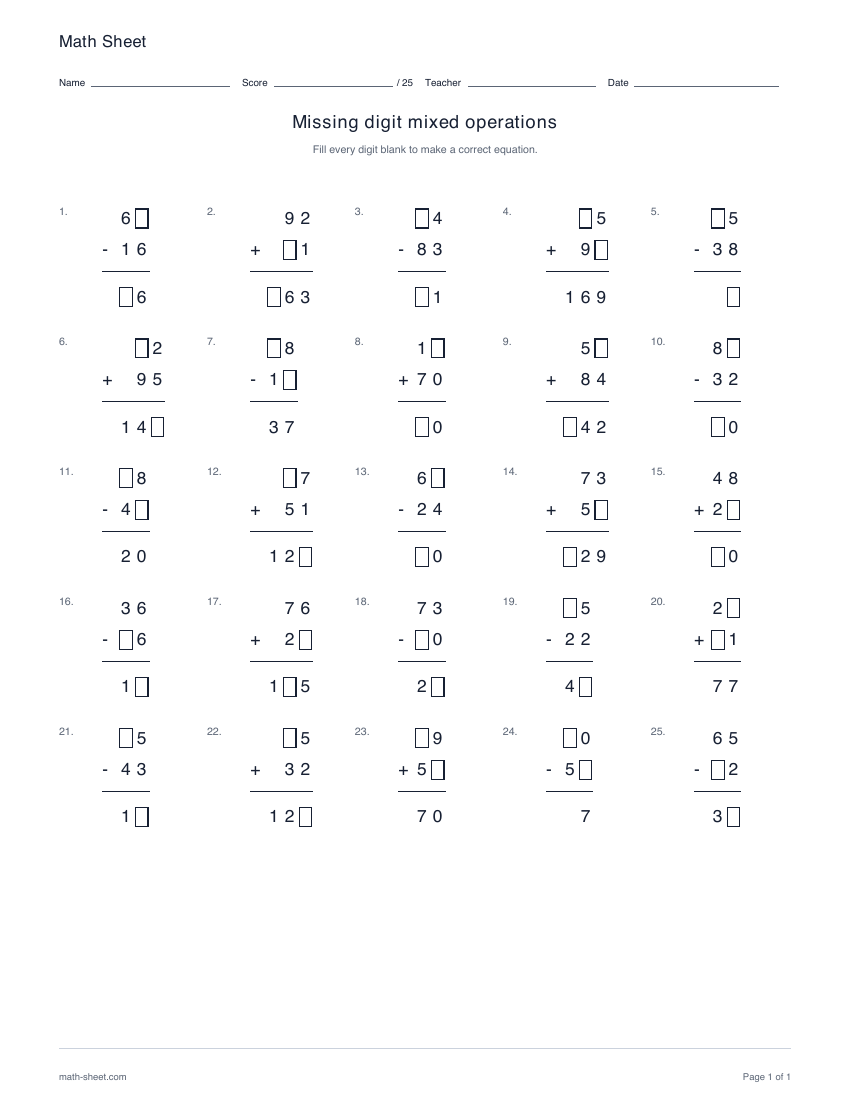
Mixed operations
Complete uniquely solvable digit blanks in two- to four-digit vertical addition and subtraction equations.
Preview and downloadChoose the next skill
Choose the correct rule when quantities include negative numbers, compound measurements or fractions.
Mixed operations
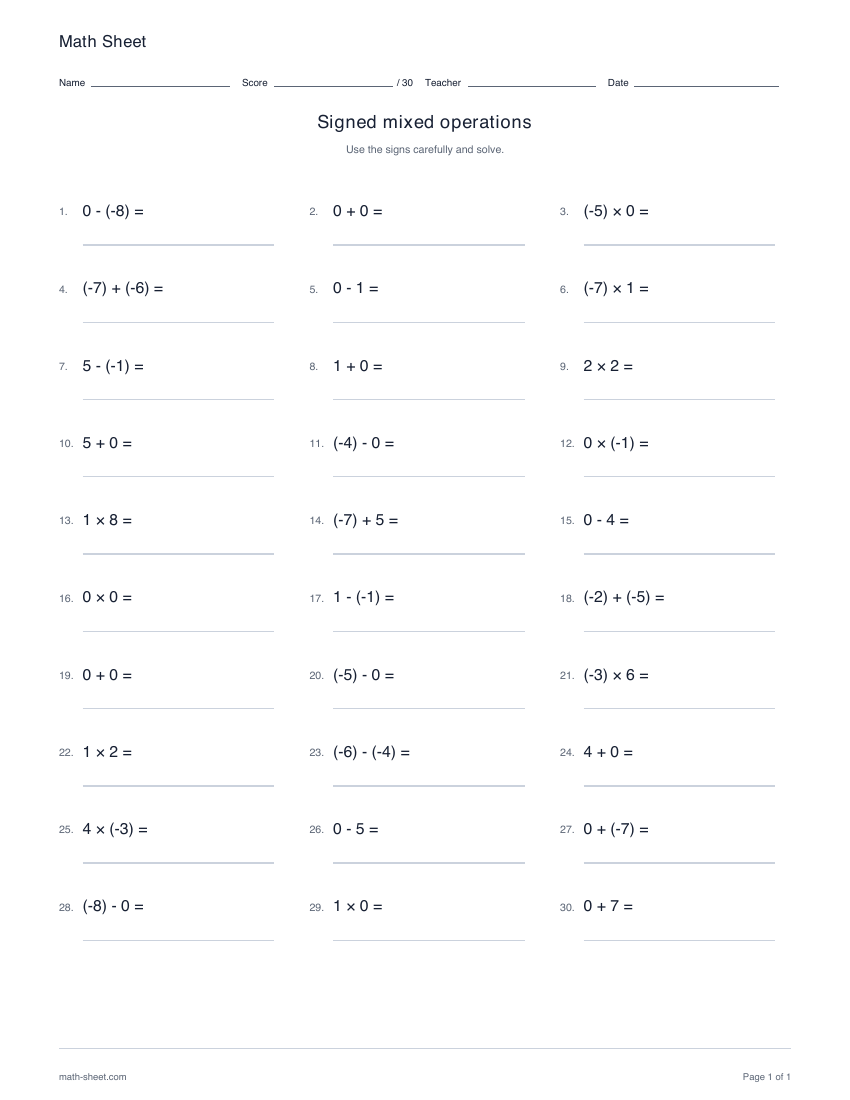
Mix addition, subtraction and multiplication with positive and negative integers, or opt into balanced exact division practice. Choose positive, mixed-sign, or two-negative operands.
Preview and download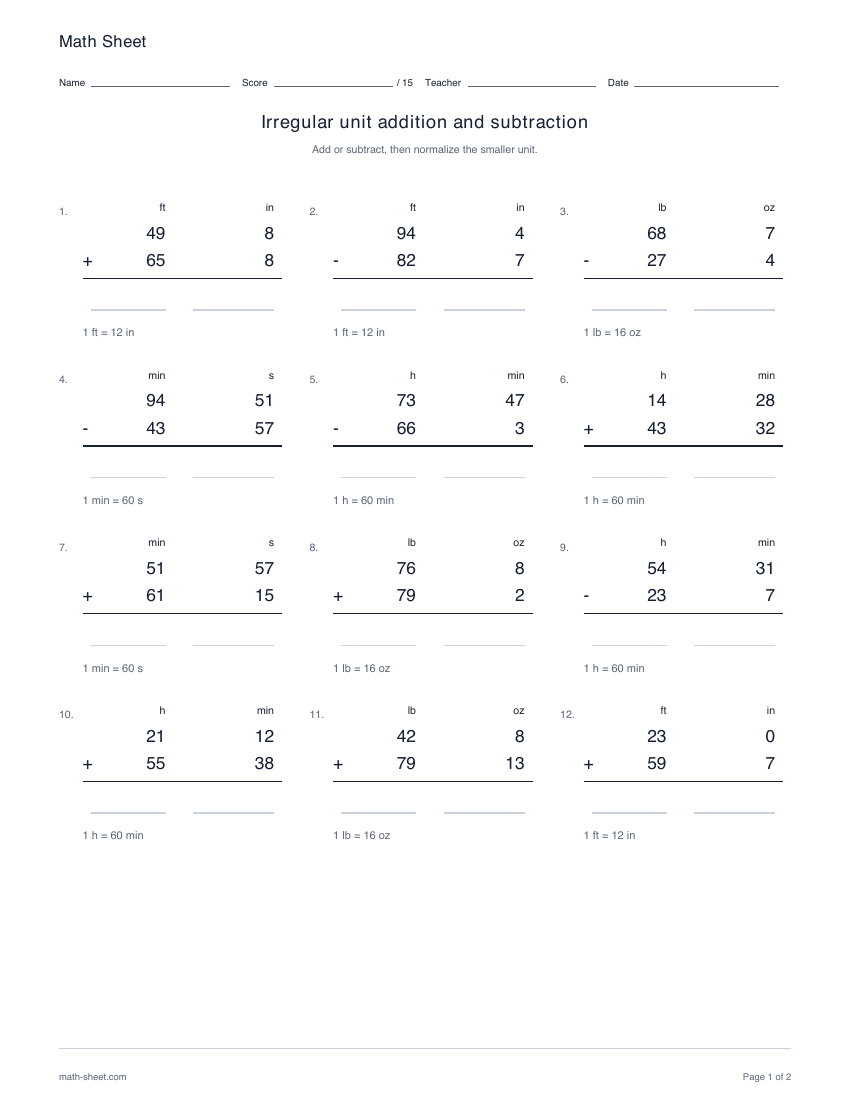
Mixed operations
Mix fifteen compound-measurement calculations using feet and inches, pounds and ounces, hours and minutes, or minutes and seconds.
Preview and download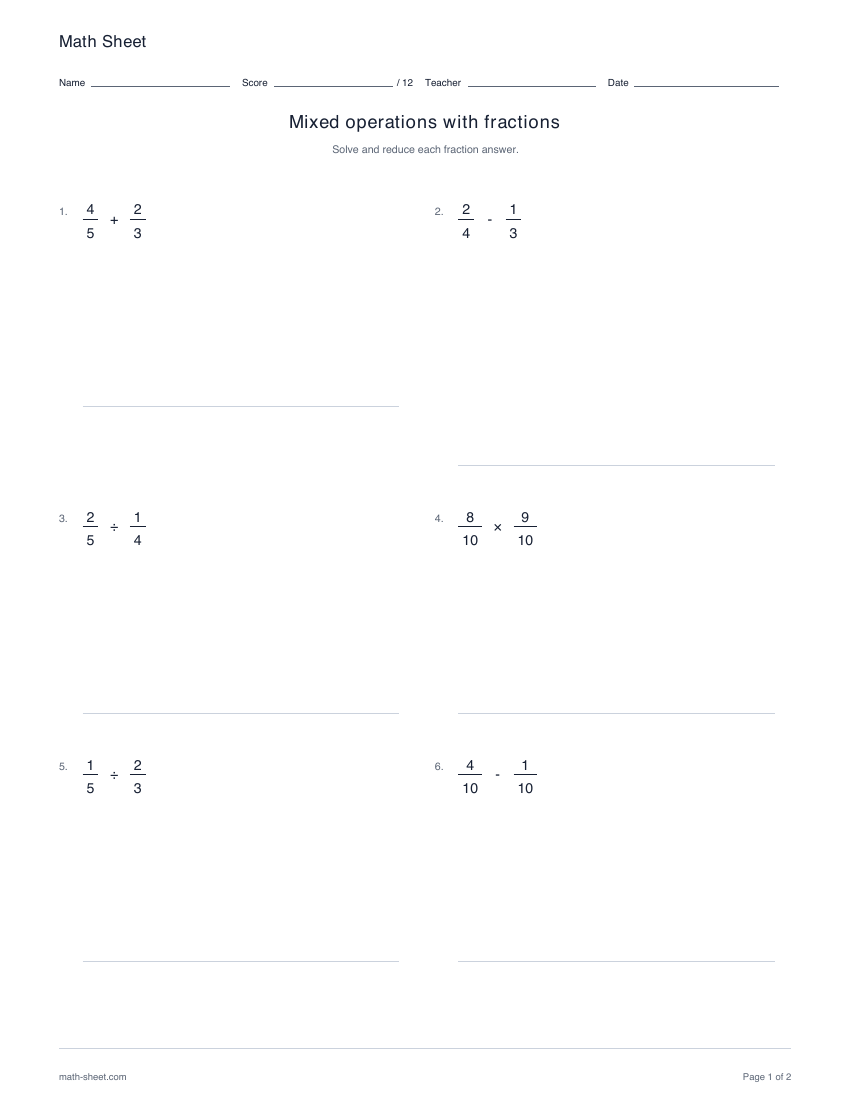
Mixed operations
Solve twelve proper-fraction problems, three per operation, with exact reduced answers and worked keys. Choose grouped or randomized operation order.
Preview and downloadChoose by readiness
After counting and joining or taking away are understood, a teacher can introduce a few mixed addition and subtraction questions. These starters use numbers from one to five, keeping sums within ten. Read each sign aloud and return to counters whenever the meaning is uncertain.
Use after one-to-one counting and joining/taking-away models are familiar. A teacher reads each sign; the selected pools keep sums within ten.
Open this supported starter →Try twelve supported problems after small addition and subtraction are understood. Keep counters available and read every operator aloud.
Open this supported starter →Digit pools and fact bounds describe the numbers used to build questions. Products and dividends may be larger. Equality bands apply to known operands; a missing answer can fall outside the band or be negative. Read the guidance on each activity before choosing a preset.
Choose by the learner’s current skills. Mixing operations adds the task of recognizing a sign before choosing a method, even when the individual numbers are familiar.
Two- through six-digit addition and subtraction share one page. The two borrowing-required options constrain subtraction only; choose no regrouping when neither carrying nor borrowing is wanted.
Use an untimed drill to establish that each selected operation is understood. Add a short time goal only when it helps the learner practice familiar facts. For multi-digit calculations, give the written method enough attention and space rather than treating every task as a speed test.
Fraction rules and compound-unit conversions deserve their own preparation: a common denominator is useful for adding fractions, while minutes regroup in sixties, not tens.