
Multiplication
Multiplication arrays
Count structured rows and columns in original shape arrays and connect each arrangement to a multiplication equation.
Preview and downloadConnect multiplication and division
Begin with arrays and equal groups, connect those models to multiplication and division facts, then add short fluency practice when the facts make sense.
This is a selected collection of multiplication, division and time activities for a familiar English Grade 3 learning stage. It is not a complete Grade 3 curriculum or a standards-alignment claim. Choose activities by the learner’s readiness.
Name the rows and columns, then explain how their equal groups give the total.
Use charts, fact patterns and related products to reason about unfamiliar facts.
Use optional timing only after the learner can solve the selected facts accurately and explain a strategy.
The 11 multiplication activities below build this focused path; 4 related division activities extend it. The full multiplication library also includes decimal, money and multi-digit work for learners who need a different next step.
Step 1 · See the groups
Start here when multiplication is new. Ask the learner to point to one row, state how many objects are in each row, and count the total before writing an equation.
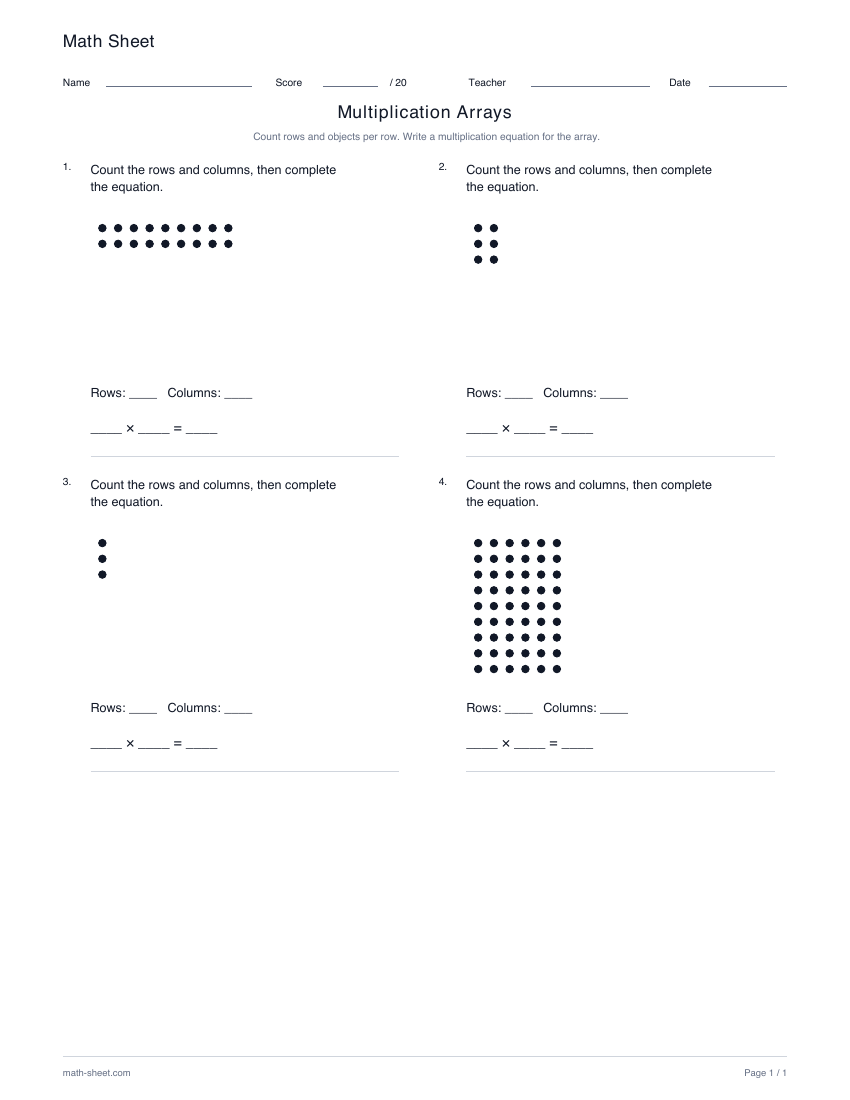
Multiplication
Count structured rows and columns in original shape arrays and connect each arrangement to a multiplication equation.
Preview and download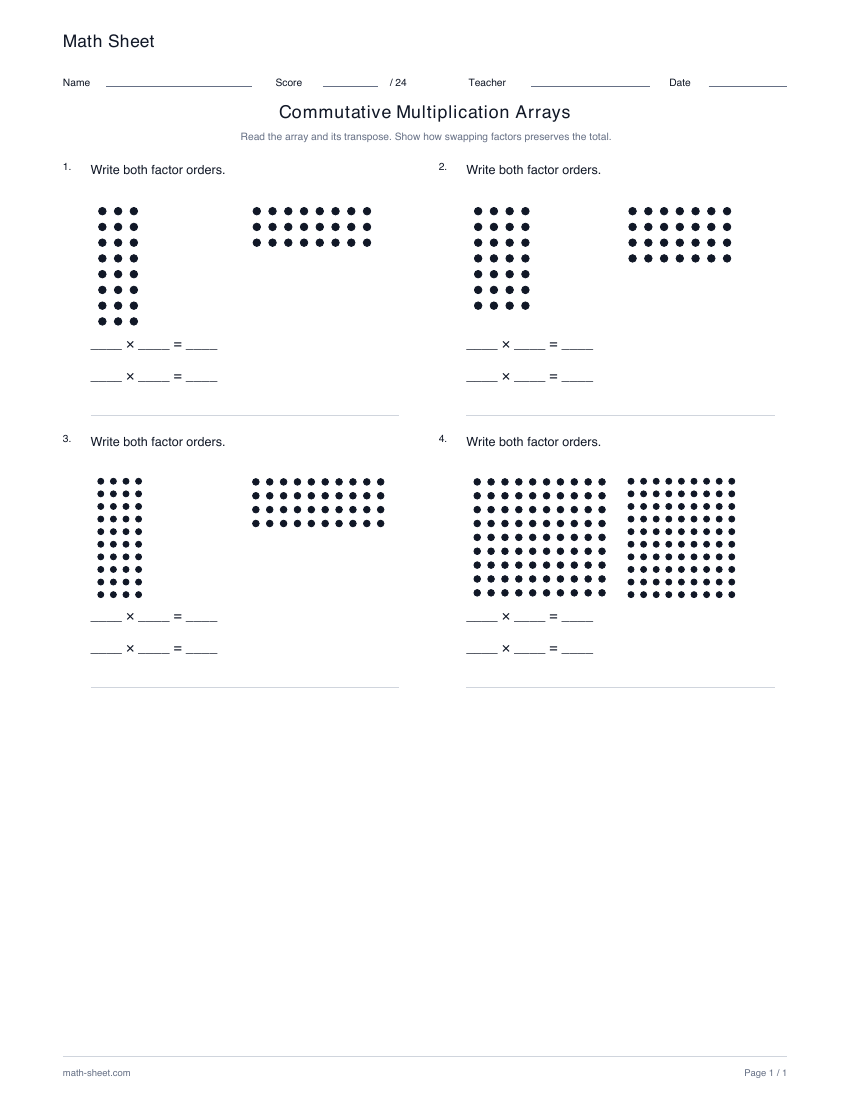
Multiplication
Compare an array with its turned orientation to show that reversing the factors preserves the total number of objects.
Preview and download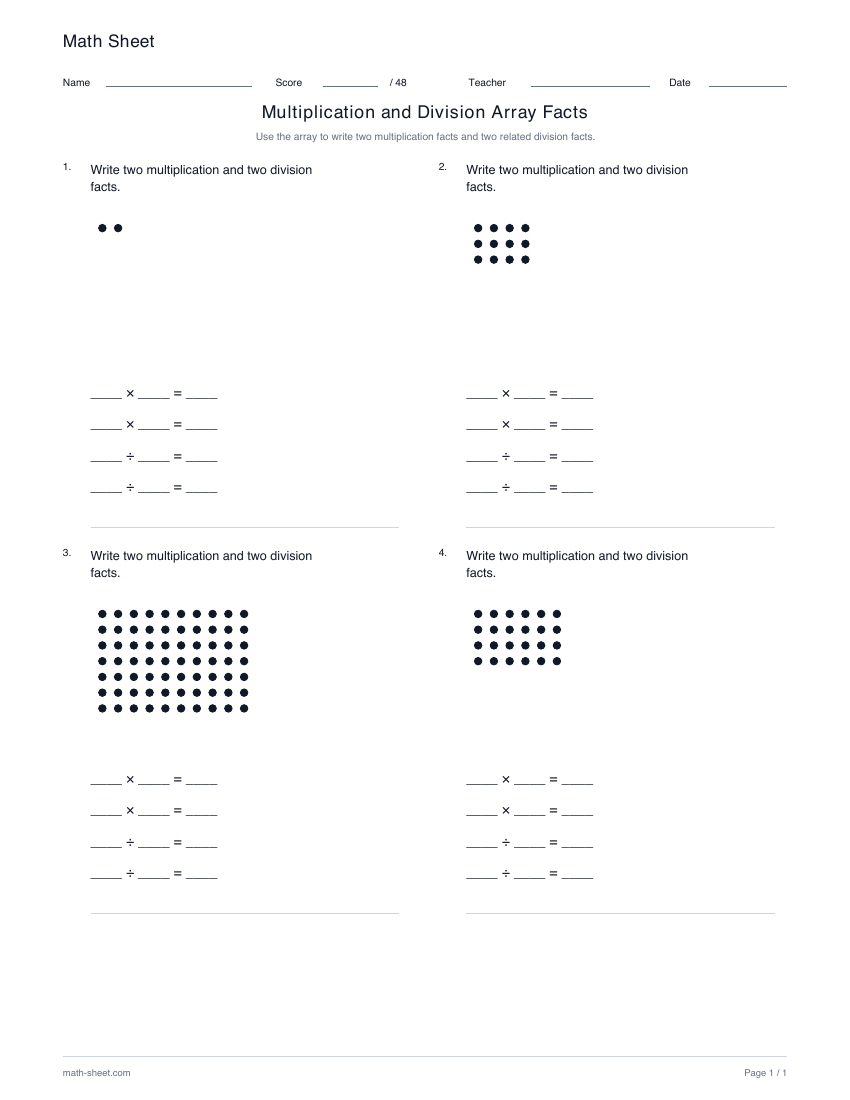
Multiplication
Use one rectangular array to write two multiplication equations and two related division equations.
Preview and download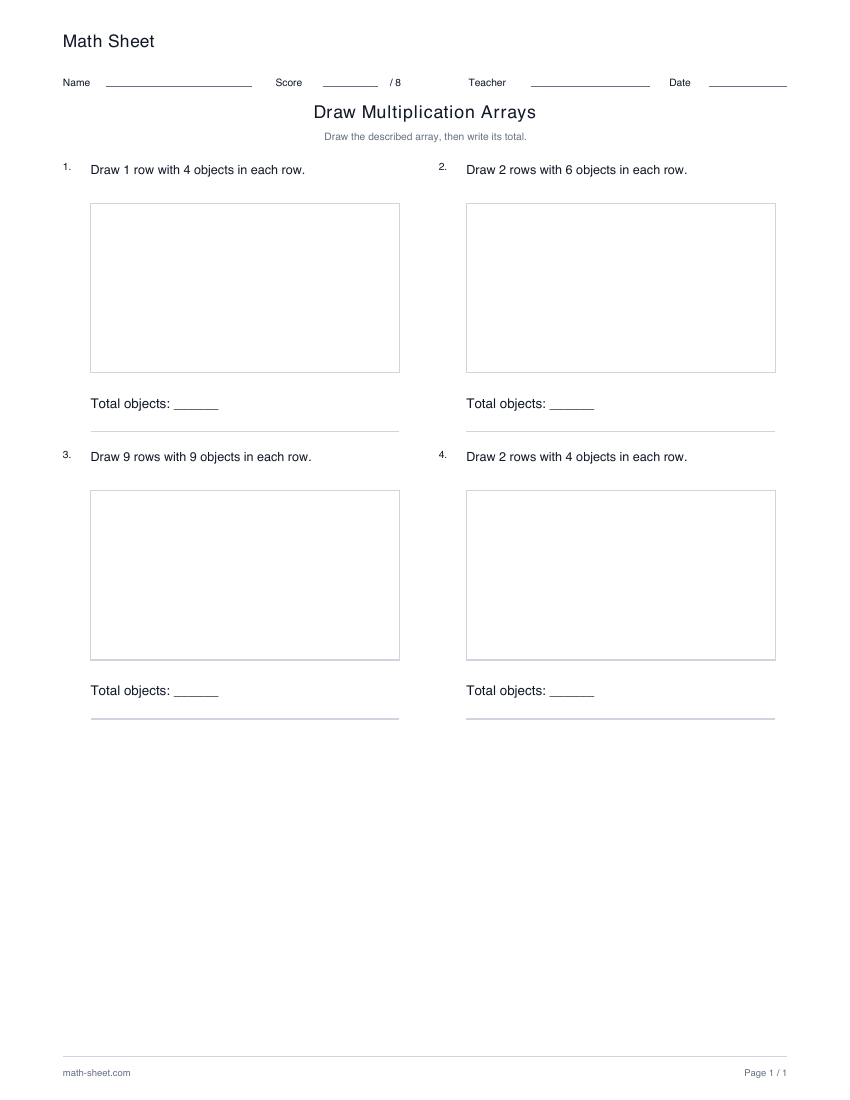
Multiplication
Create a rectangular array for given row and column counts, then label the model with its equation and product.
Preview and download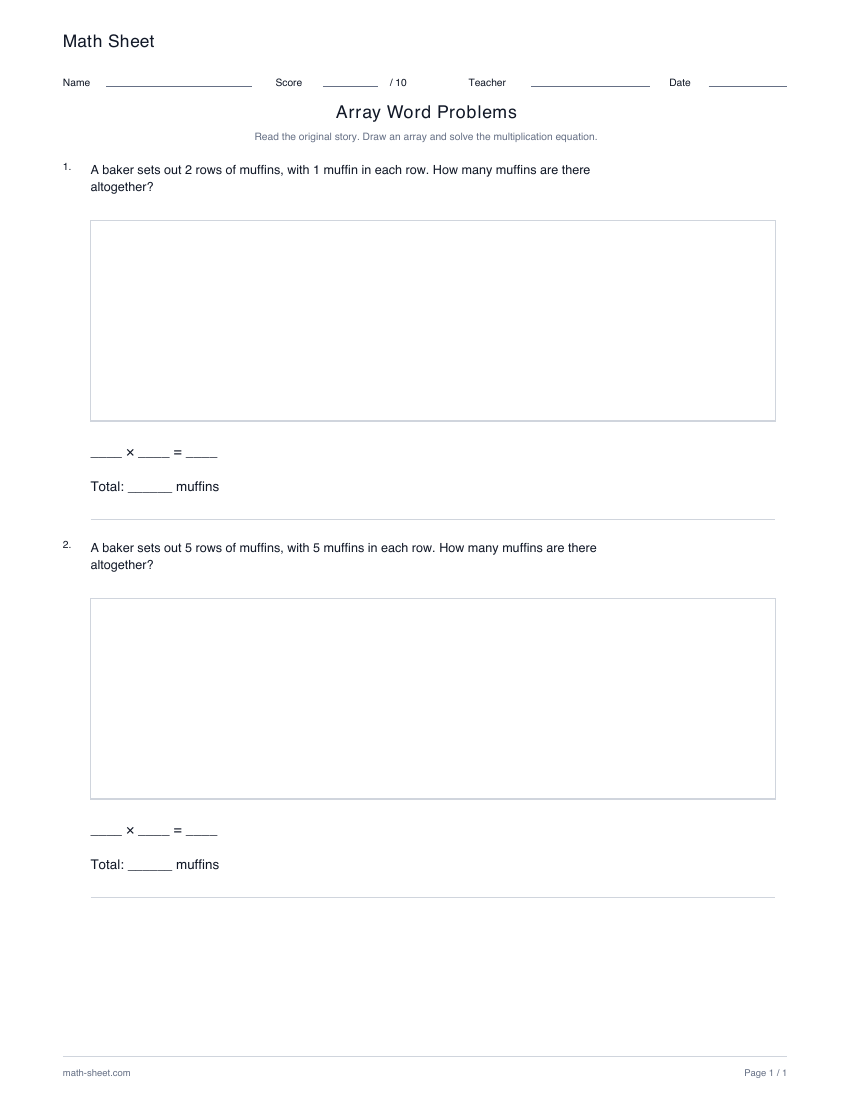
Multiplication
Translate original equal-row stories into arrays, multiplication equations, and answers with consistent real-world units.
Preview and downloadStep 2 · Build connections
Move here when arrays are familiar. Encourage a known fact, a nearby fact, or skip counting as a check instead of treating every product as an isolated answer.
Multiplication
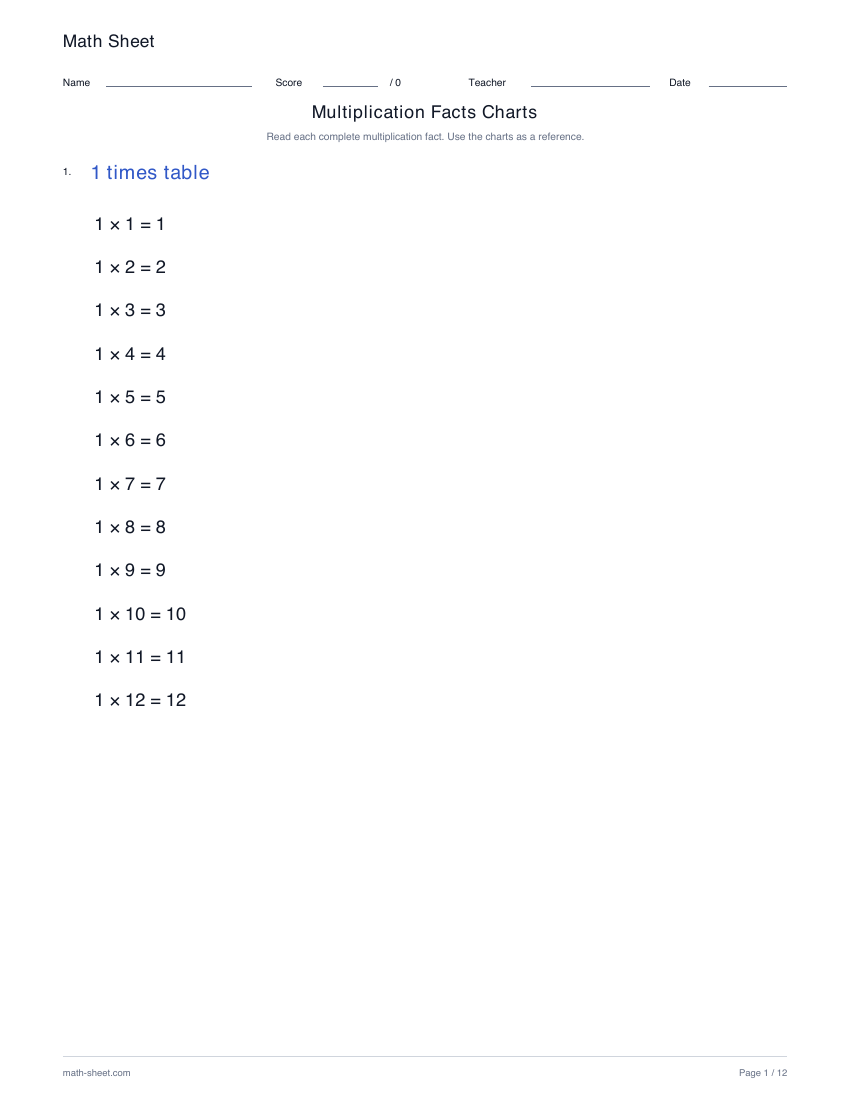
Read selected multiplication fact families on a printable reference chart and use nearby products to explain useful fact patterns.
Preview and download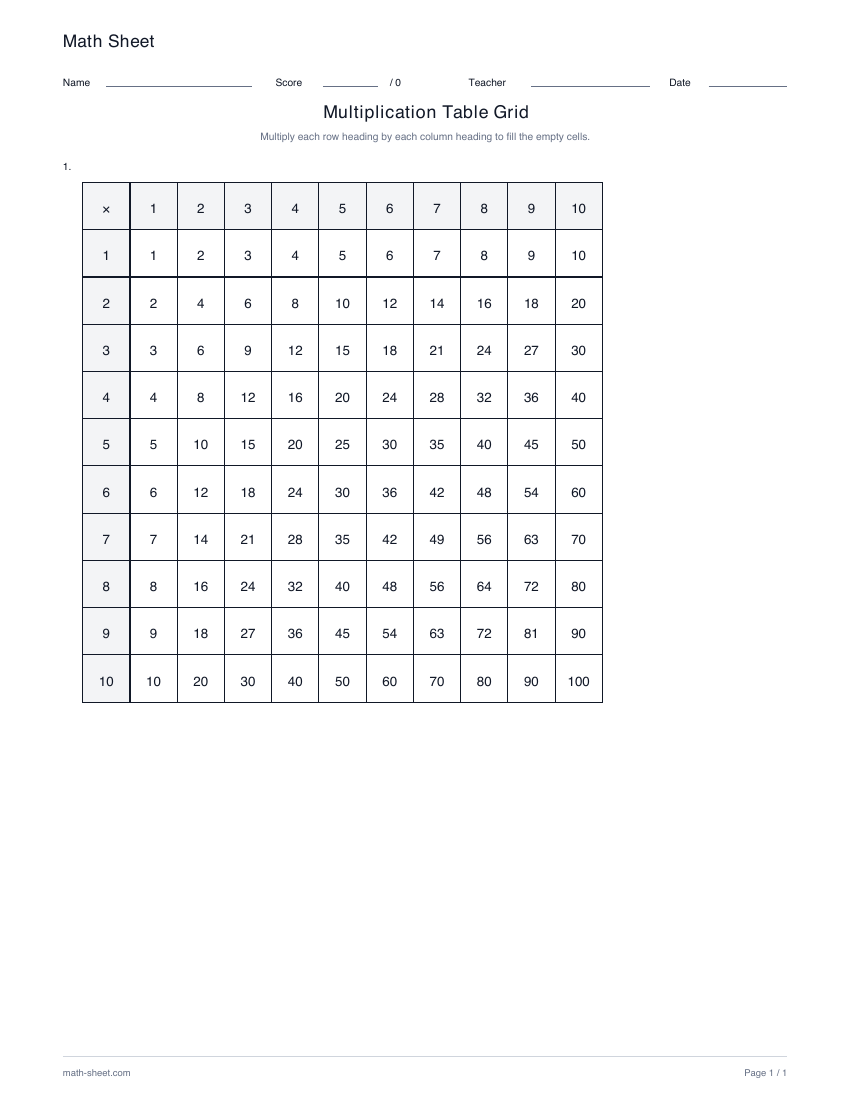
Multiplication
Complete a two-way multiplication grid for selected row and column factors, with optional blanks for focused recall practice.
Preview and download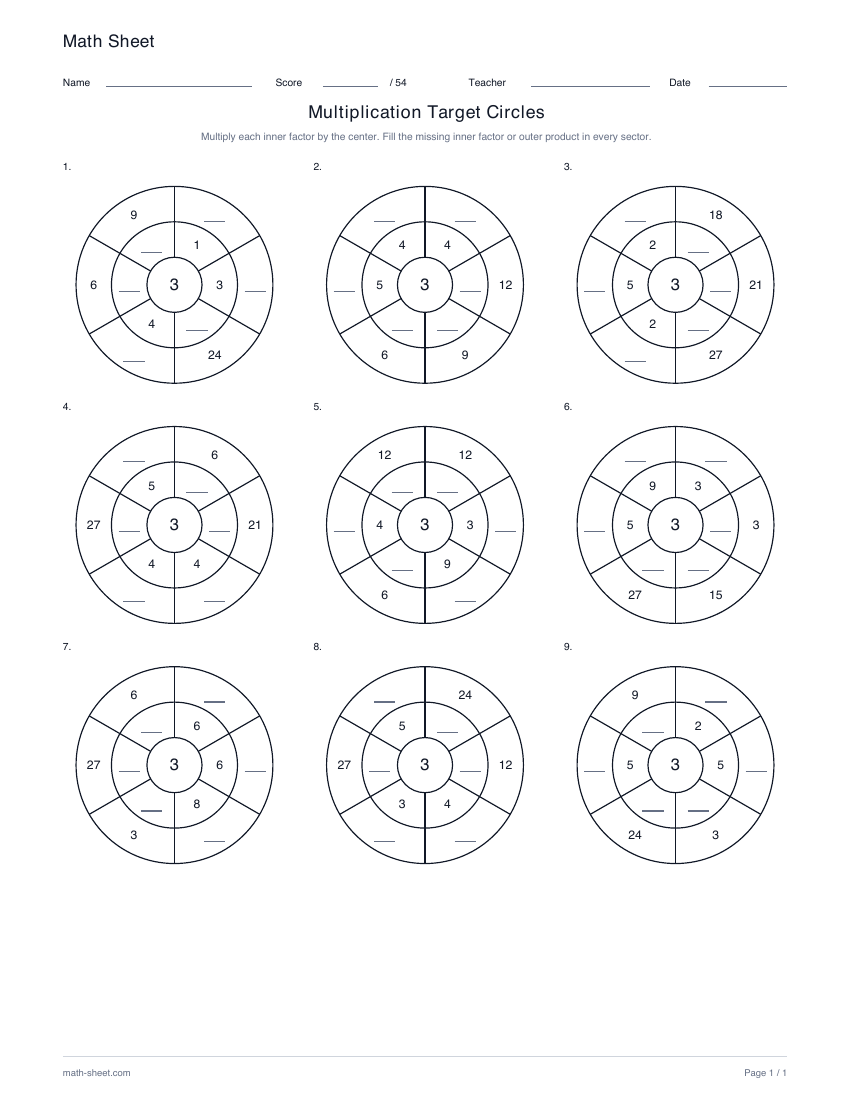
Multiplication
Solve six related facts around a known center factor, alternating between missing inner factors and missing products.
Preview and download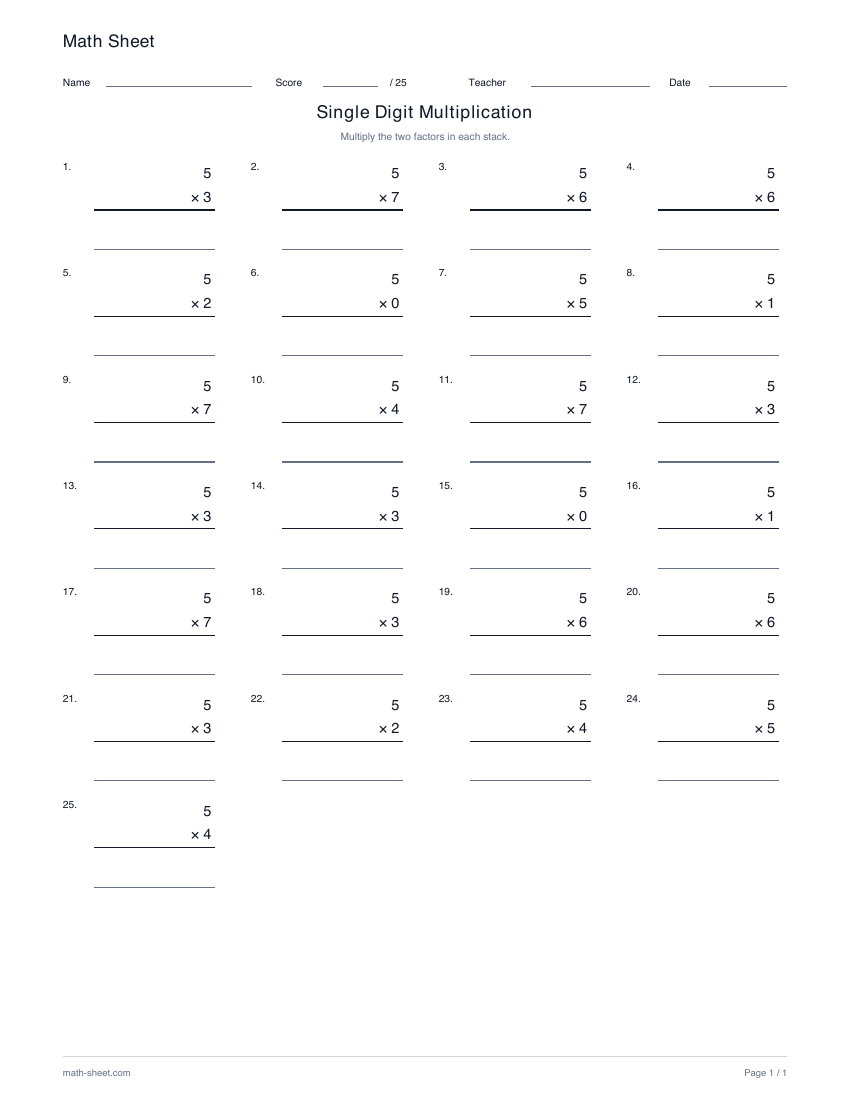
Multiplication
Practice selected single-digit factors in vertical form with space to record each product and check it with a known strategy.
Preview and download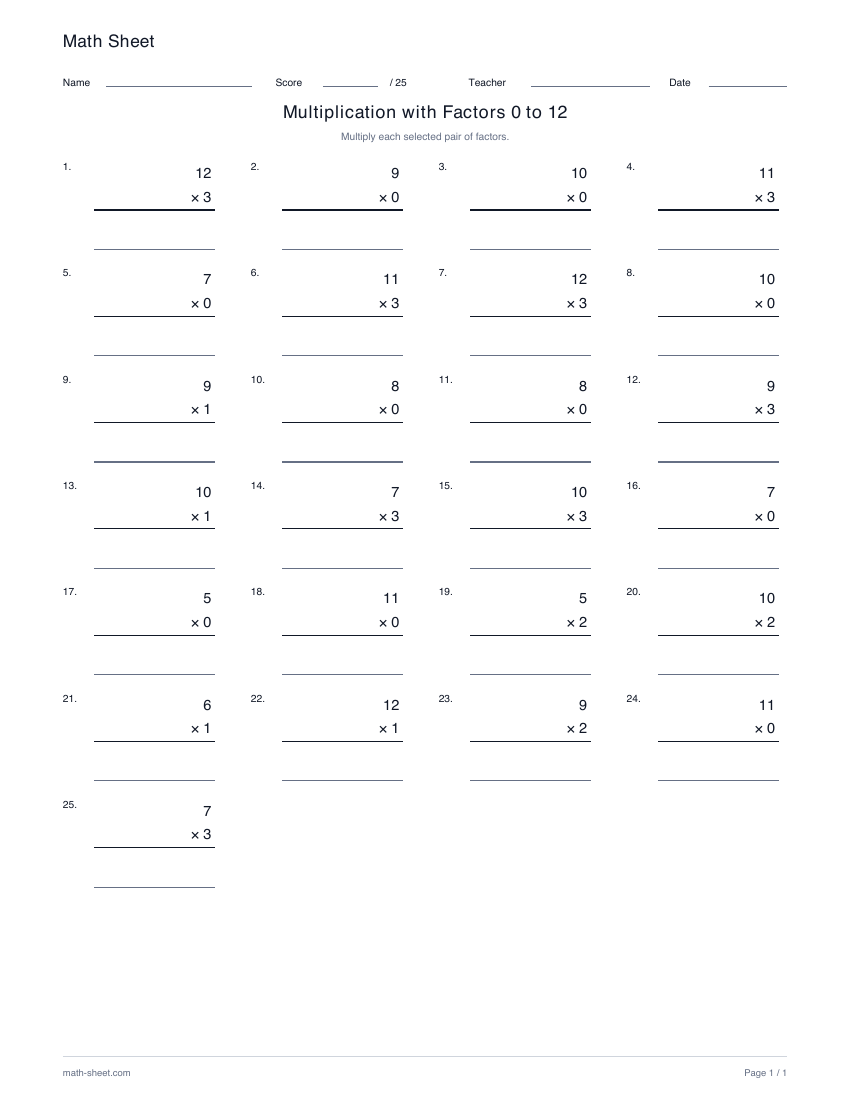
Multiplication
Multiply factors selected from zero through twelve, including zero, identity, square, and upper-table facts on one configurable page.
Preview and downloadStep 3 · Optional practice
Accuracy comes first. Timing can record progress with already understood facts. Finish missed items without a timer, discuss a strategy, and narrow the next set if errors increase.
Multiplication
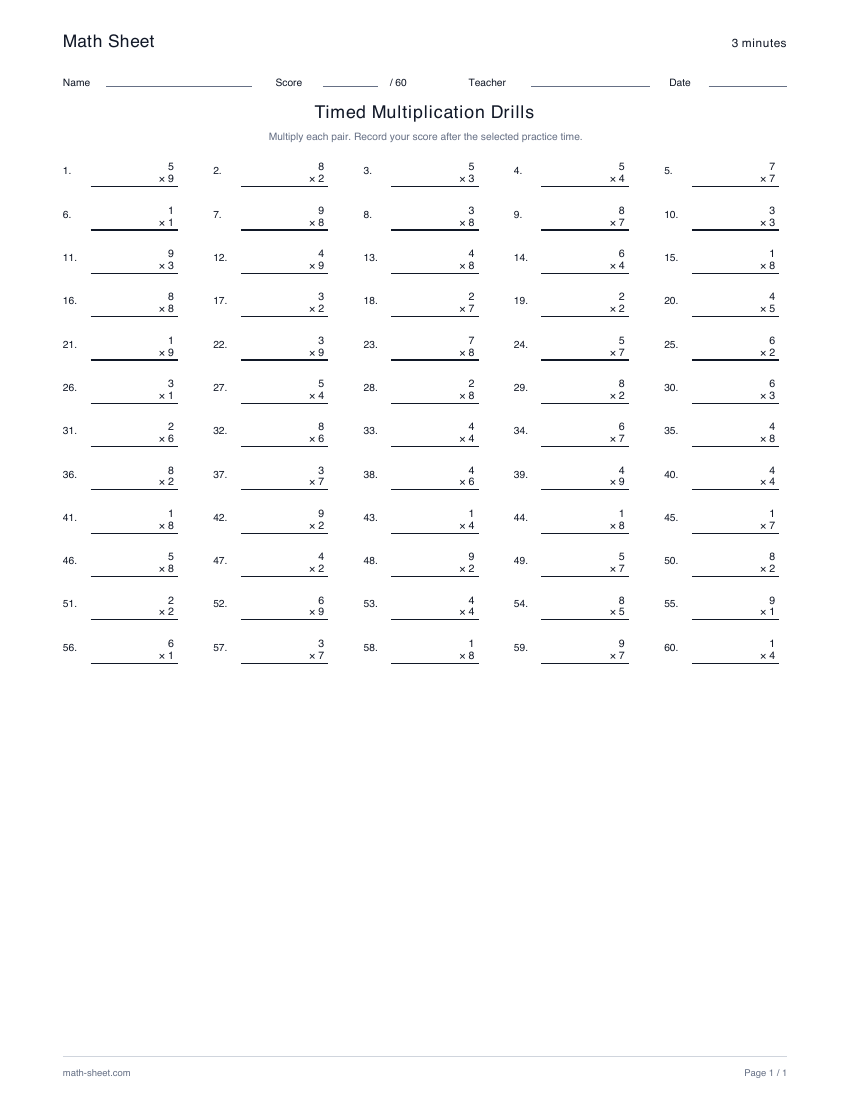
Practice already understood multiplication facts in short one-, three-, or five-minute formats with an optional timing label.
Preview and downloadConnect the operations
If 6 × 4 = 24, then 24 ÷ 6 = 4. Ask the learner to explain what the total and the group size mean before using a timed sheet.
Division
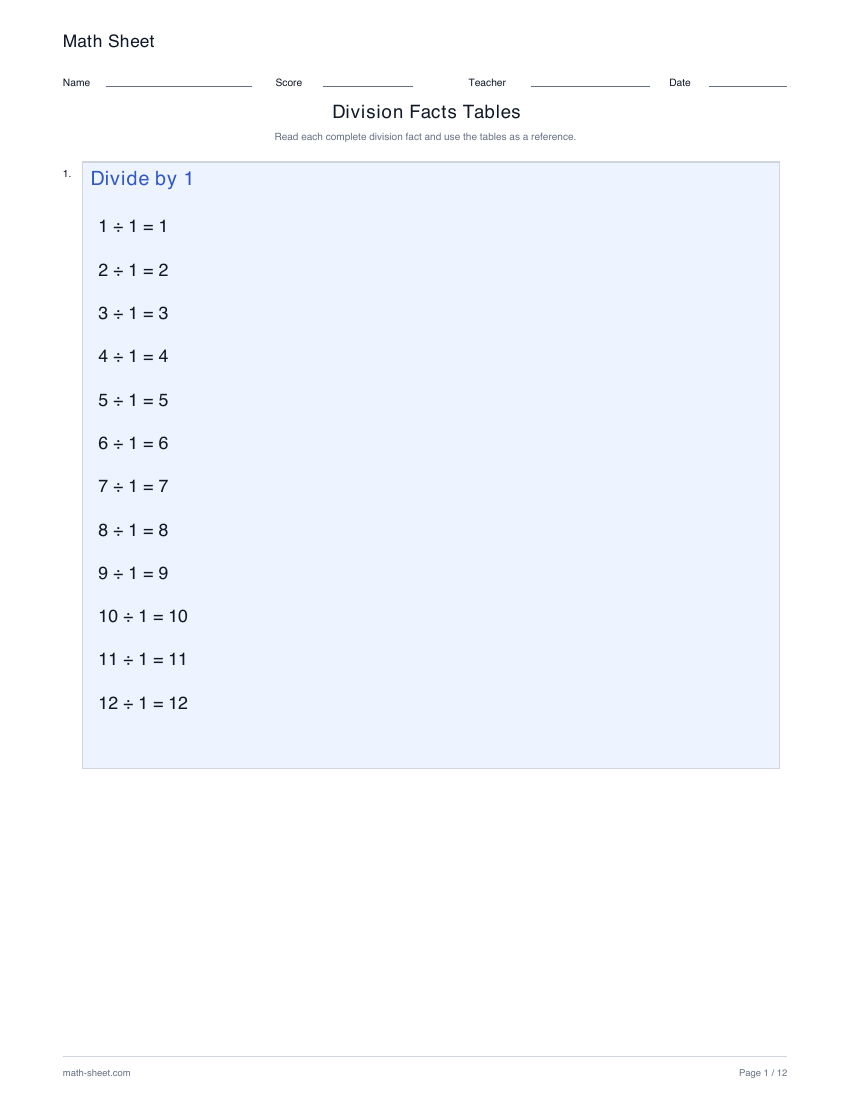
Read completed division tables for 1 through 12 as a reference for equal groups and the inverse relationship with multiplication.
Preview and download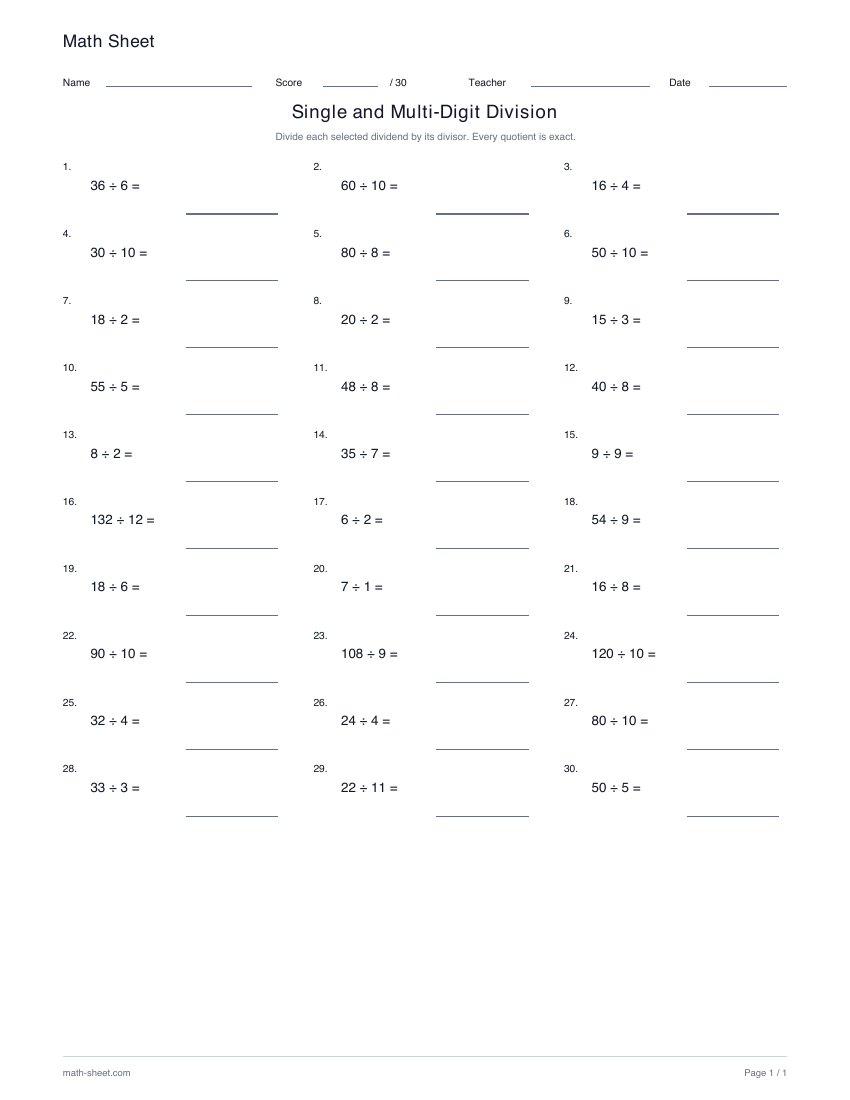
Division
Build exact division practice by selecting divisor and quotient values from 1 through 12, with dividends determined by their products.
Preview and download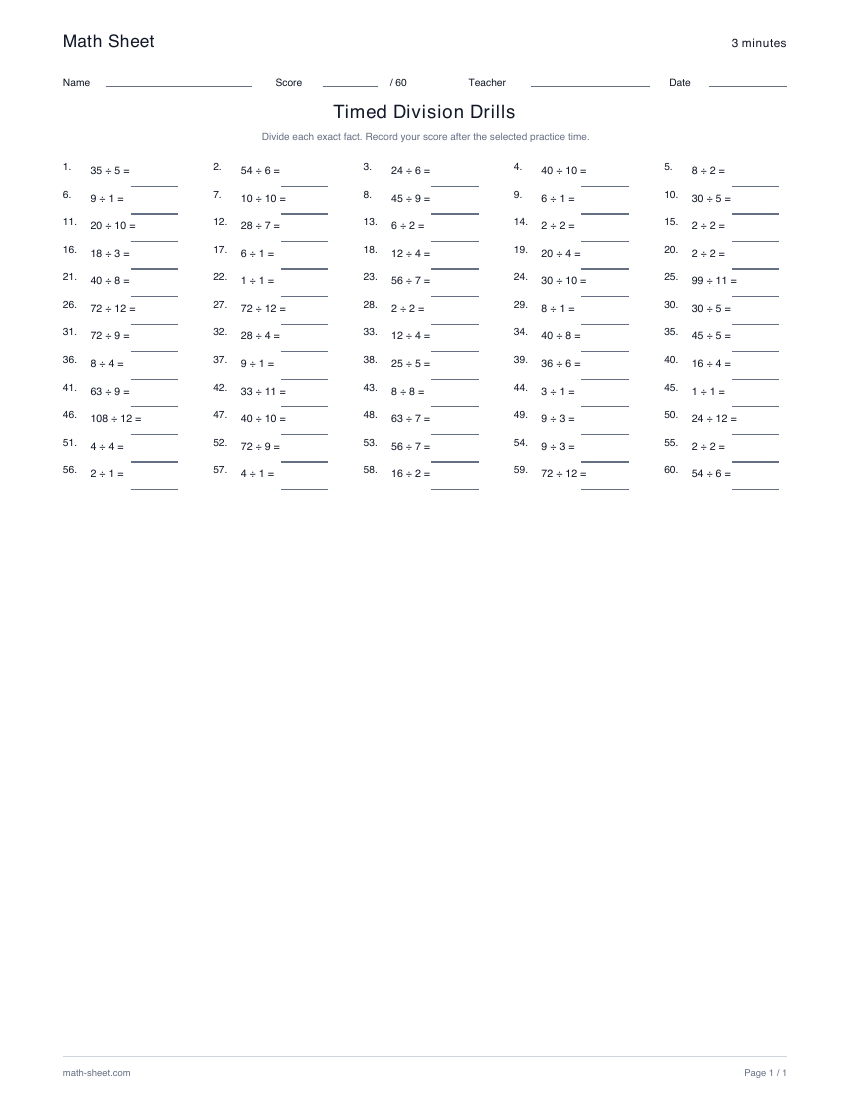
Division
Practice familiar division facts in a timed format with a selected answer range, then use mistakes to guide the next untimed review.
Preview and download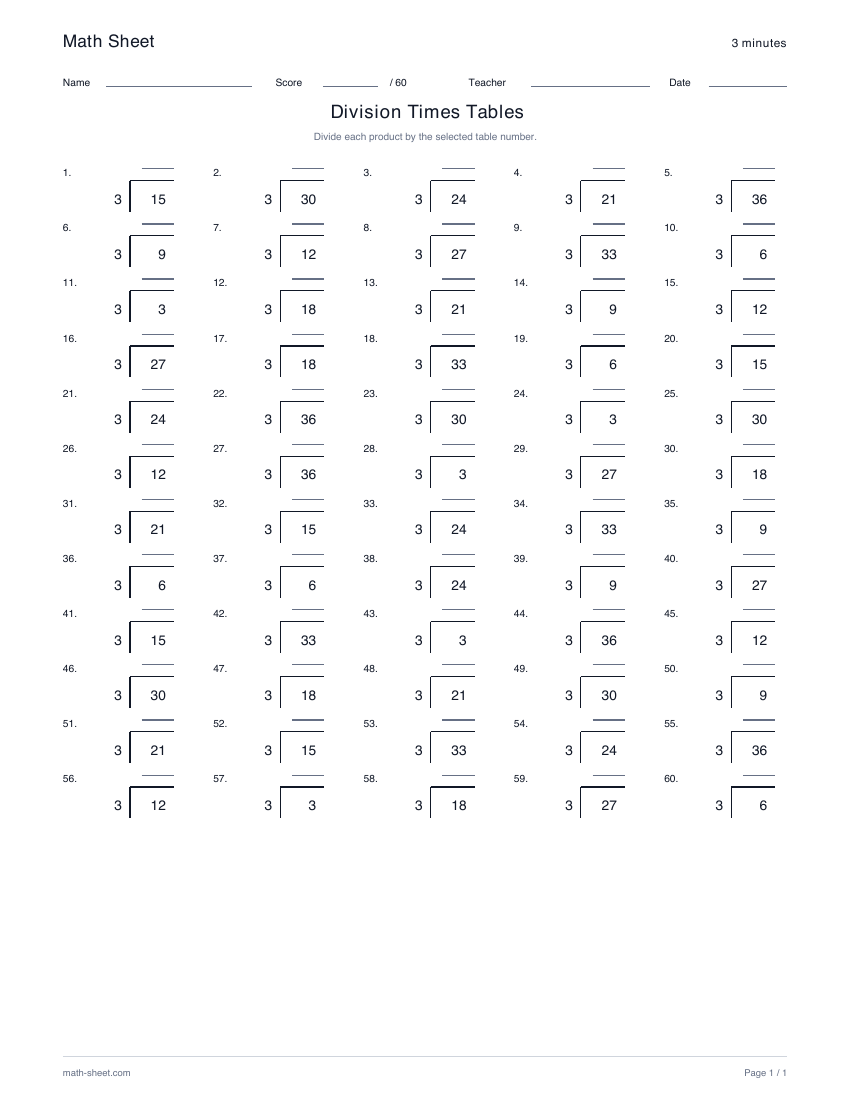
Division
Focus a division drill on one selected divisor and use its multiplication table to recover each quotient.
Preview and downloadTime and duration
Read clocks confidently before finding an interval. Use a timeline to cross the next hour, and check AM/PM and any next-day labels. Larger ranges are optional extensions.
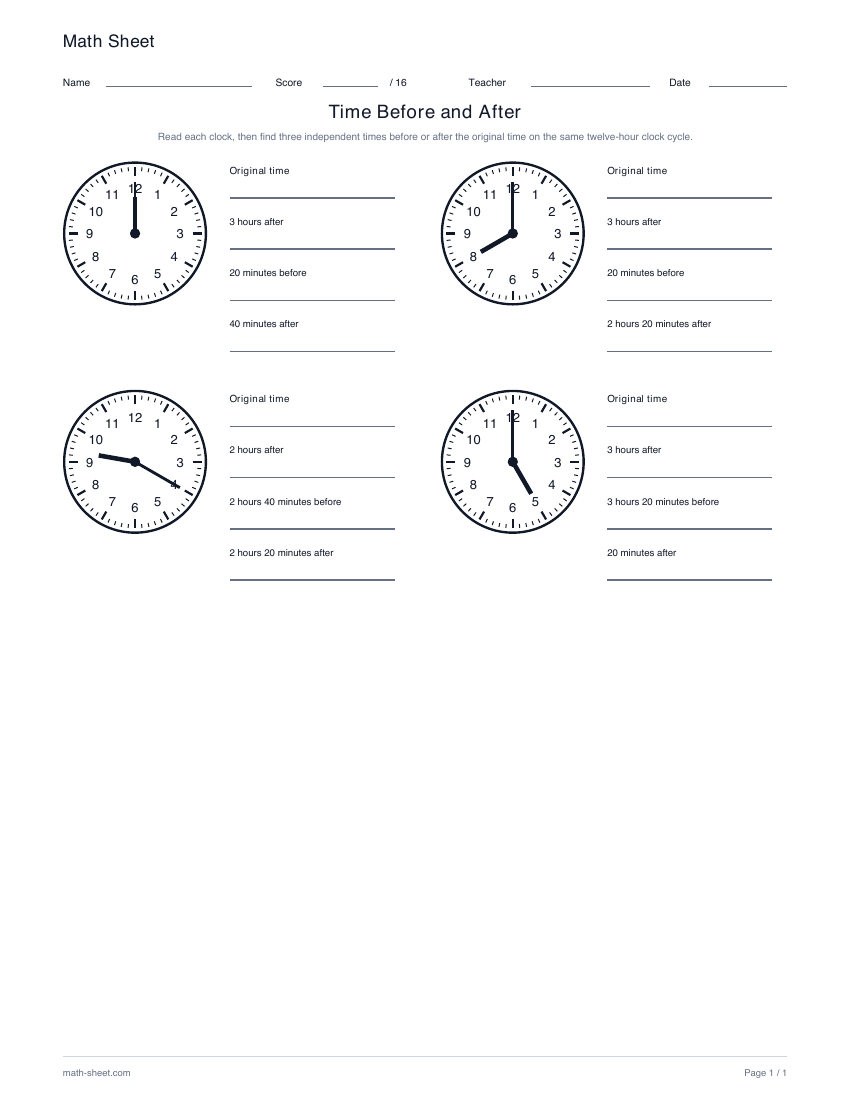
Time
Read an original clock, then find times before or after it using separate hour-and-minute offsets.
Preview and download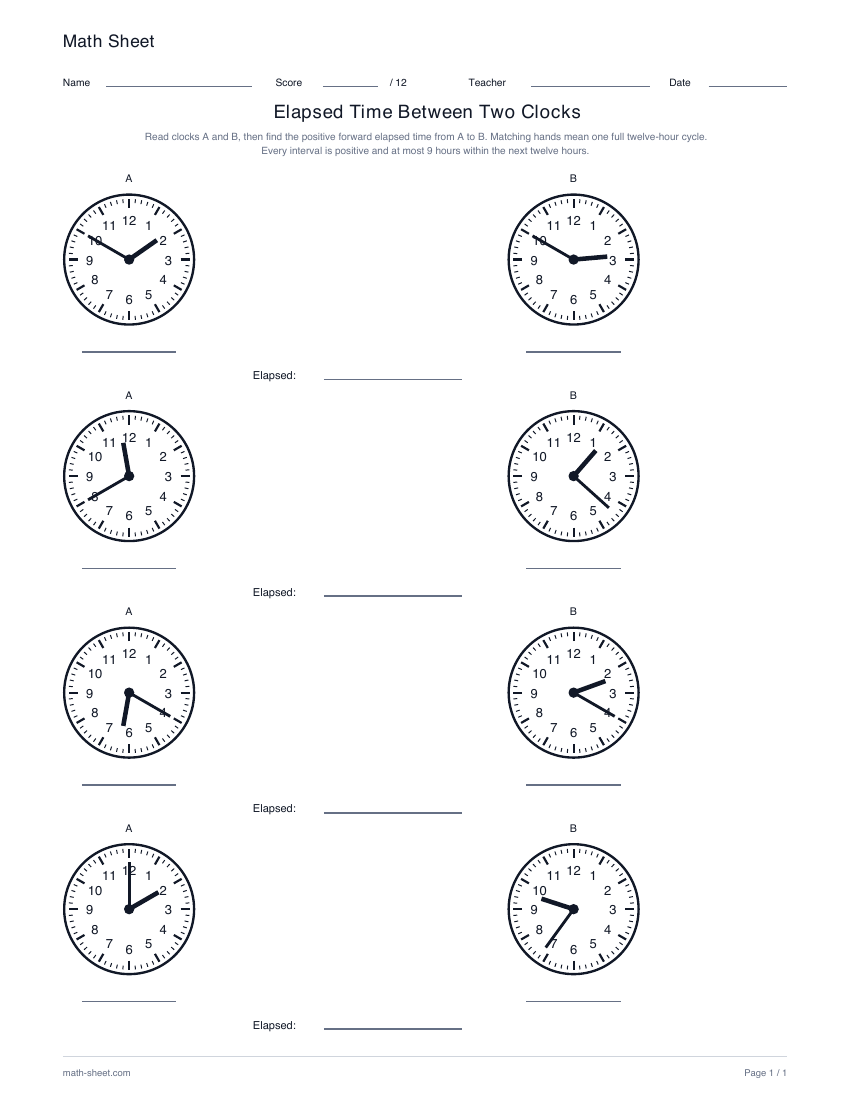
Time
Read a starting and ending analog clock, then calculate the amount of time that passes between them.
Preview and download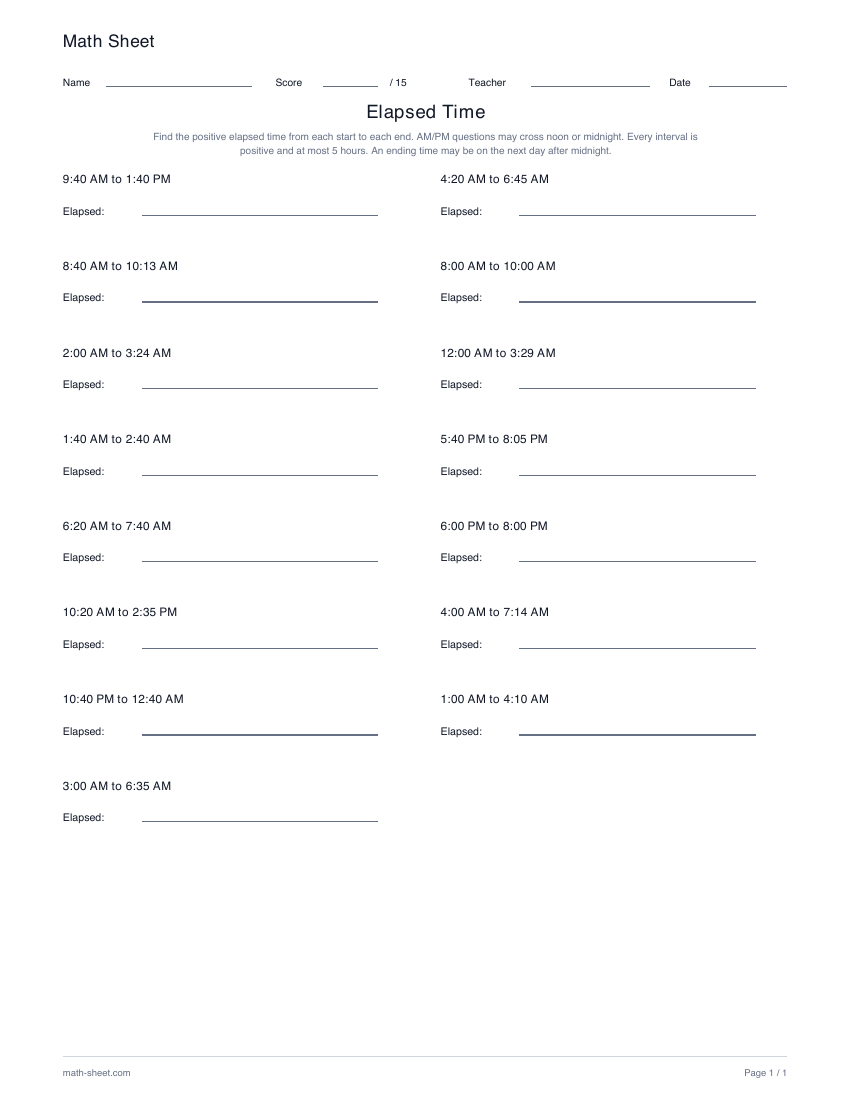
Time
Find elapsed time from digital starting and ending times. Choose hours, minutes or combined durations, the maximum duration and AM/PM labels, then print a worksheet and separate key.
Preview and download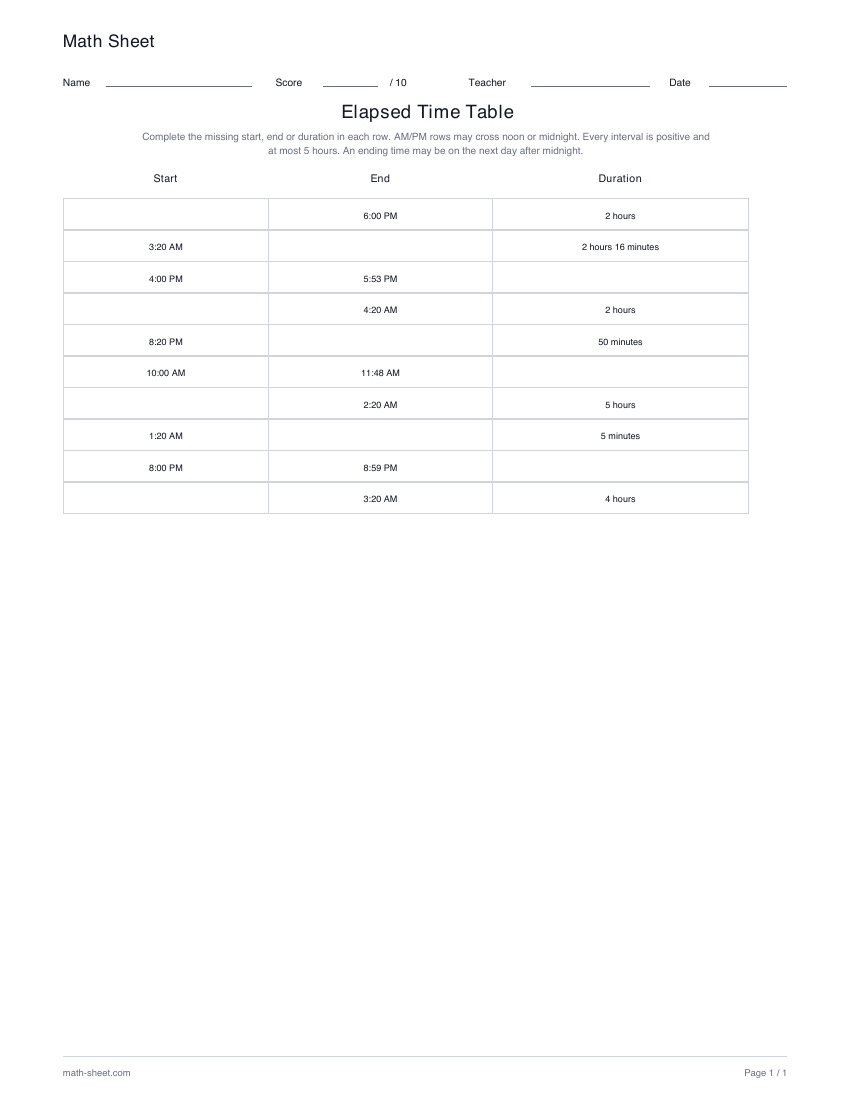
Time
Find a missing start time, end time or elapsed duration by using the other two entries in a row.
Preview and downloadUse unit prices and quantities to find costs, then check payment and change. Decimal money notation is a prerequisite; offer these as an extension when the learner is ready.
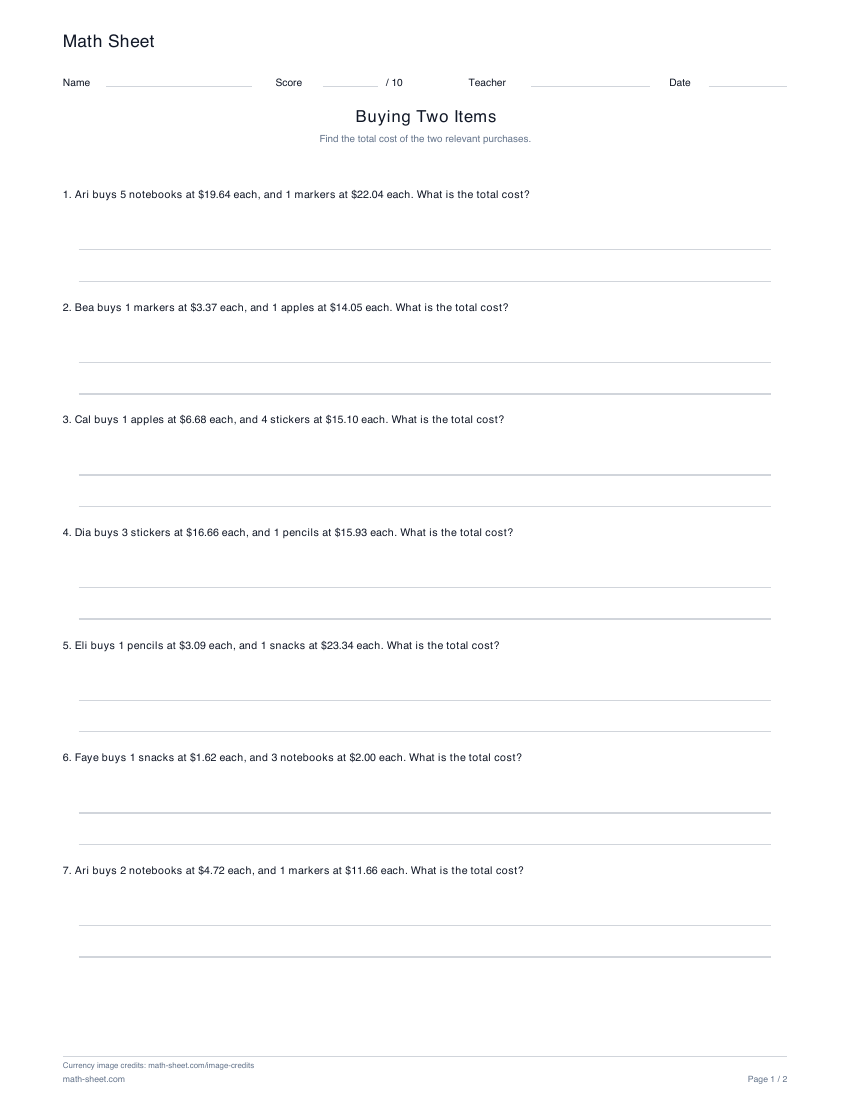
Money
Find the total cost of two relevant purchase categories, including stories with more than one unit of an item.
Preview and download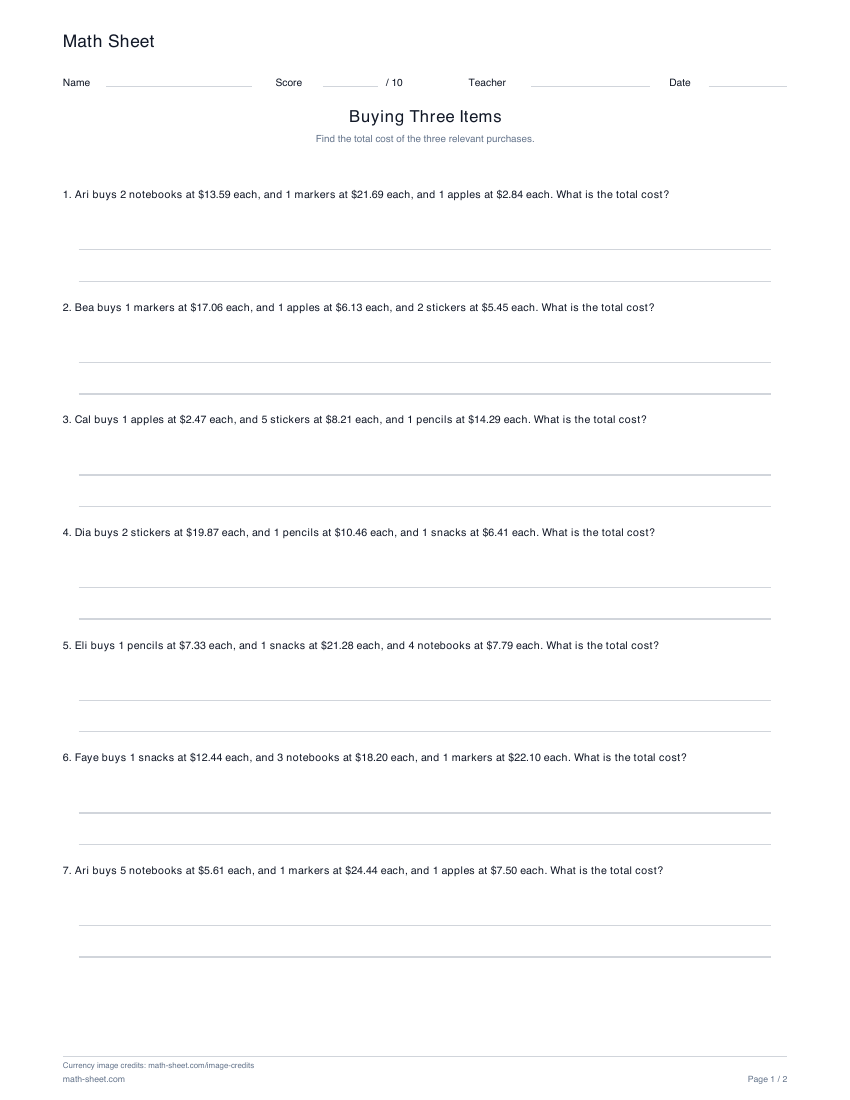
Money
Organize three purchase categories, calculate any repeated-item costs and combine the subtotals into one amount.
Preview and download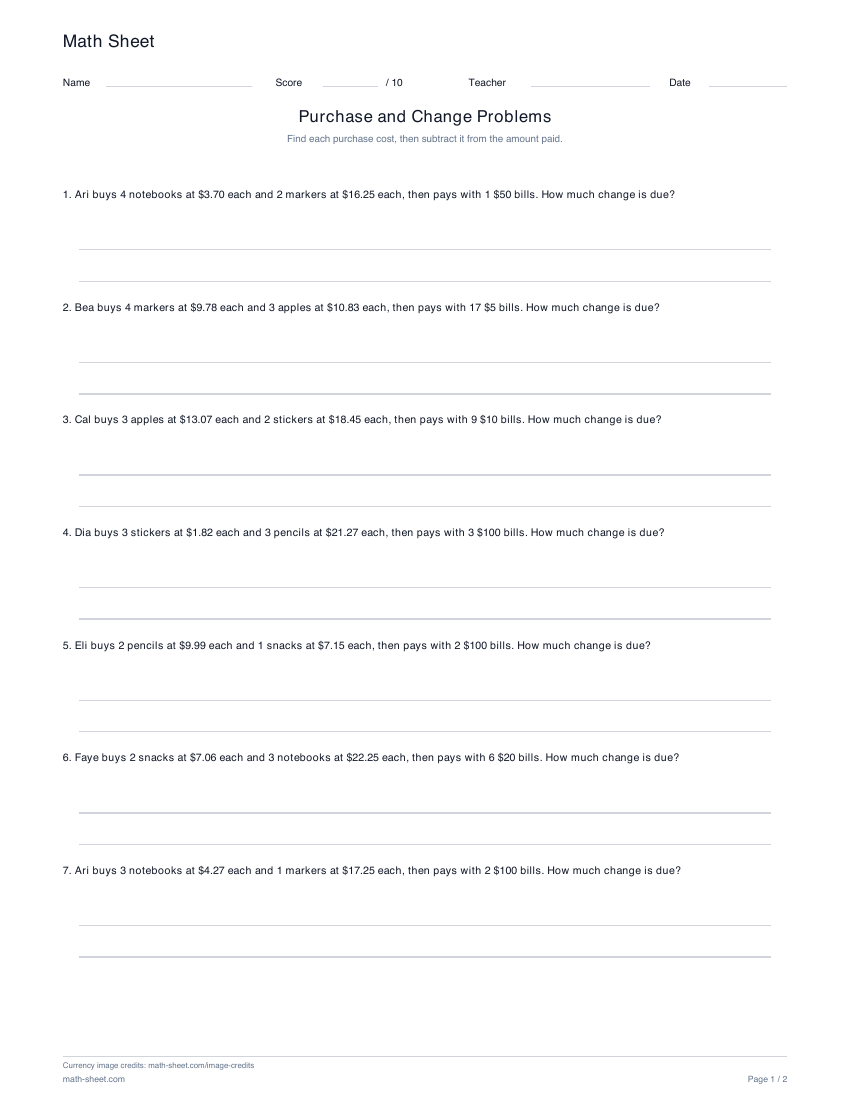
Money
Calculate the cost of a purchase, work out the amount paid and subtract to find the change due.
Preview and downloadKeep the whole the same size and check that its parts are equal. Name the denominator before counting the selected parts. These visual activities are a starting point for learners ready to connect pictures and fraction notation.
Fractions
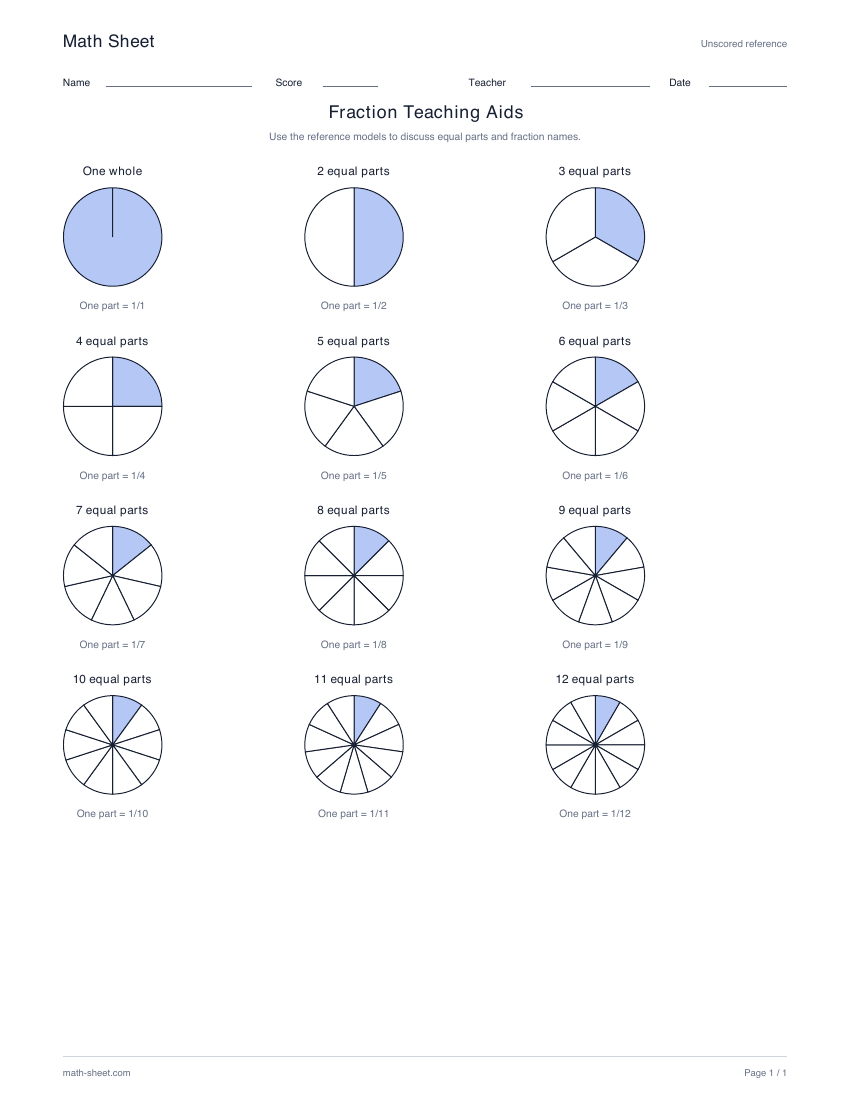
Use fraction circles or bars to discuss equal parts, unit fractions and different names for the same amount.
Preview and download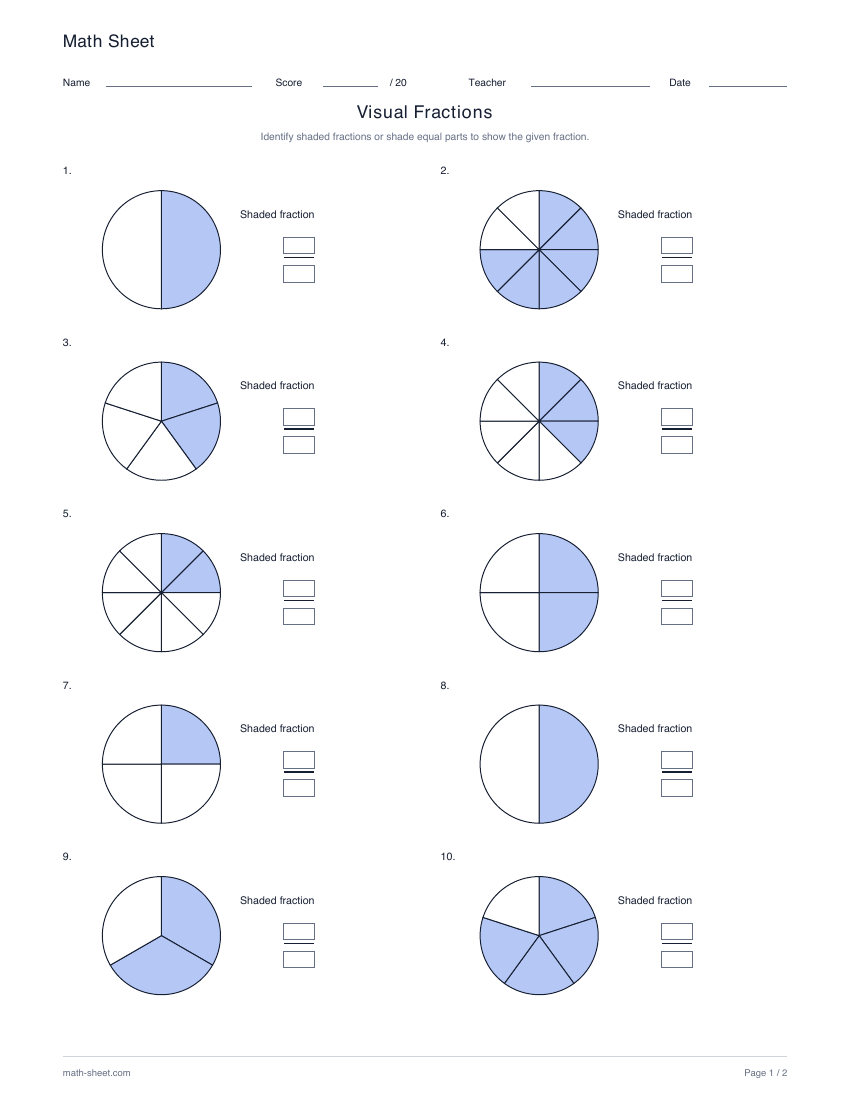
Fractions
Read a fraction from a partitioned shape or shade equal parts to represent a stated fraction.
Preview and downloadDraw, plot and explain
Use large square cells to connect equal rows, multiplication and area. Print at 100% for true centimeter spacing.
Customize this paper →Choose familiar arithmetic so the learner can focus on the story. These starting points describe readiness; expectations differ between schools and curricula.
Decide whether the unknown is a total, a group size or a number of groups.
Open this story practice →Use a timeline after reading clocks and counting across an hour are secure.
Open this story practice →