
Even and odd
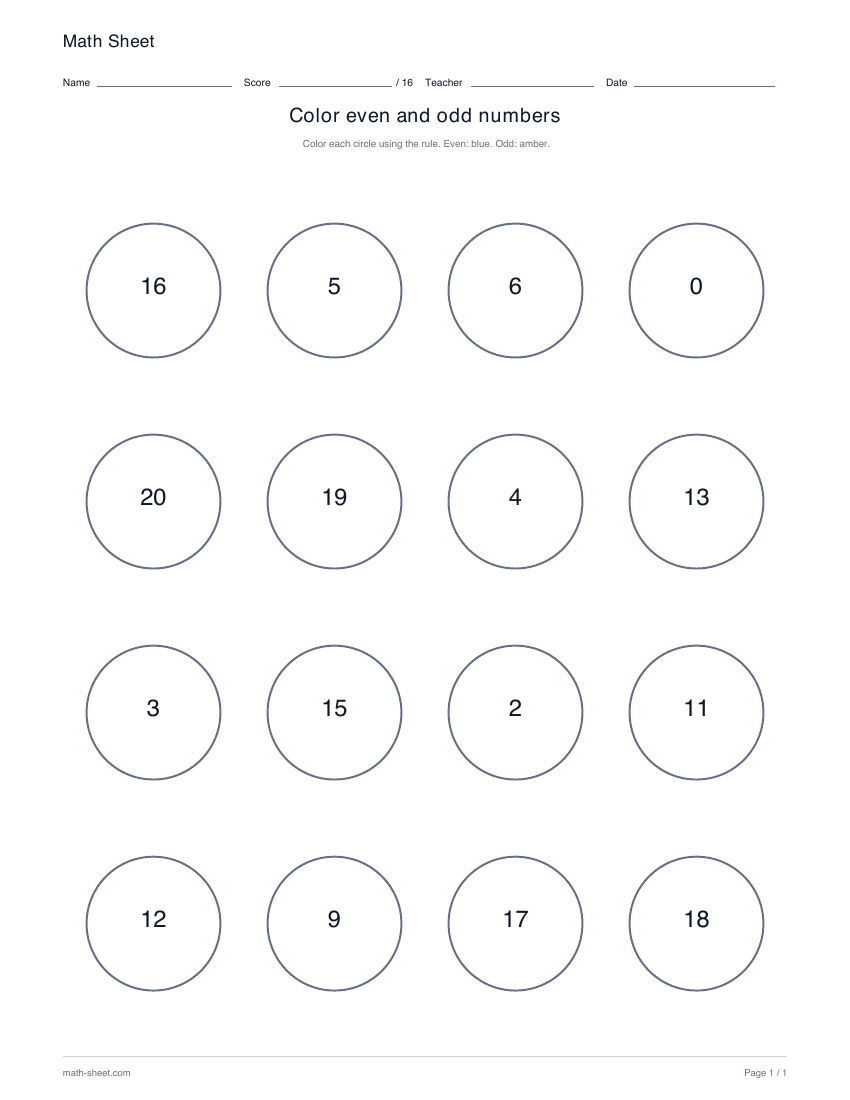
Color even and odd numbers
Sort sixteen numbered circles by coloring even numbers blue and odd numbers amber. Choose a small starting range or extend the numbers to 100.
Preview and downloadPractice by skill
Make pairs and look for a leftover. Begin with small numbers, connect the pattern to the ones digit, then apply it to grids and word problems.
Find a worksheetThree pairs. None left over.
Three pairs. One left over.
Even and odd practice
Begin with concrete pairs and small numbers. Connect complete pairs to even and one leftover to odd before using a quick ones-digit check.
Even and odd
Sort sixteen numbered circles by coloring even numbers blue and odd numbers amber. Choose a small starting range or extend the numbers to 100.
Preview and download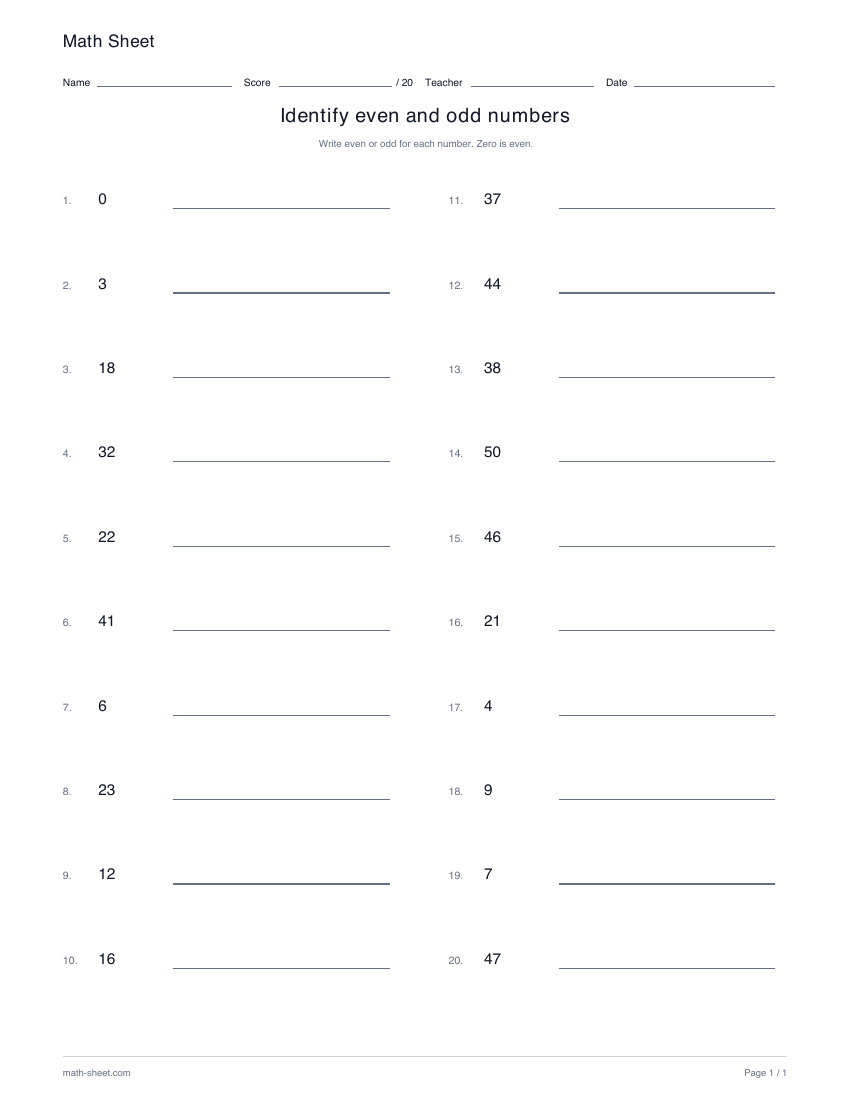
Even and odd
Write even or odd beside twenty different numbers. Choose a 0–20 starter range or practice larger values up to 200.
Preview and downloadEven and odd practice
Choose familiar number sizes and read each grid instruction. Some cells should be colored; others should stay neutral.
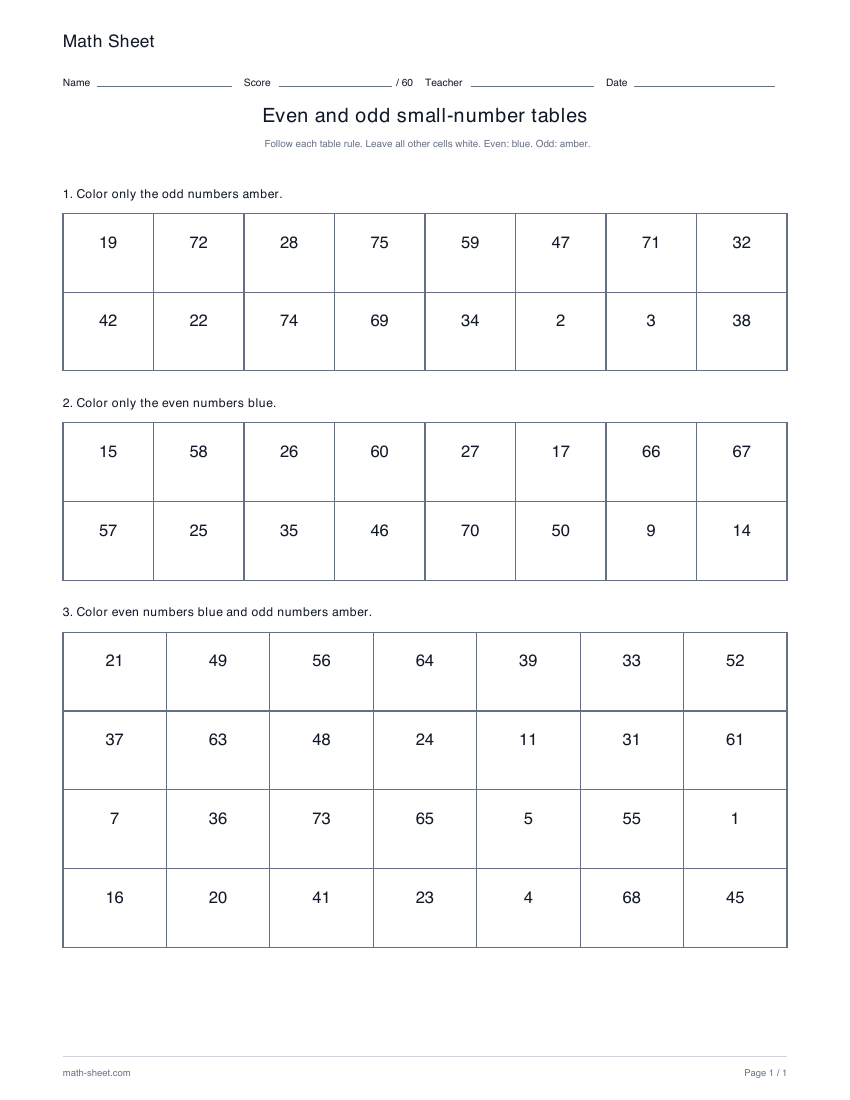
Even and odd
Work through sixty distinct values in three grids: color only odd numbers, only even numbers, then both groups. Choose ranges from 0–75 to 100–200.
Preview and download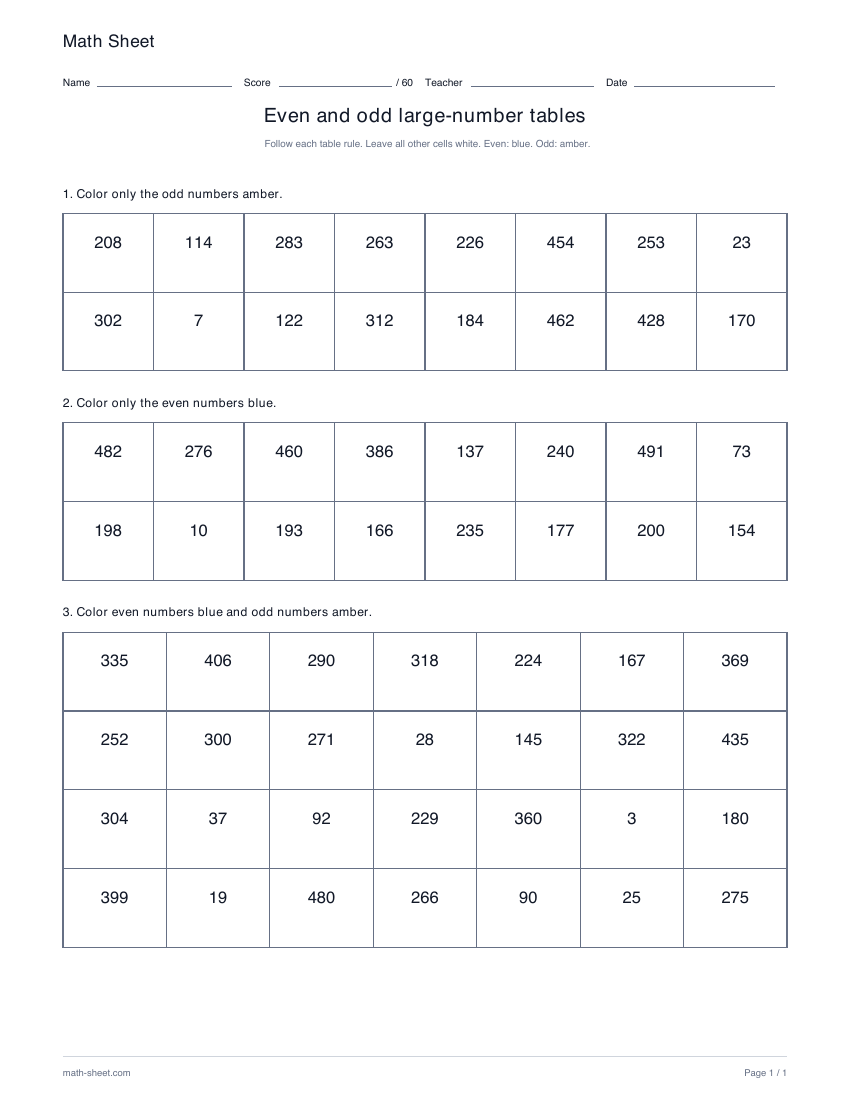
Even and odd
Classify sixty different larger values in odd-only, even-only and mixed grids. Select 0–500, 500–1000, 1000–1500 or 1500–2000.
Preview and downloadEven and odd practice
Use a given quantity, calculate a sum or find a difference, then explain whether the requested result is even or odd.
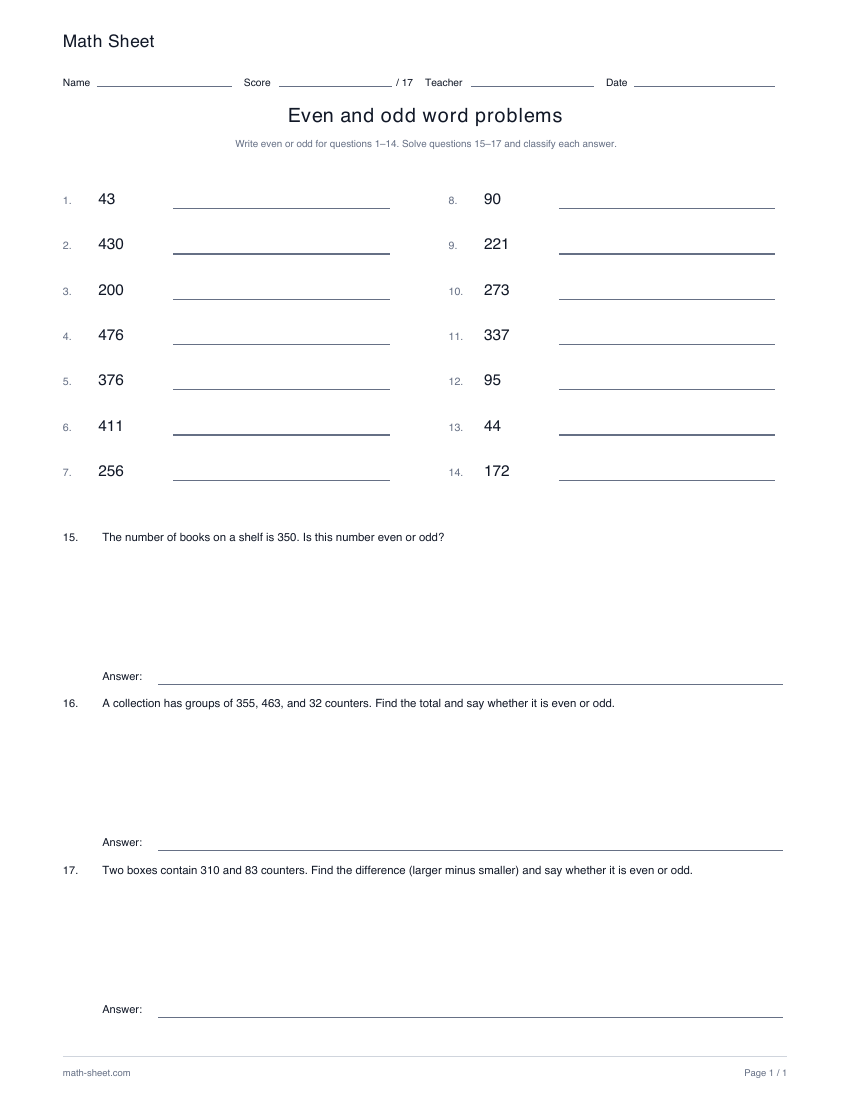
Even and odd
Classify fourteen numbers, then reason through a quantity, a sum of three numbers and a difference. Choose operand ranges from 0–500 through 1500–2000.
Preview and downloadChoose by readiness
Match objects two at a time before asking for a written label. Use these short ranges with a teacher once the learner recognizes the numbers. Grids and larger arithmetic are later choices, not prerequisites for this first lesson.
With a teacher, build the quantity with counters and look for one leftover before choosing a color.
Open this starter preset →Use this after the learner can explain pairs and recognize the numerals. Say the word together before writing.
Open this starter preset →An even quantity can be grouped into pairs with nothing left over. Zero objects also leave nothing over. Once learners can explain this with objects, connect the pattern to ones digits: 0, 2, 4, 6 and 8 are even; 1, 3, 5, 7 and 9 are odd.
Start can be any whole number from 0 to 20; end can be any whole number from 1 to 100 and must be greater than start. Both endpoints are included. Small ranges repeat in shuffled cycles to fill all sixteen circles. Even is blue and odd is amber; the key also uses parity words.
make a pair
Two learners may choose the same answer for different reasons. Ask how they know. Complete tens can already be paired, so checking the ones digit works for a small number and for a four-digit number.