
Even and odd
Identify even and odd numbers
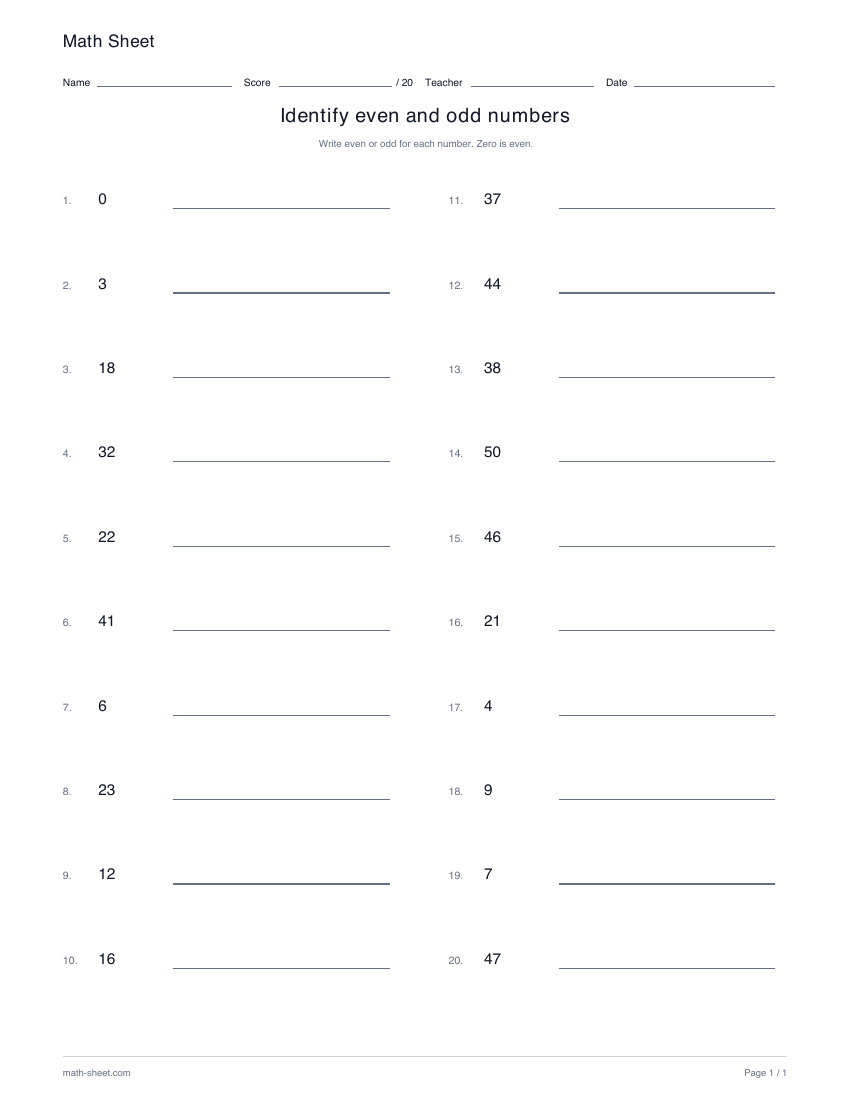
Write even or odd beside twenty different numbers. Choose a 0–20 starter range or practice larger values up to 200.
Preview and downloadEven and odd practice
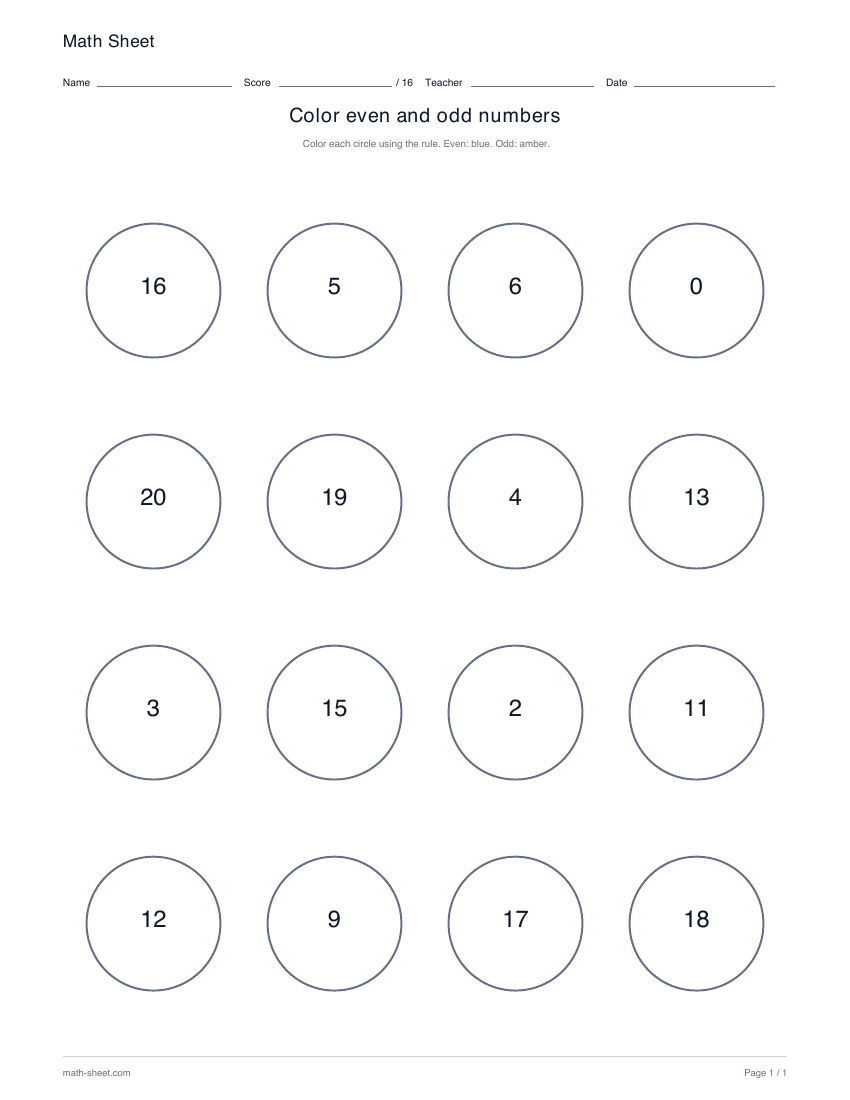
Sort sixteen numbered circles by coloring even numbers blue and odd numbers amber. Choose a small starting range or extend the numbers to 100.
Ready-made English PDF · fixed settings
Customization below makes a separate PDF.
Fixed English ready-made files. Custom settings below apply only to the configured PDF.
Ready to print
Read each number. Color its circle blue if the number is even, or amber if it is odd. Use counters to check unfamiliar numbers.
Download the practice pages alone, or include a separate answer key or teacher model. Longer activities may use more than one page.
Customize this worksheetPaper sizes and printing help · More even and odd activities
Start can be any whole number from 0 to 20; end can be any whole number from 1 to 100 and must be greater than start. Both endpoints are included. Small ranges repeat in shuffled cycles to fill all sixteen circles. Even is blue and odd is amber; the key also uses parity words.
Learning objective
Explain whether a quantity can be arranged in pairs without anything left over.
Worked example
Amber: 7 is odd.
Seven counters make three pairs with one counter left over. Six counters would make three complete pairs, so 6 is even.
Teaching notes
Make it yours
Choose your options, update the preview, then download the exact same pages.
A useful next step
Even and odd
Write even or odd beside twenty different numbers. Choose a 0–20 starter range or practice larger values up to 200.
Preview and download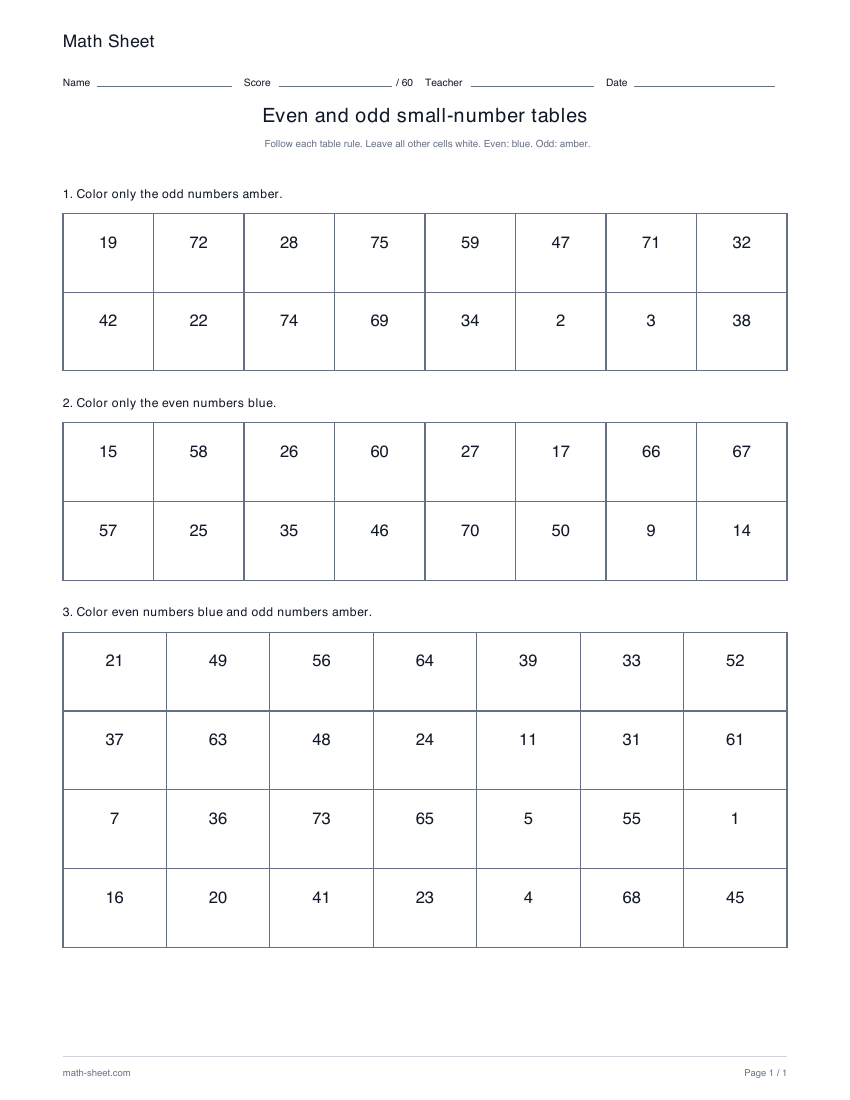
Even and odd
Work through sixty distinct values in three grids: color only odd numbers, only even numbers, then both groups. Choose ranges from 0–75 to 100–200.
Preview and download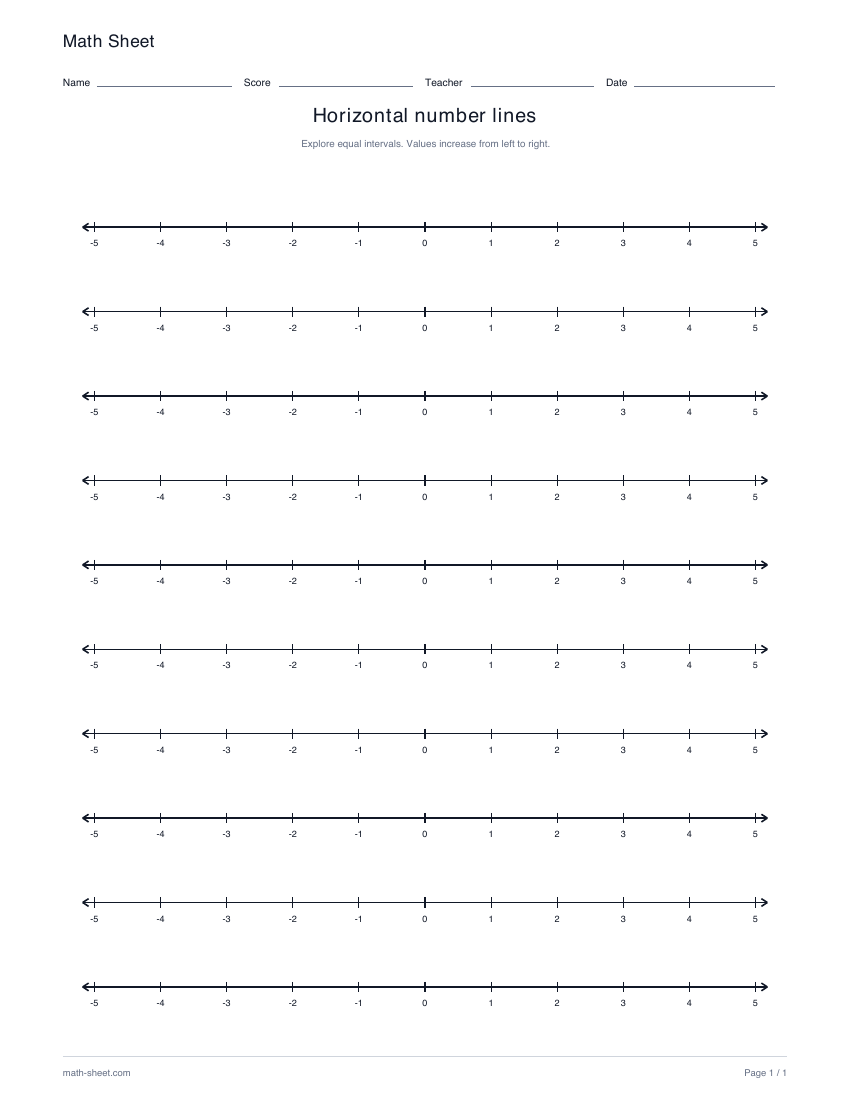
Number line
Print ten horizontal number lines with your own endpoints, whole-number or fractional steps, and six choices of tick labels.
Preview and download