
Even and odd
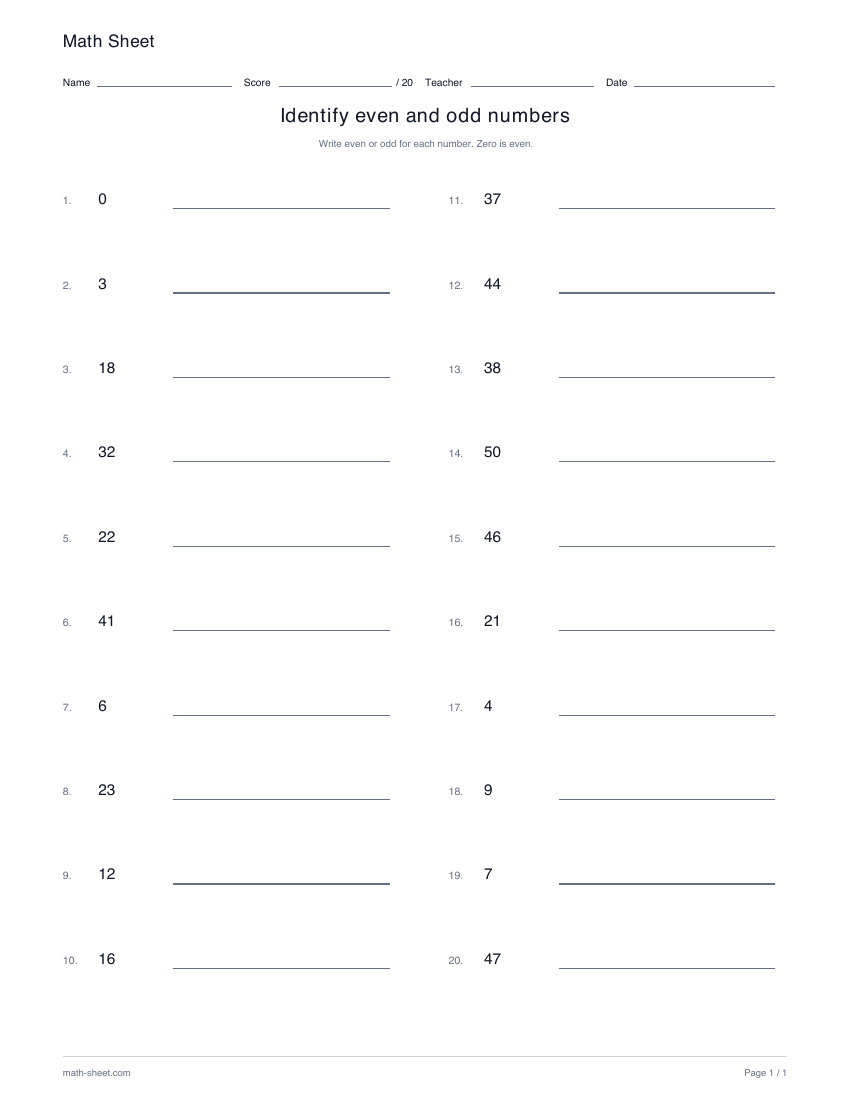
Identify even and odd numbers
Write even or odd beside twenty different numbers. Choose a 0–20 starter range or practice larger values up to 200.
Preview and downloadEven and odd practice
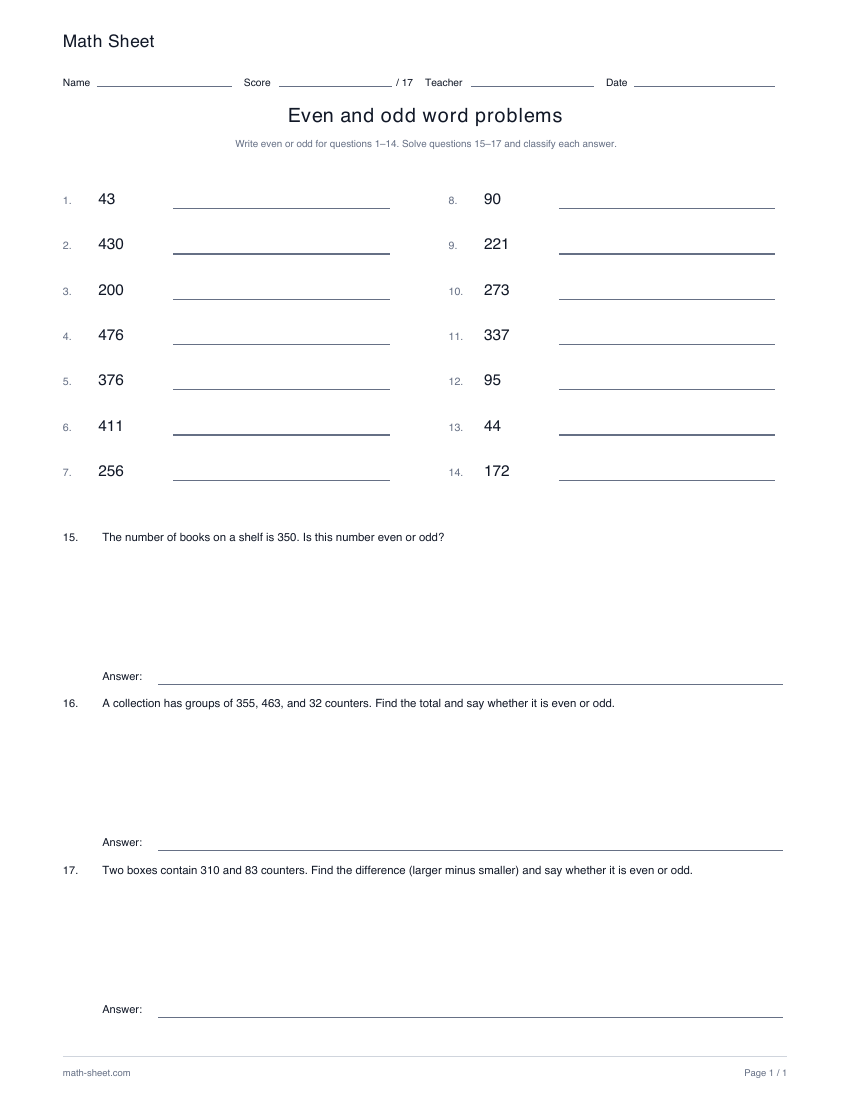
Classify fourteen numbers, then reason through a quantity, a sum of three numbers and a difference. Choose operand ranges from 0–500 through 1500–2000.
Ready-made English PDF · fixed settings
Customization below makes a separate PDF.
Fixed English ready-made files. Custom settings below apply only to the configured PDF.
Ready to print
Write even or odd for the first fourteen numbers. Read each of the final three questions, work out the quantity when needed, and classify the result.
Download the practice pages alone, or include a separate answer key or teacher model. Longer activities may use more than one page.
Customize this worksheetPaper sizes and printing help · More even and odd activities
The fourteen direct classifications are followed by one contextual count, one sum of three operands and one larger-minus-smaller difference. The selected range applies to given operands, not necessarily to the resulting sum or difference.
Learning objective
Connect parity to a stated quantity and to the result of addition or subtraction.
Worked example
29 counters, which is odd.
14 + 9 + 6 = 29. The two even quantities make an even sum; adding the odd quantity leaves one unpaired counter.
Teaching notes
Make it yours
Choose your options, update the preview, then download the exact same pages.
A useful next step
Even and odd
Write even or odd beside twenty different numbers. Choose a 0–20 starter range or practice larger values up to 200.
Preview and download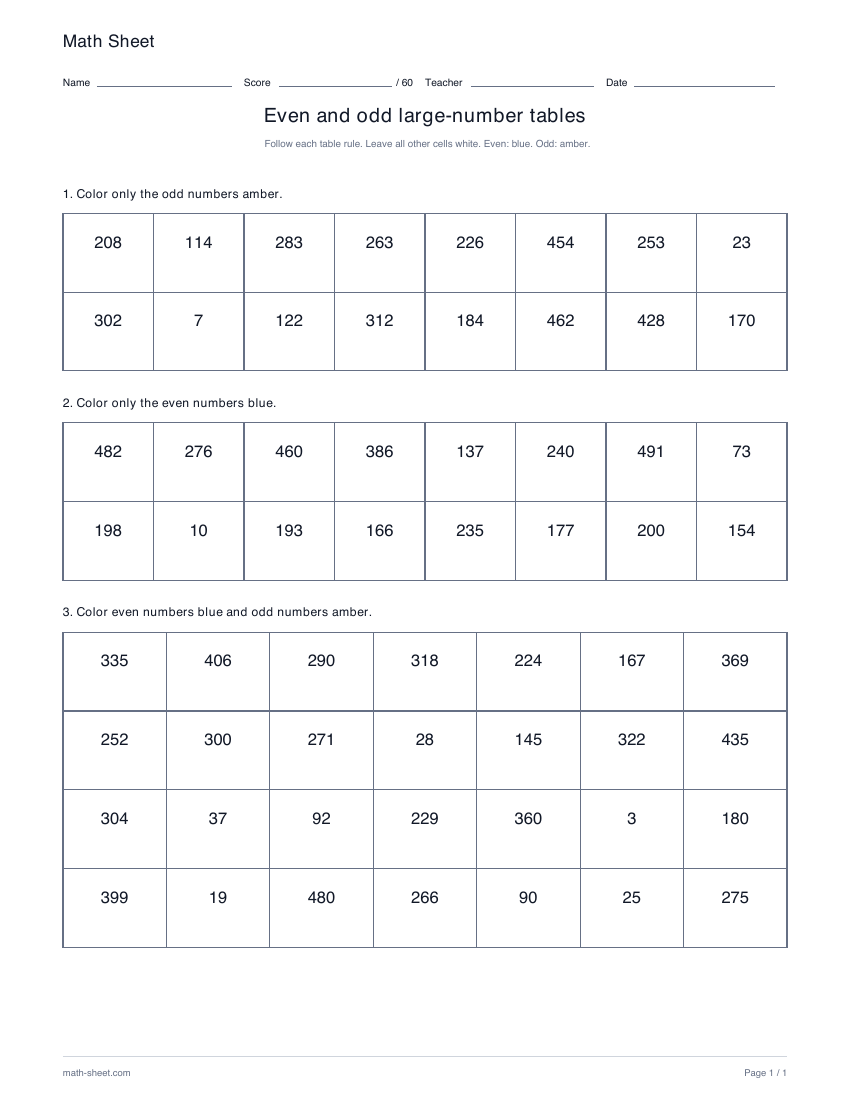
Even and odd
Classify sixty different larger values in odd-only, even-only and mixed grids. Select 0–500, 500–1000, 1000–1500 or 1500–2000.
Preview and download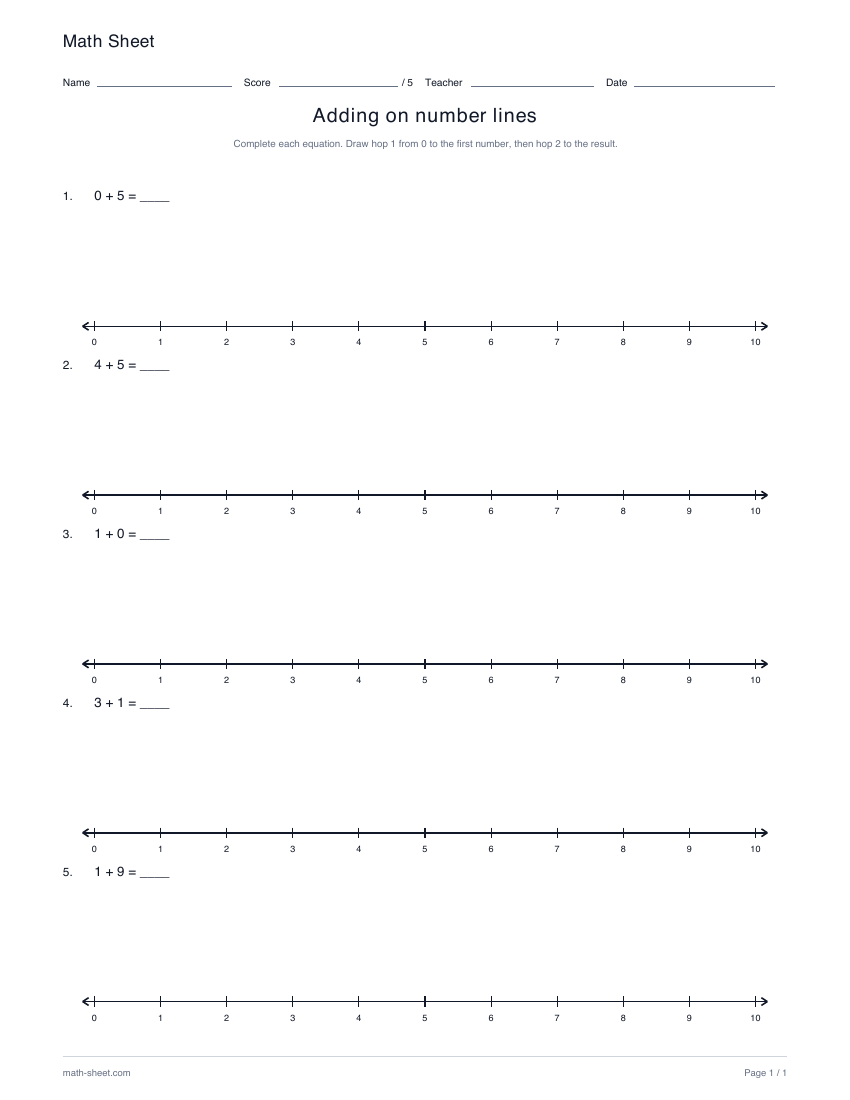
Number line
Solve five addition exercises by drawing two directed hops, or read the hops and complete the equation. Start within 10 or choose a larger range.
Preview and download