
Geometry
Classifying angles worksheets
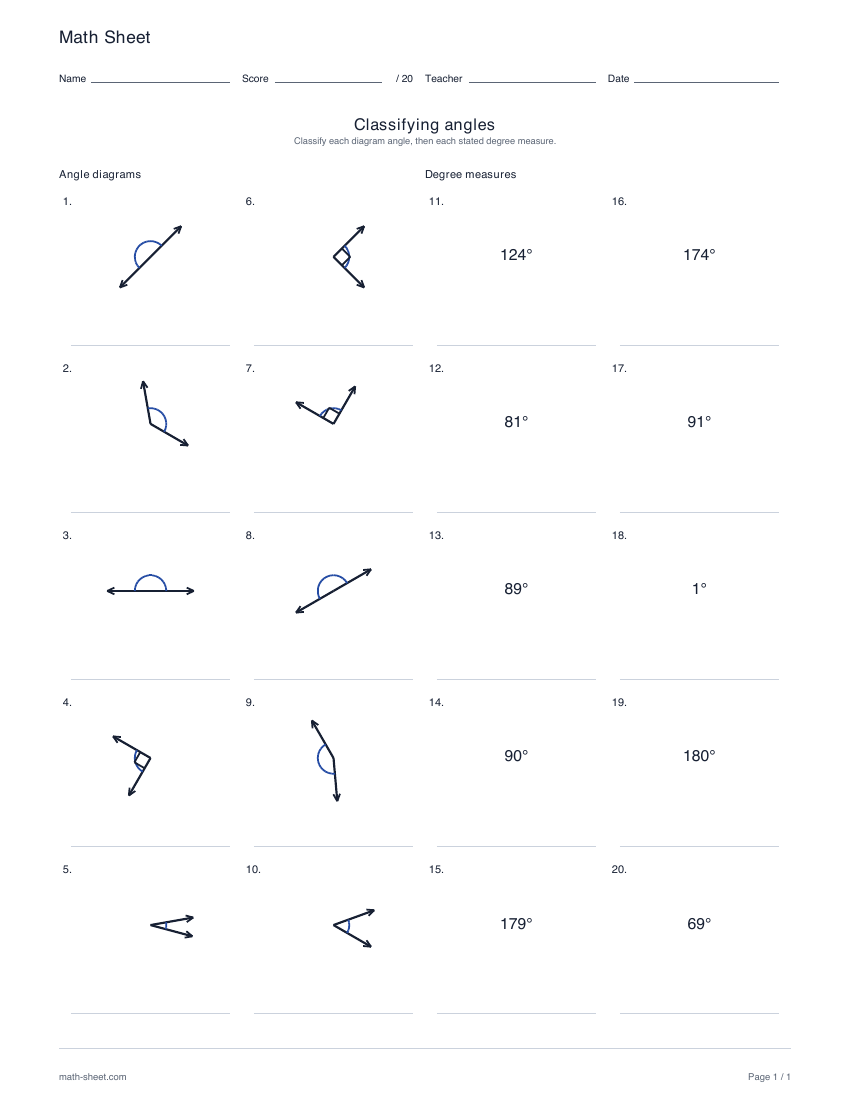
Classify 20 angles as acute, right, obtuse or straight. Ten questions use unlabelled diagrams and ten use exact degree measures, followed by a separate answer key.
Preview and downloadGeometry practice
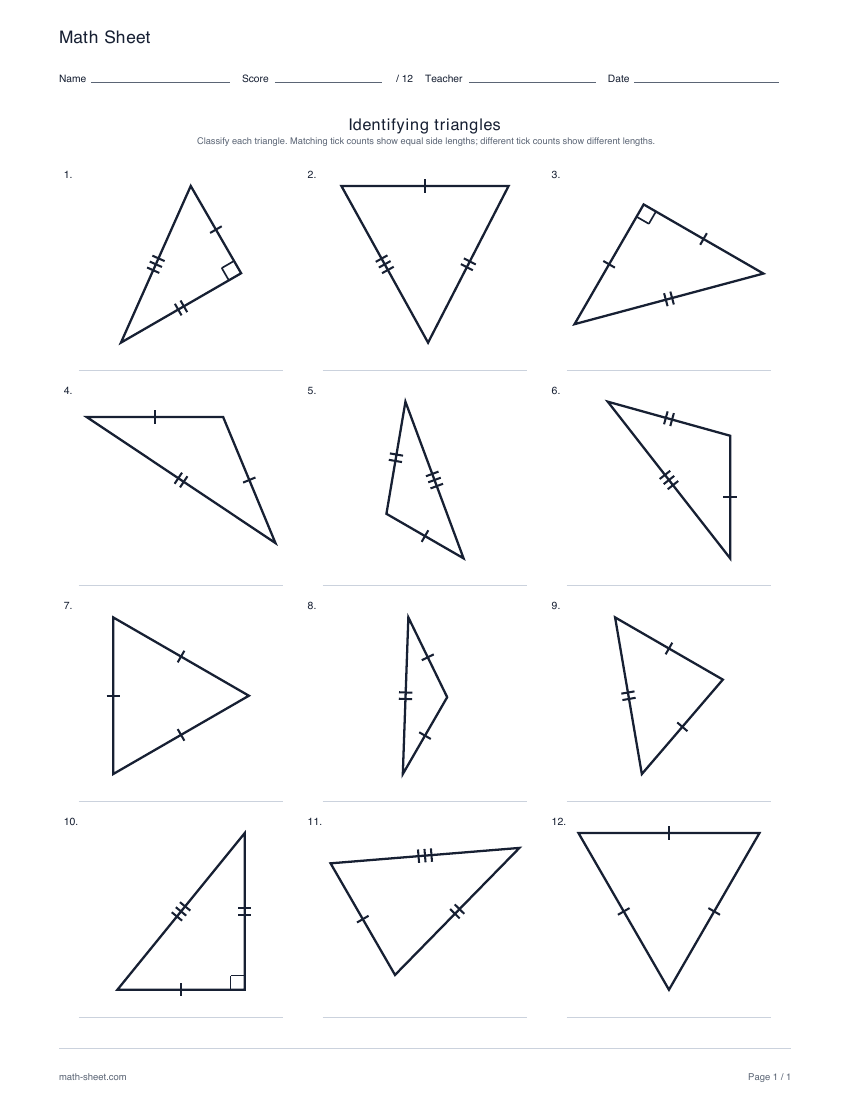
Classify 12 triangles into seven angle-and-side buckets using exact geometry, equal-side tick marks and right-angle squares. Choose any nonempty class set and print a separate answer key.
Ready-made English PDF · fixed settings
Customization below makes a separate PDF.
Fixed English ready-made files. Custom settings below apply only to the configured PDF.
Ready to print
Classify each triangle. Matching tick counts show equal side lengths, while different tick counts show different lengths on this worksheet. Use the right-angle square when present.
Download the practice pages alone, or include a separate answer key or teacher model. Longer activities may use more than one page.
Customize this worksheetEvery sheet has twelve triangles in three columns and four rows. Matching tick counts identify equal sides, while different counts identify different lengths on this worksheet. A small square marks an exact right angle.
First decide whether the angle class is acute, right or obtuse. Then decide whether the sides are scalene or isosceles. When all three sides match, use the special Equilateral answer bucket; this worksheet convention is compatible with the inclusive definition that an equilateral triangle also has at least two equal sides.
Learning objective
Combine exact side equality with acute, right or obtuse angle evidence to name each triangle using the worksheet’s seven answer buckets.
Worked example
Right Scalene.
The square proves that one angle is exactly 90 degrees, so the angle class is right. Three different tick counts show three different side lengths, so the side class is scalene.
Teaching notes
Make it yours
Choose your options, update the preview, then download the exact same pages.
A useful next step
Geometry
Classify 20 angles as acute, right, obtuse or straight. Ten questions use unlabelled diagrams and ten use exact degree measures, followed by a separate answer key.
Preview and download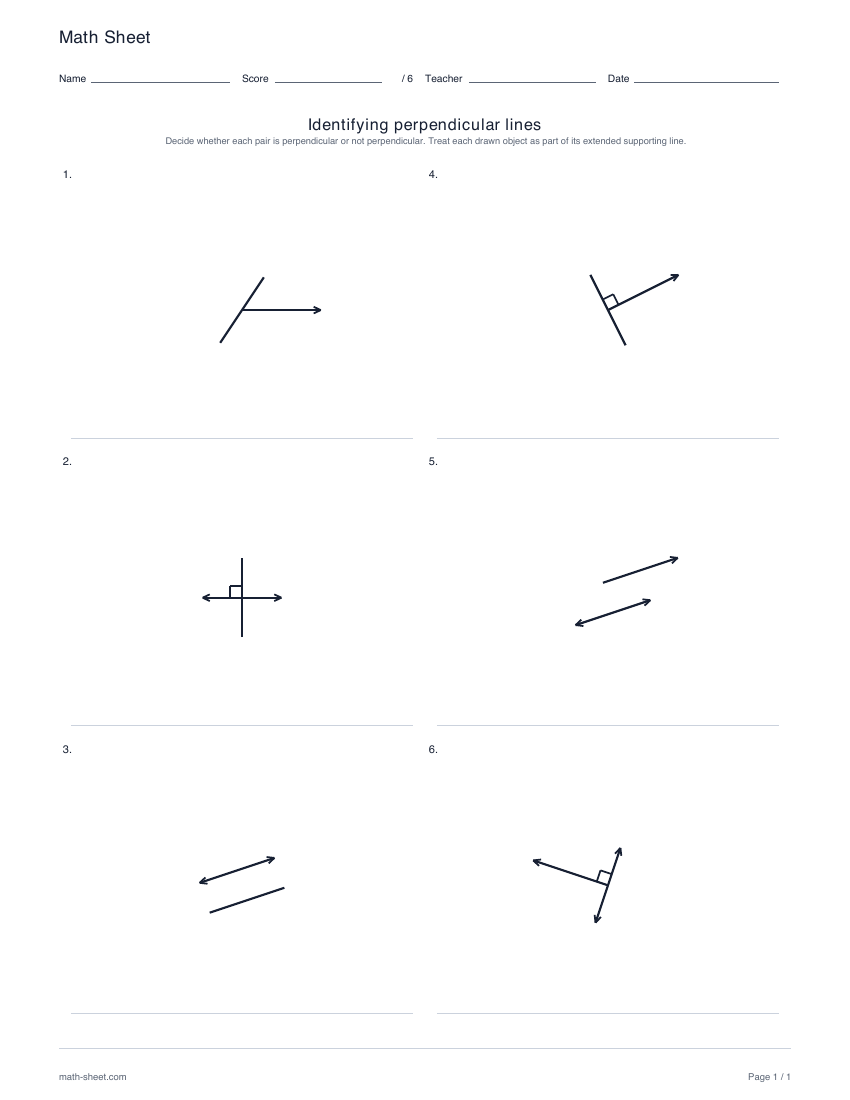
Geometry
Decide whether six pairs of extended supporting lines are perpendicular. True examples include a right-angle mark; counterexamples include parallel and oblique pairs.
Preview and download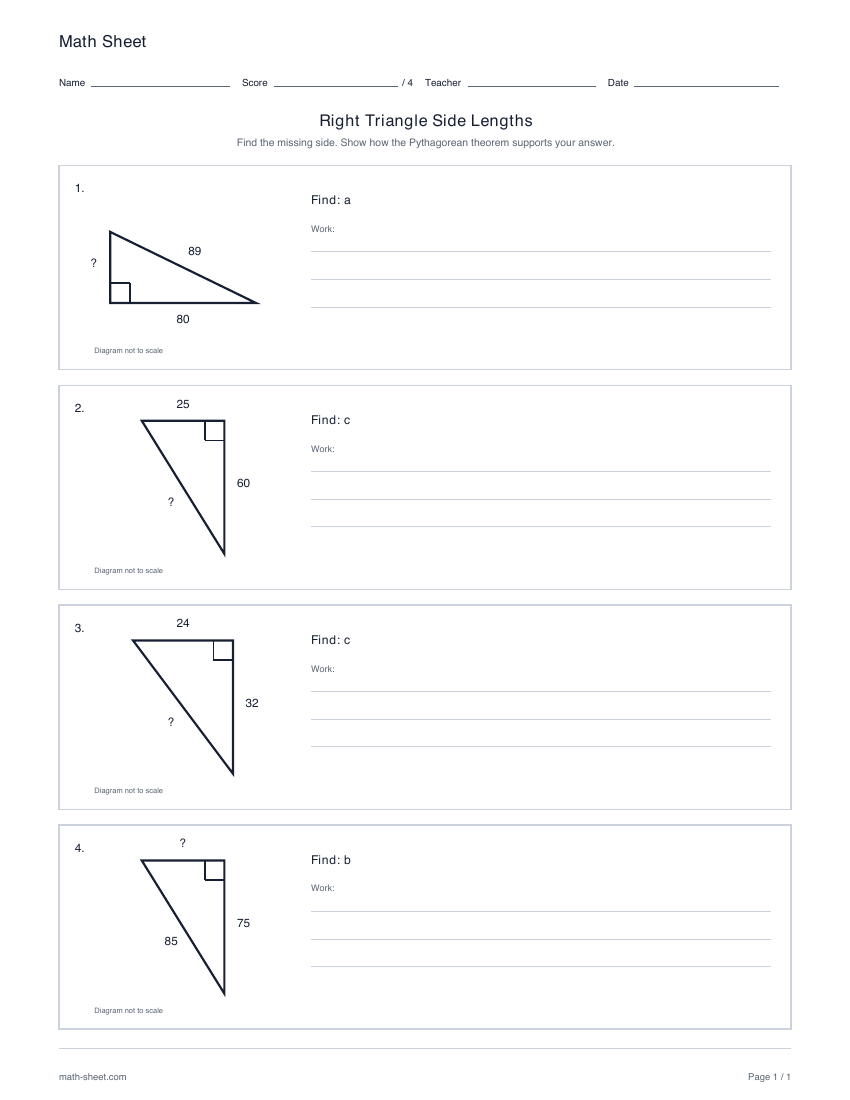
Pythagorean theorem
Print a four-question Pythagorean theorem worksheet for missing hypotenuses or legs. Choose whole-number triples or irrational results from whole or decimal givens.
Preview and download