A printable guide to the language of algebra. Connect words with addition, subtraction, products, quotients, equality and grouping, with examples that explain operand order.
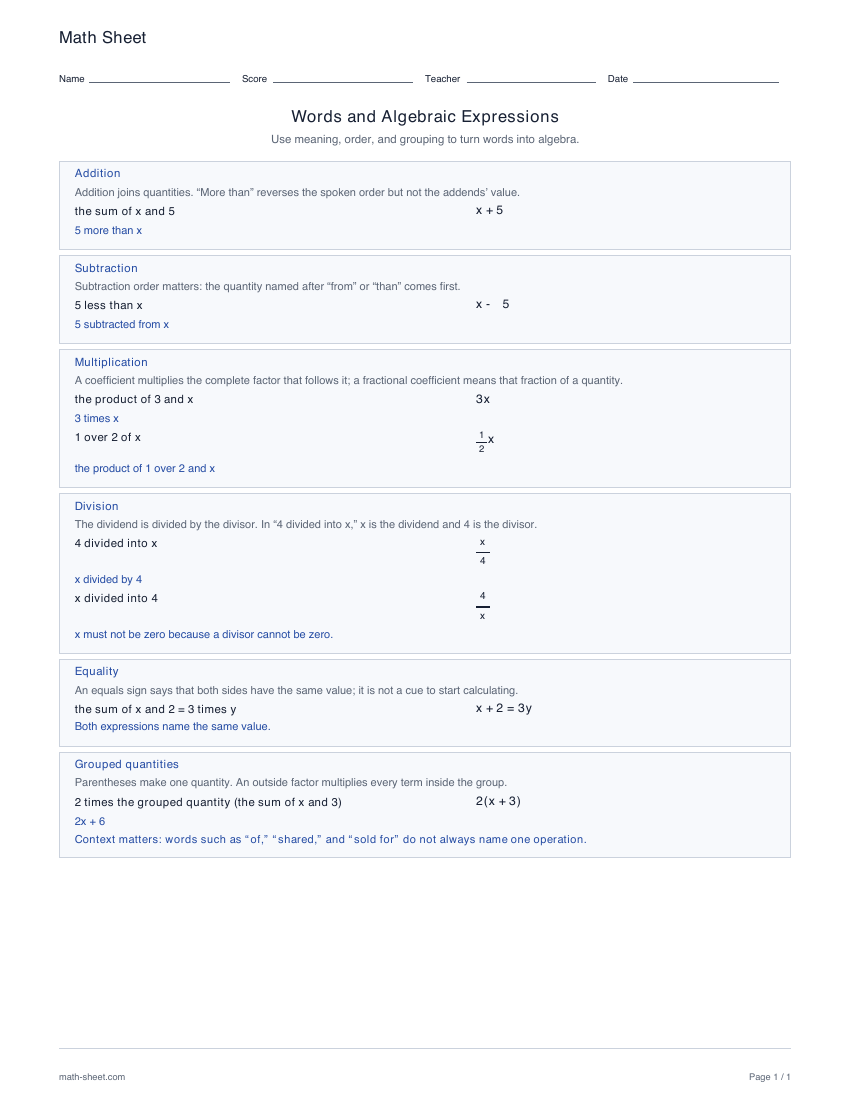
The reference connects six groups of language with mathematical examples: addition, subtraction, multiplication, division, equality and grouped quantities. It explains reversed phrases such as subtracted from and warns against choosing an operation from one isolated word.
This is a fixed handout, so it has no random question set or separate answer edition. Change the paper size, printed language or teacher note before downloading.
Learning objective
What this activity builds
Read the relationship between quantities before choosing an operation or writing an expression.
Worked example
Write an expression for six less than twice a number n.
2n − 6.
Twice the number is 2n. Six less than that quantity means subtract 6 from 2n. The word order does not make 6 the first operand.
Teaching notes
Make the practice count
Ask learners to restate a phrase in their own words.
Test the meaning with a small number before writing the general expression.
Contrast twice a number plus three with twice the sum of a number and three.
Read context: a word such as of does not always specify one operation.
Make it yours
Customize the reference
Choose your options, update the preview, then download the exact same pages.
This fixed reference teaches operation order, reversal, division order, equality, and grouped quantities in the selected print language.
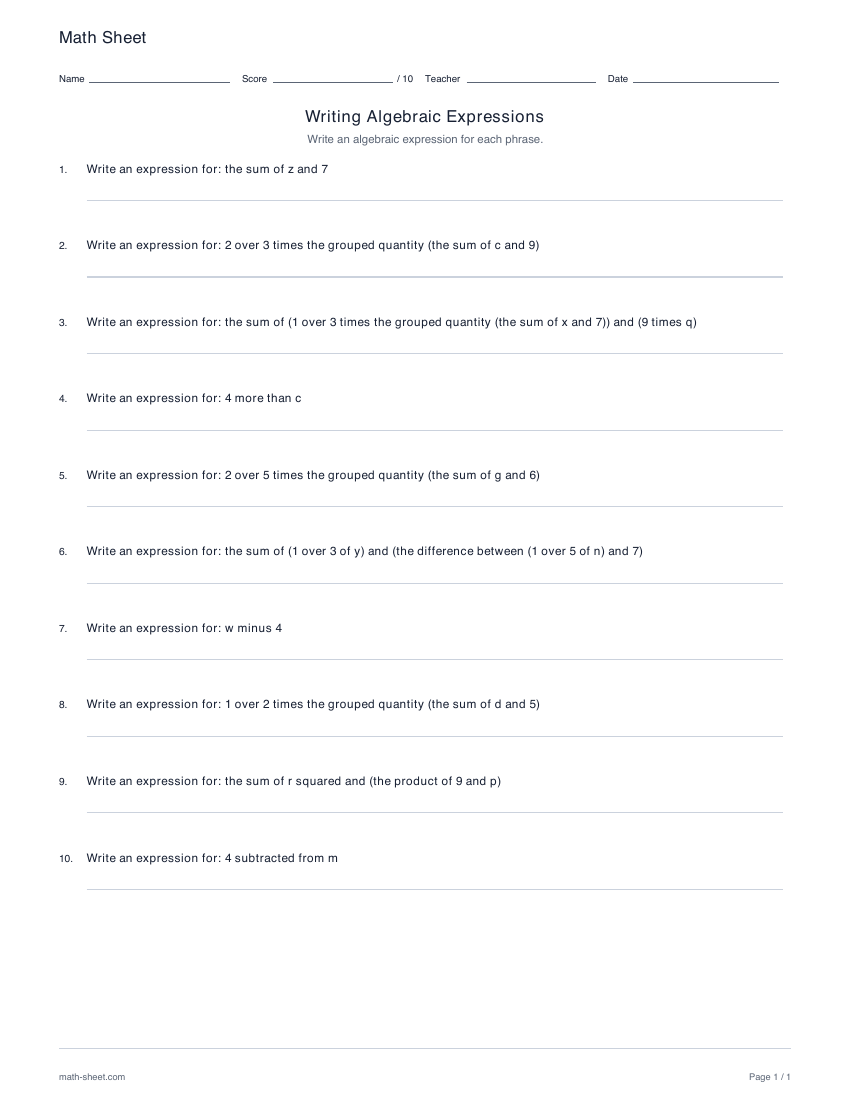
Translate words into algebra with ten questions per worksheet. Select easy, medium and hard phrases, including grouping, fractions and powers, and print an explained answer key.
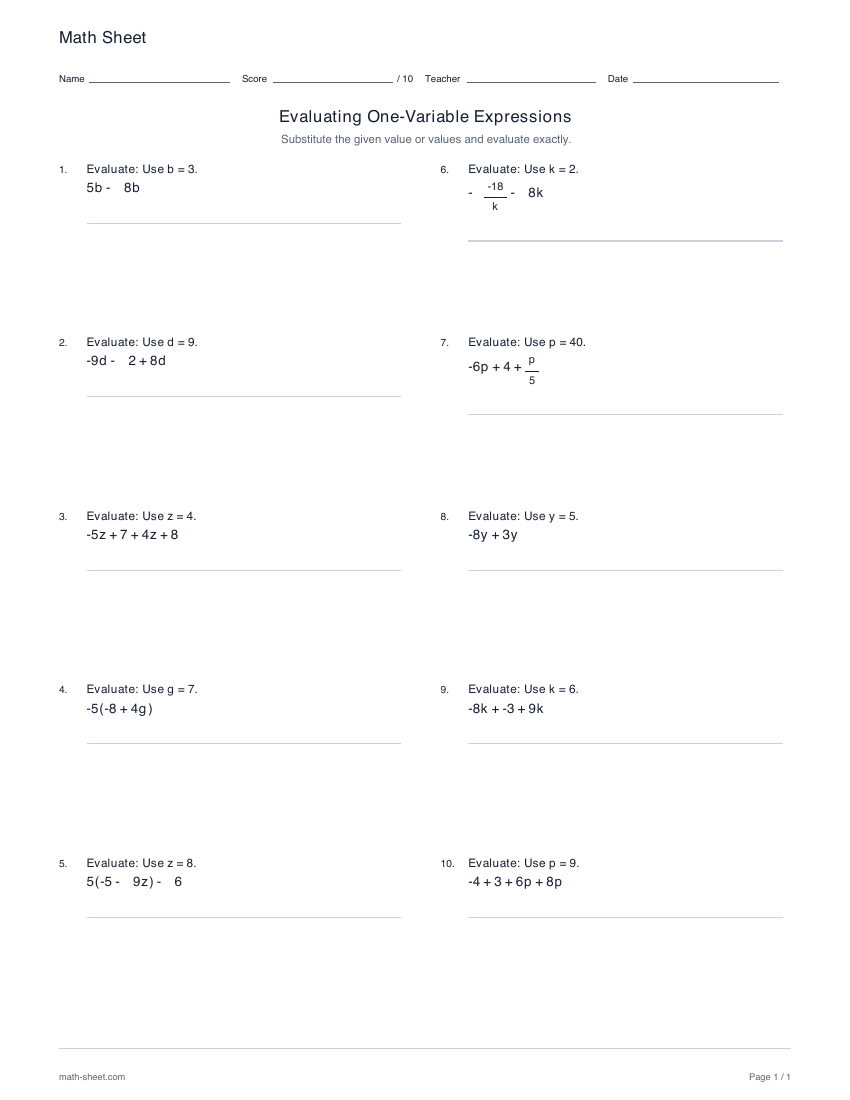
Substitute a given value and evaluate expressions with one variable. Choose addition, subtraction, grouped products or exact division, with whole-number or signed integer inputs.
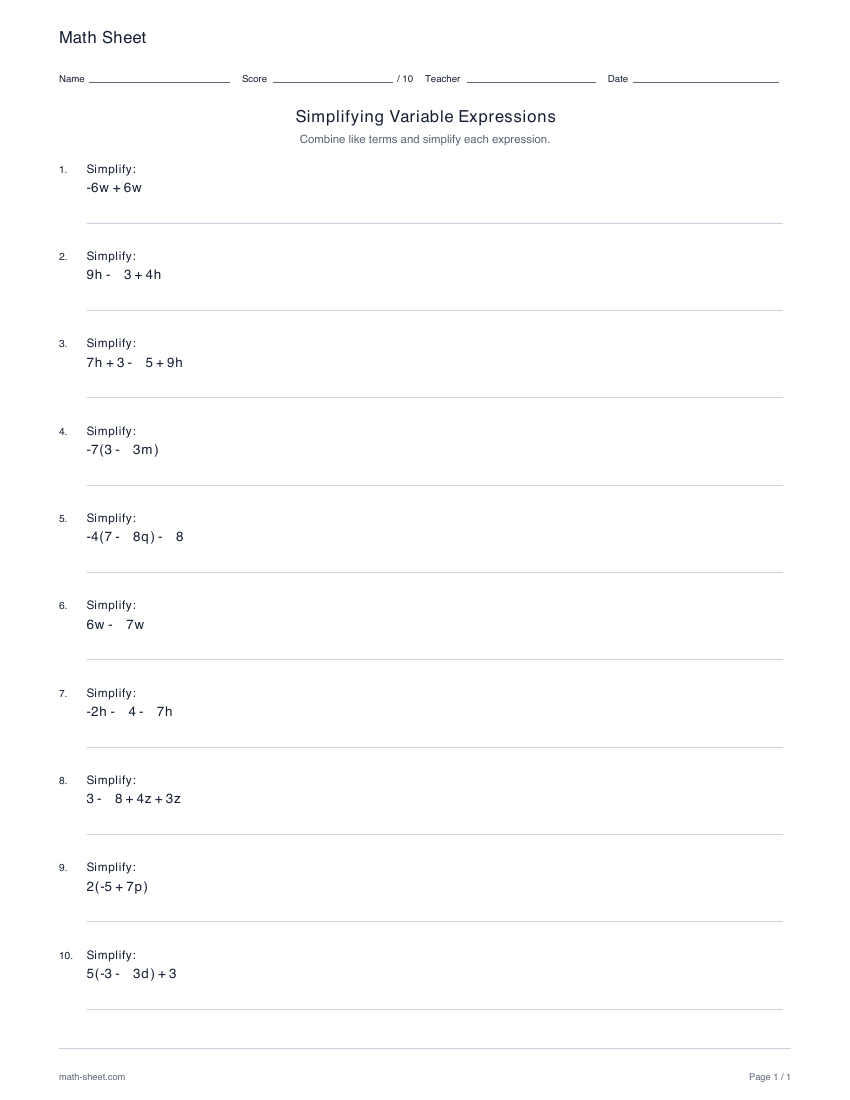
Print ten combining-like-terms questions and a separate worked key. Choose original one-variable practice or a progressive English lesson with two-variable grouping, distribution, error analysis, and perimeter.