
Time
Teaching clock reference
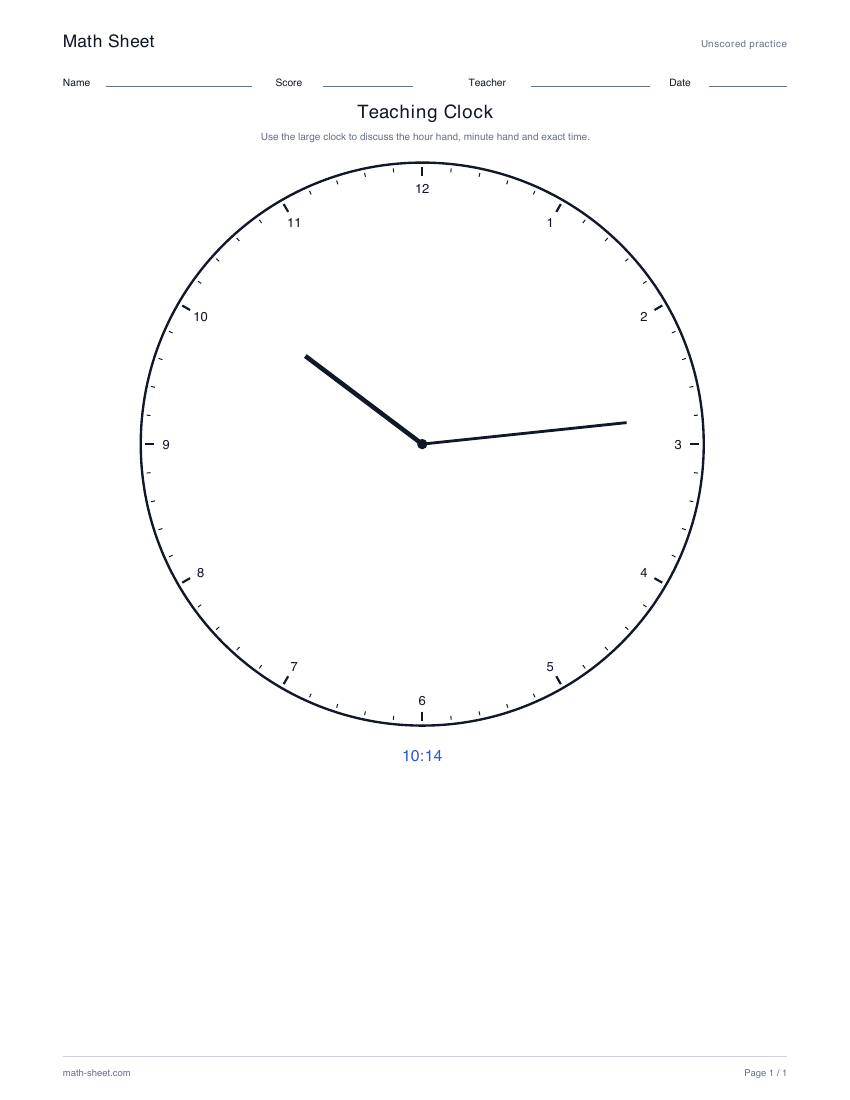
Choose a time for a large clock reference and use its hands and digital label to explain how the two representations agree.
Preview and downloadTime practice
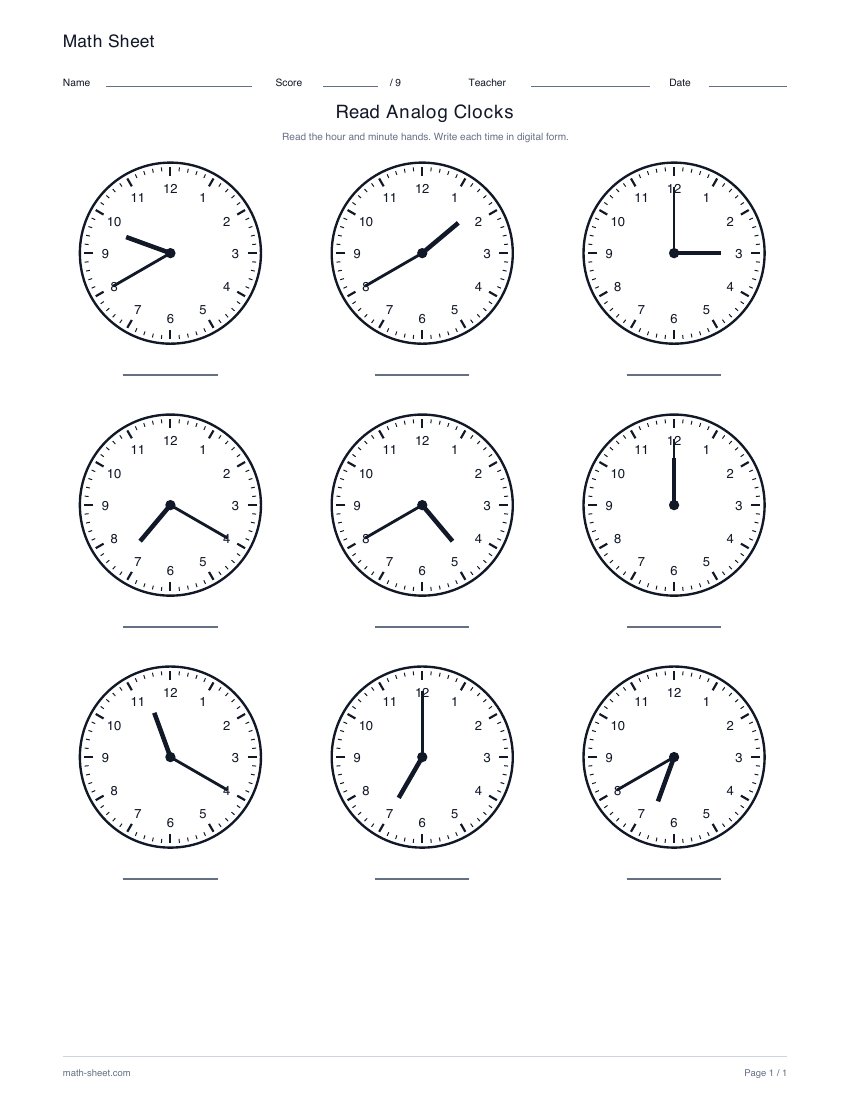
Read the two hands of an analog clock and record its time. Use generated practice or ordered custom times to focus a lesson.
Ready-made English PDF · fixed settings
Customization below makes a separate PDF.
Fixed English ready-made files. Custom settings below apply only to the configured PDF.
Ready to print
Find the shorter hour hand and the longer minute hand. Read the hour that has begun, count the minutes past that hour and write the time. An analog face by itself does not identify AM or PM.
Download the practice pages alone, or include a separate answer key or teacher model. Longer activities may use more than one page.
Customize this worksheetLearning objective
Identify the current hour and count the minutes shown by the longer hand without confusing the two roles.
Worked example
3:30.
The minute hand indicates 30 minutes. The hour hand has passed 3 but has not reached 4, so the current hour is 3. Its halfway position agrees with half of that hour having passed.
Teaching notes
Make it yours
Choose your options, update the preview, then download the exact same pages.
Choose Random times to use the minute pattern, or Nine chosen times to use the table. Four-clock practice uses the first four chosen rows; nine-clock practice uses all nine.
A useful next step
Time
Choose a time for a large clock reference and use its hands and digital label to explain how the two representations agree.
Preview and download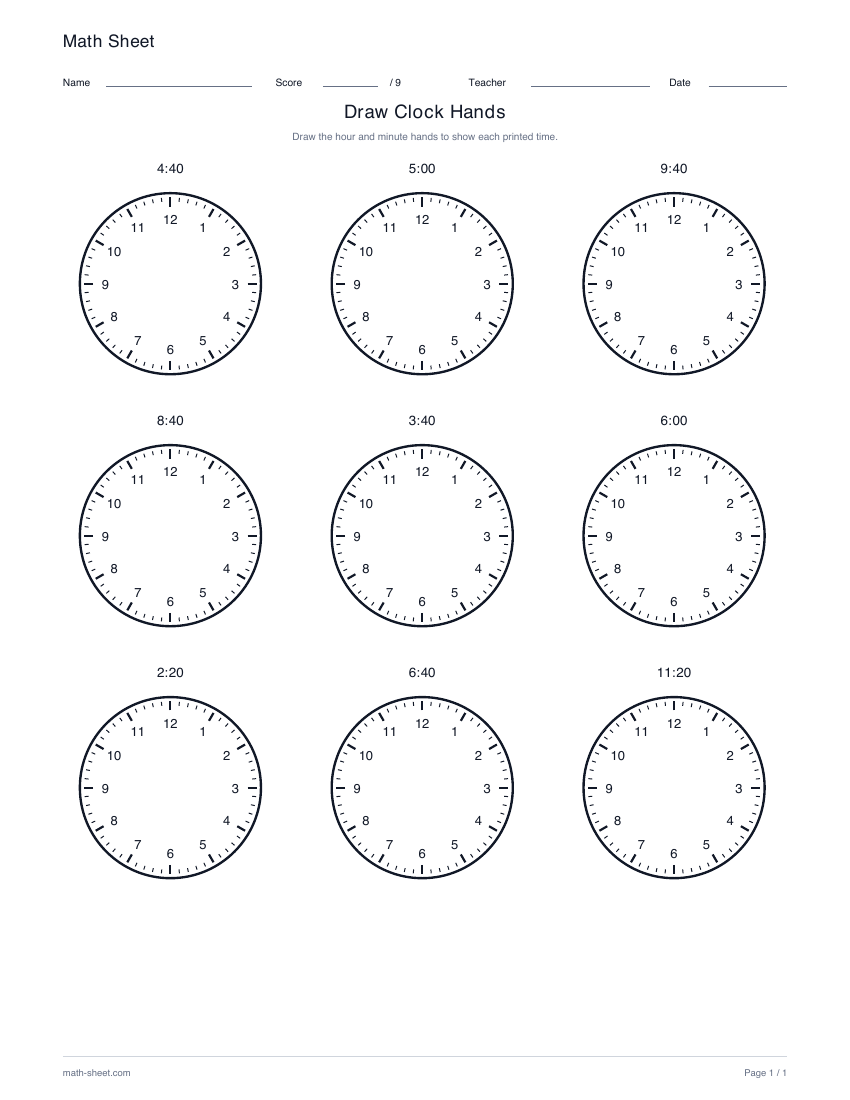
Time
Translate a written time into two correctly positioned clock hands, using generated practice or an ordered custom set of times.
Preview and download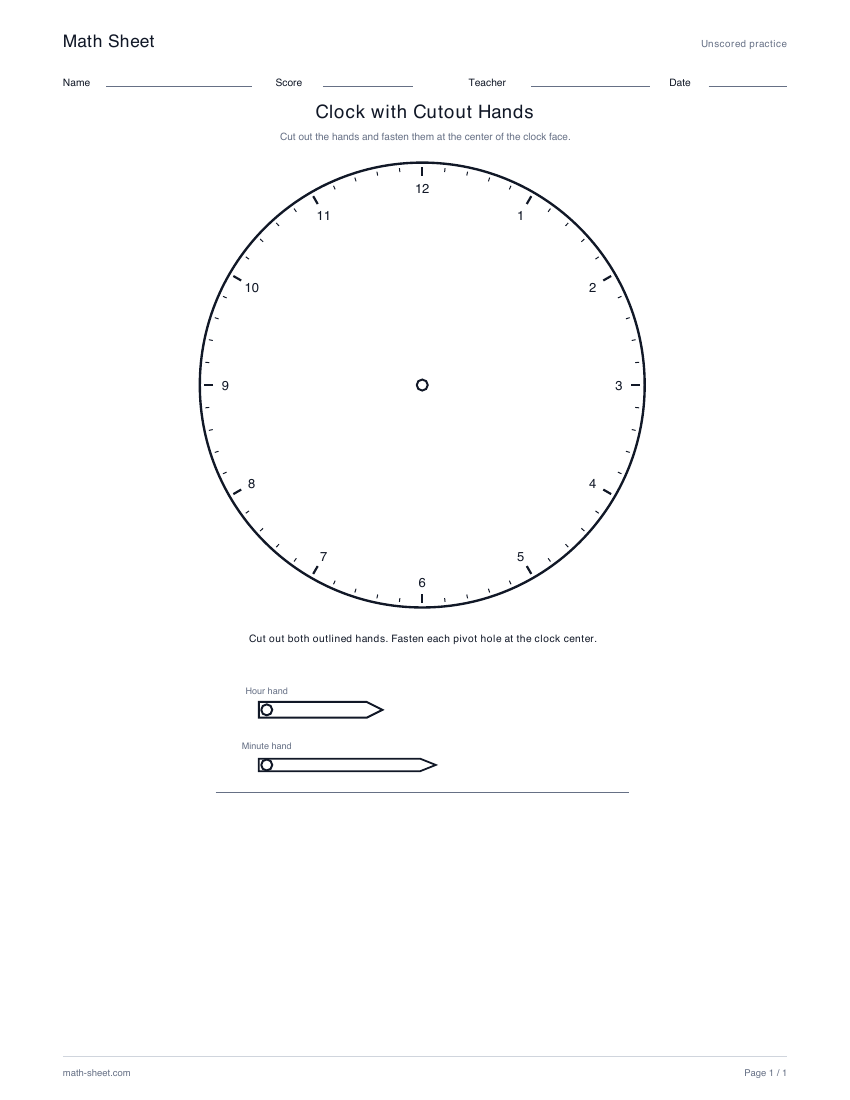
Time
Build a paper teaching clock with separate hands, then move them together to model times and discuss how a clock changes.
Preview and download