
Counting
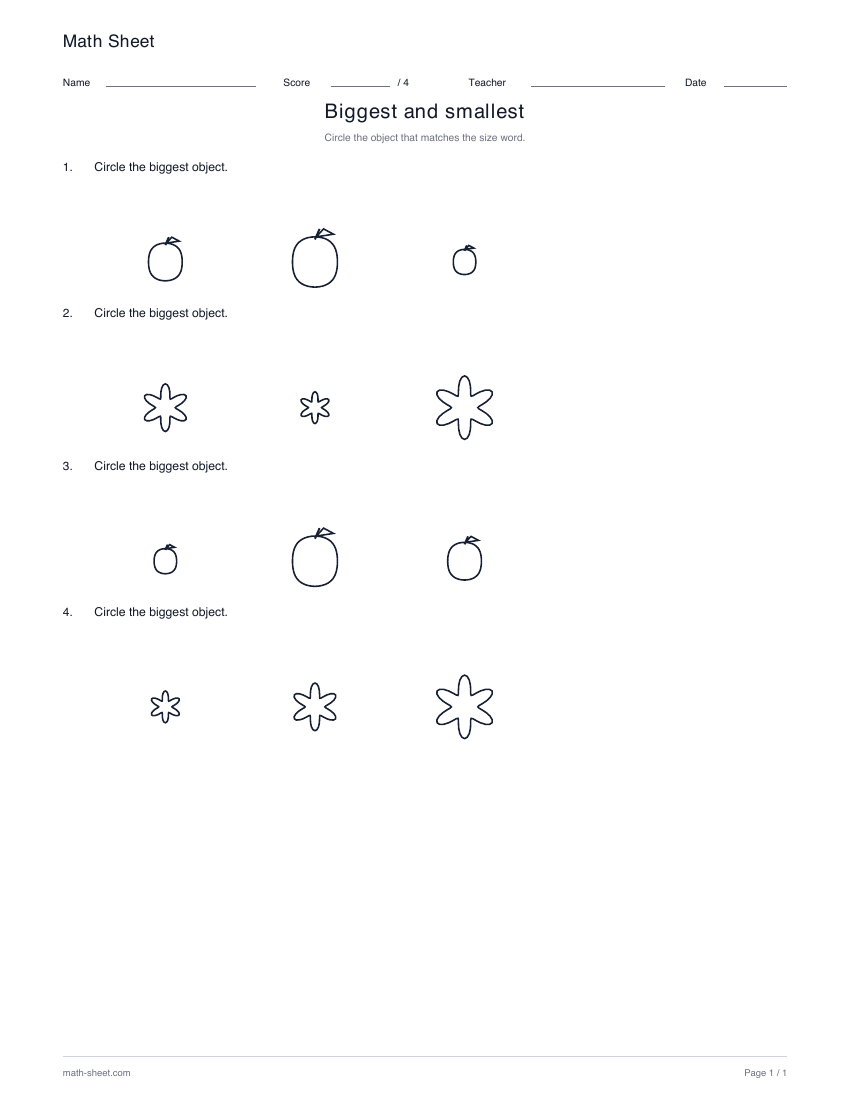
Biggest and smallest
Compare two to four original objects in each row and circle the uniquely biggest or smallest picture by visible scale.
Preview and downloadPractice by skill
Connect spoken number order, written numerals, object groups, tally marks, and skip-counting sequences.
Choose a skill that matches the learner. Each activity includes printable practice, a separate answer key or model, and a customizer.
Counting
Compare two to four original objects in each row and circle the uniquely biggest or smallest picture by visible scale.
Preview and download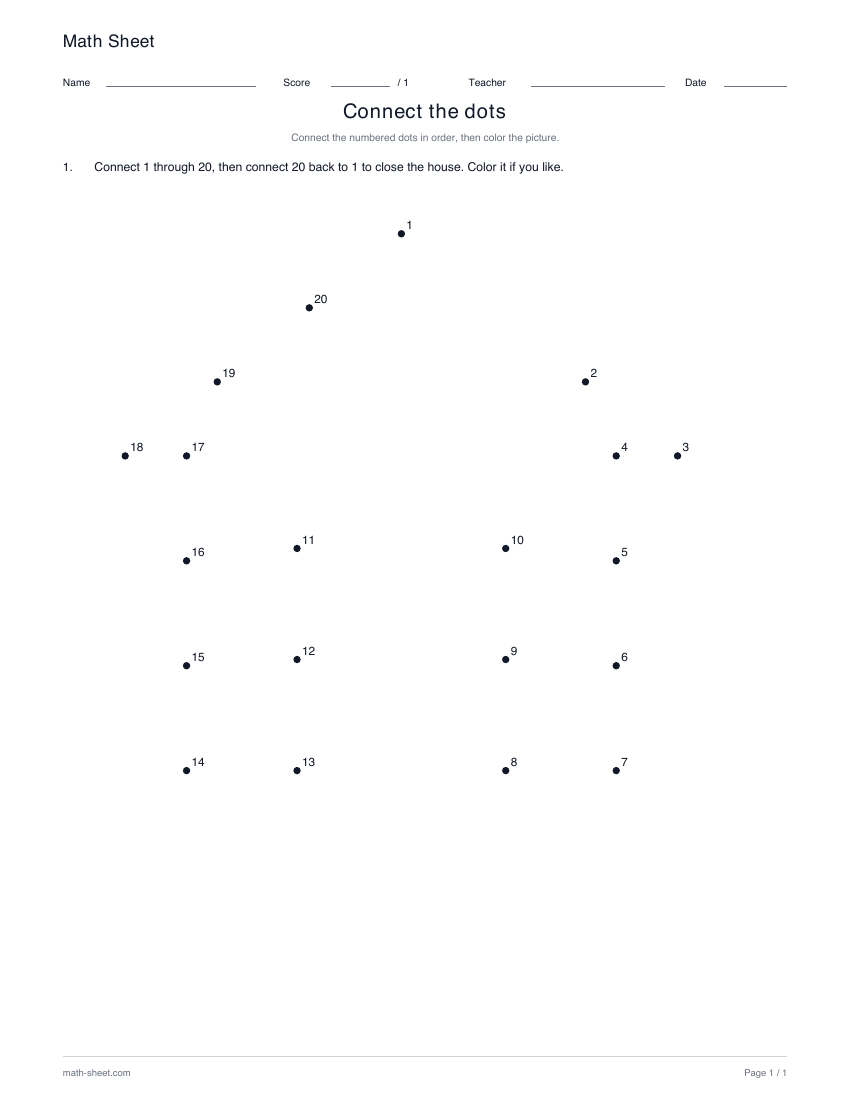
Counting
Connect numbers from 1 to 20 or 40 to draw a house, fish, rocket, sailboat, butterfly or tree. Draw an outline or finish a partly drawn picture. Print a ready-made sheet or choose your own settings.
Preview and download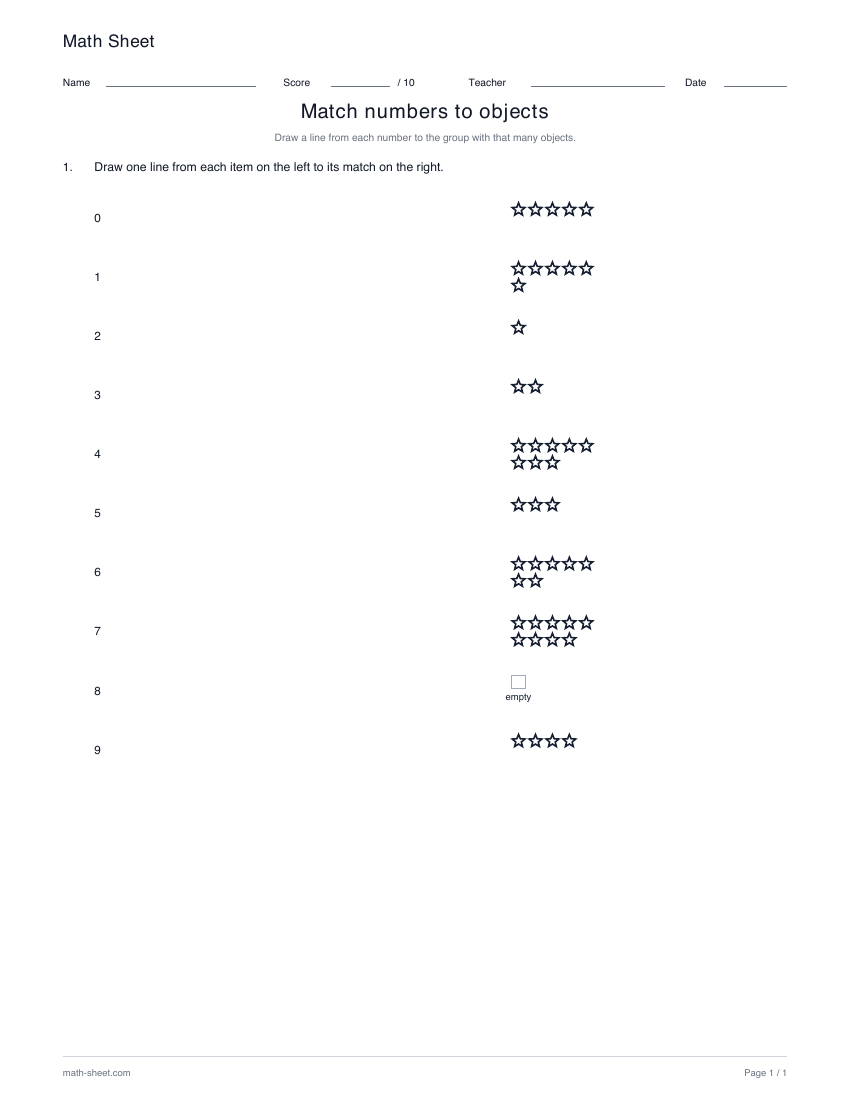
Counting
Count original object groups from 0 to 9 and draw one clear line from each group to the numeral that names its quantity.
Preview and download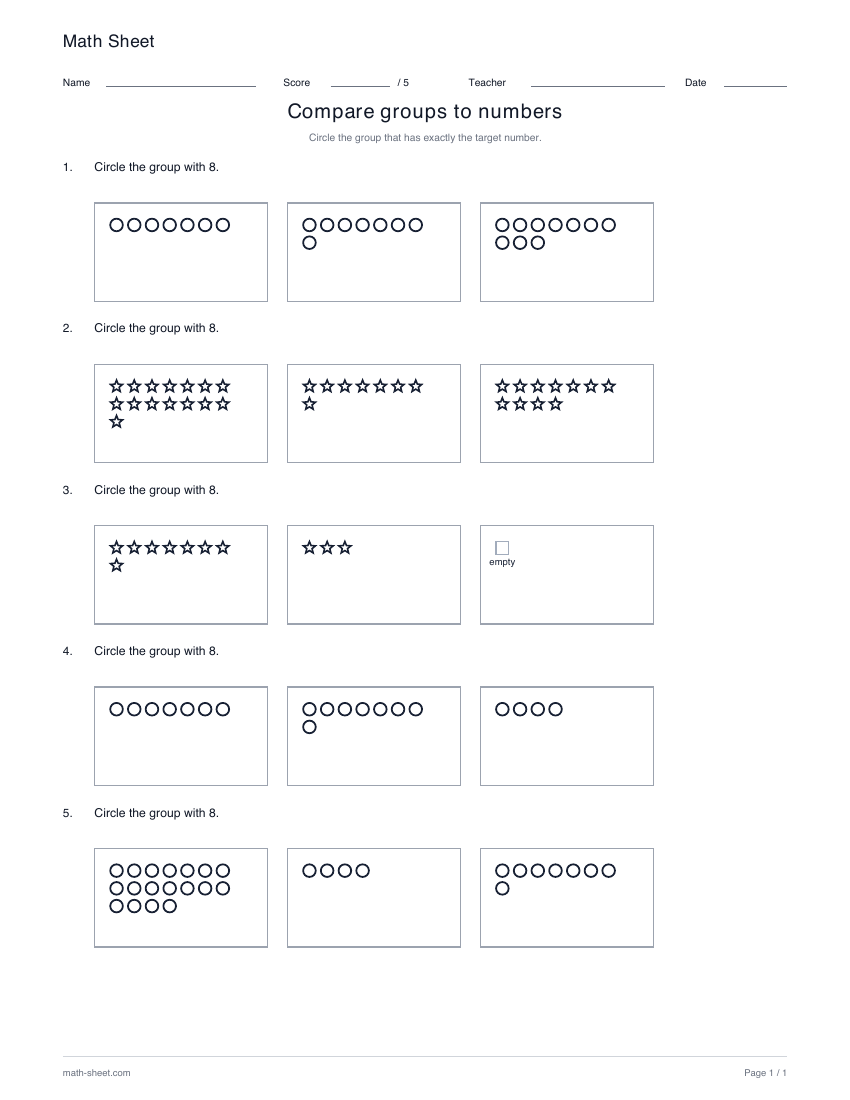
Counting
Count several original picture groups and circle the one whose quantity matches a selected target number from 1 to 20.
Preview and download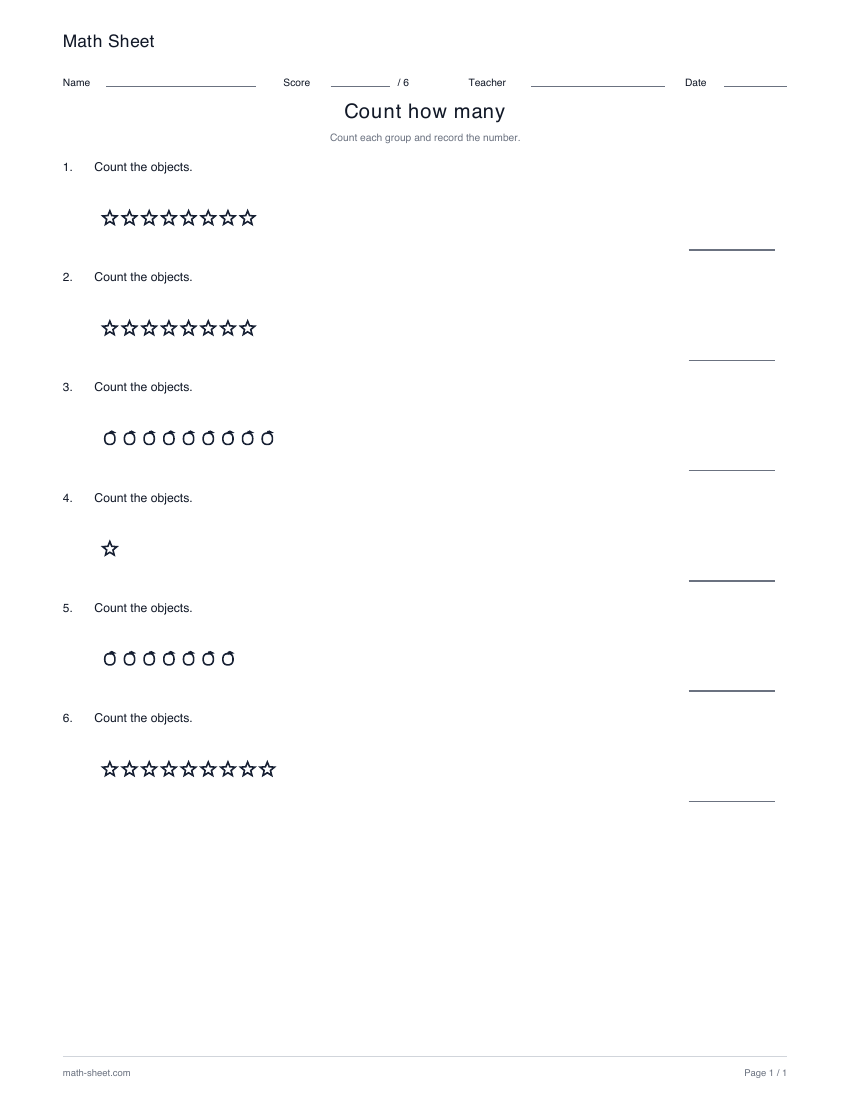
Counting
Count original object groups within a chosen 1–20 range and answer on a blank line, writing guide, or number choice.
Preview and download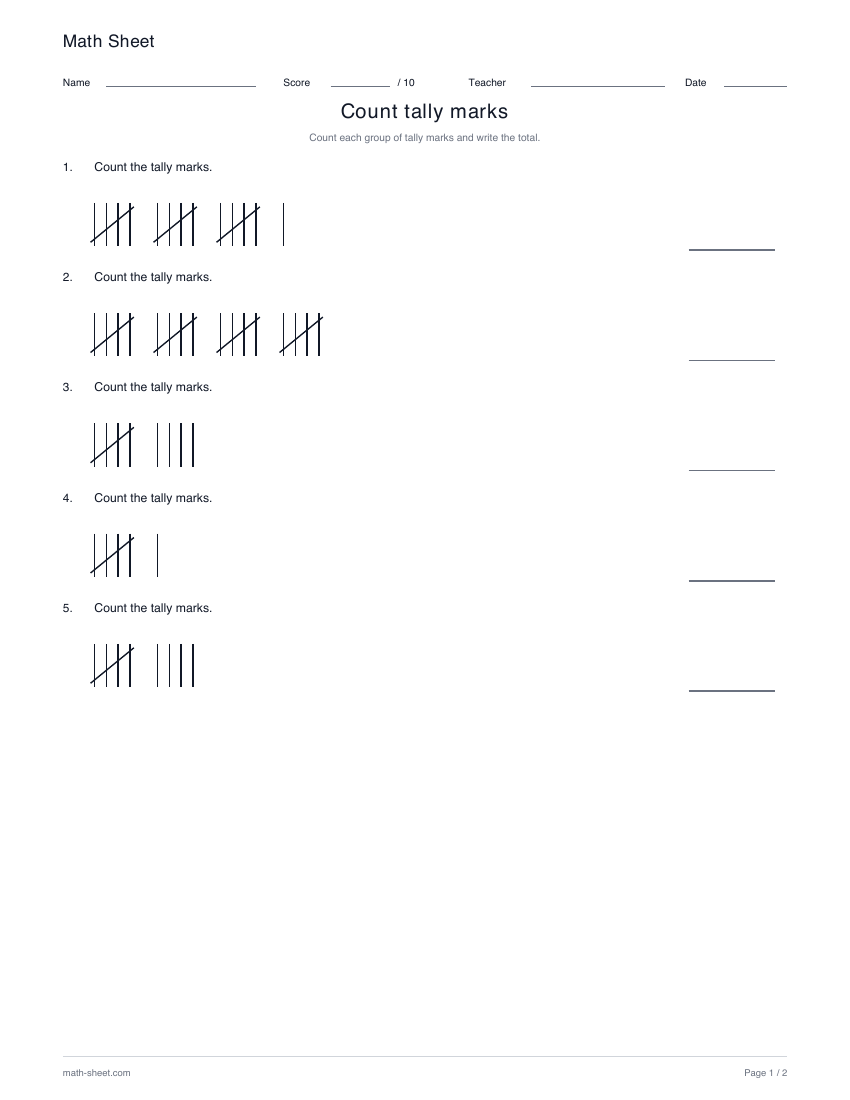
Counting
Read conventional tally groups of five, combine complete groups with leftover marks, and write totals within a selected range from 3 to 60.
Preview and download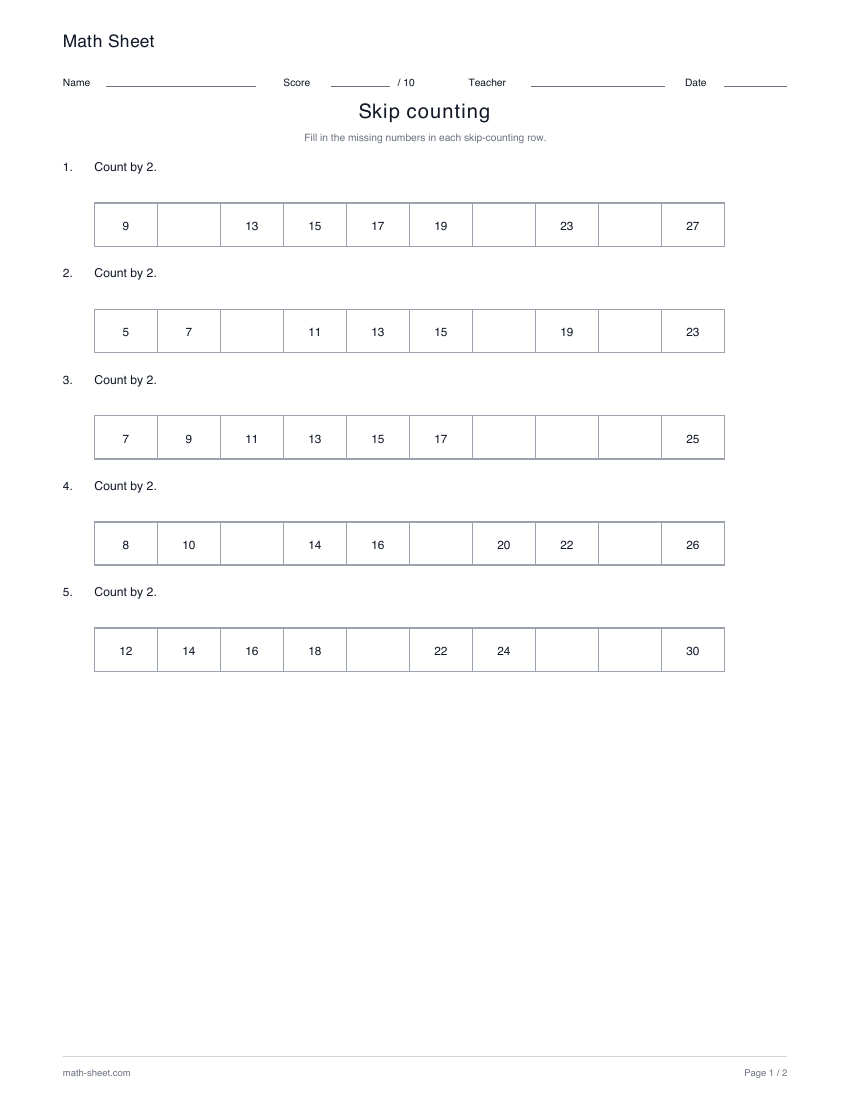
Counting
Complete sequences by equal jumps from 2 through 12. Choose three blanks for supported practice, or a compact challenge sheet with only three numbers given in each row.
Preview and download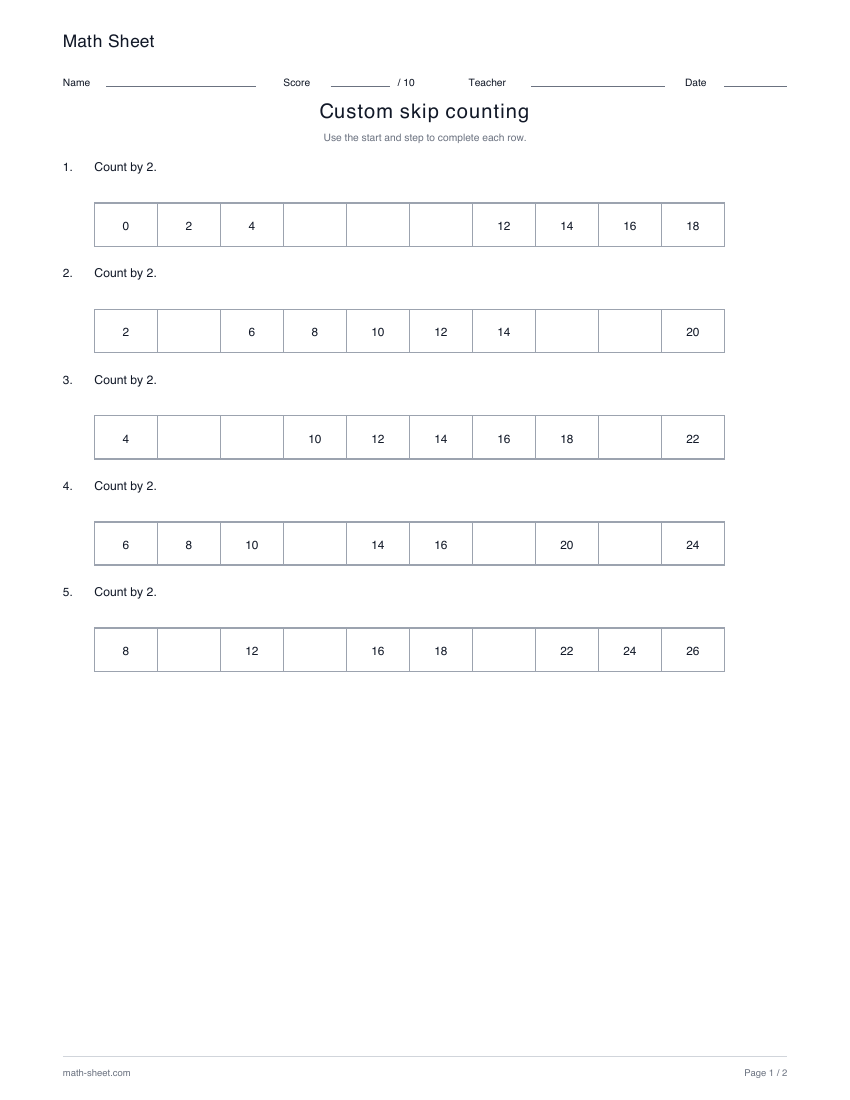
Counting
Set a start and step for each of ten sequences, including larger jumps and optional advanced negative starting numbers.
Preview and downloadCompare objects by size and select the greatest or least example while ignoring position.
Begin with two clearly different sizes before using four choices.
Maintain forward number order while connecting each numbered point exactly once.
Have the learner locate the next two numbers before drawing a line.
Connect each numeral from 0 to 9 with an object group containing exactly that many items.
Trace a clear path through the matching corridor so lines do not cross labels.
Use a short oral or hands-on example before the worksheet. When a learner can explain the thinking, choose a new set or move to the next activity. Explore the Kindergarten collection →