
Fractions
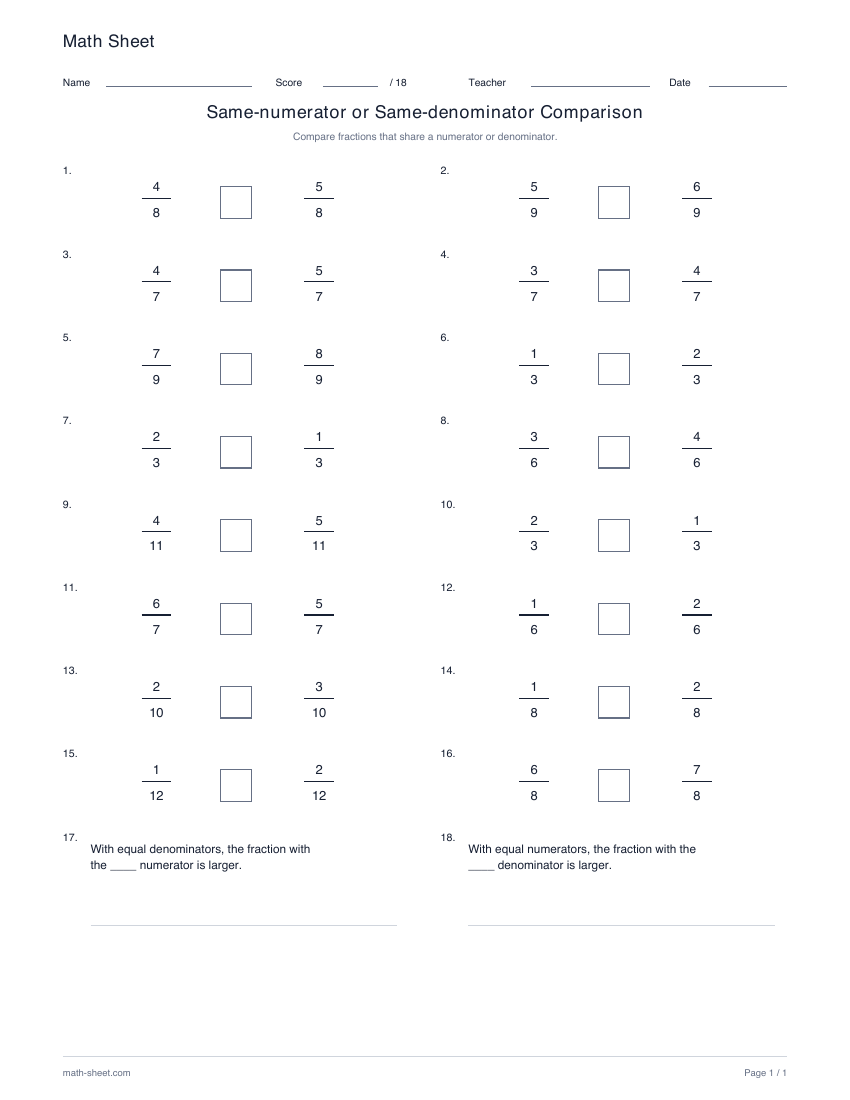
Compare fractions with a shared numerator or denominator
Compare positive fractions by separating the number of parts from the size of each part, then explain the comparison rule.
Preview and downloadComparing numbers practice
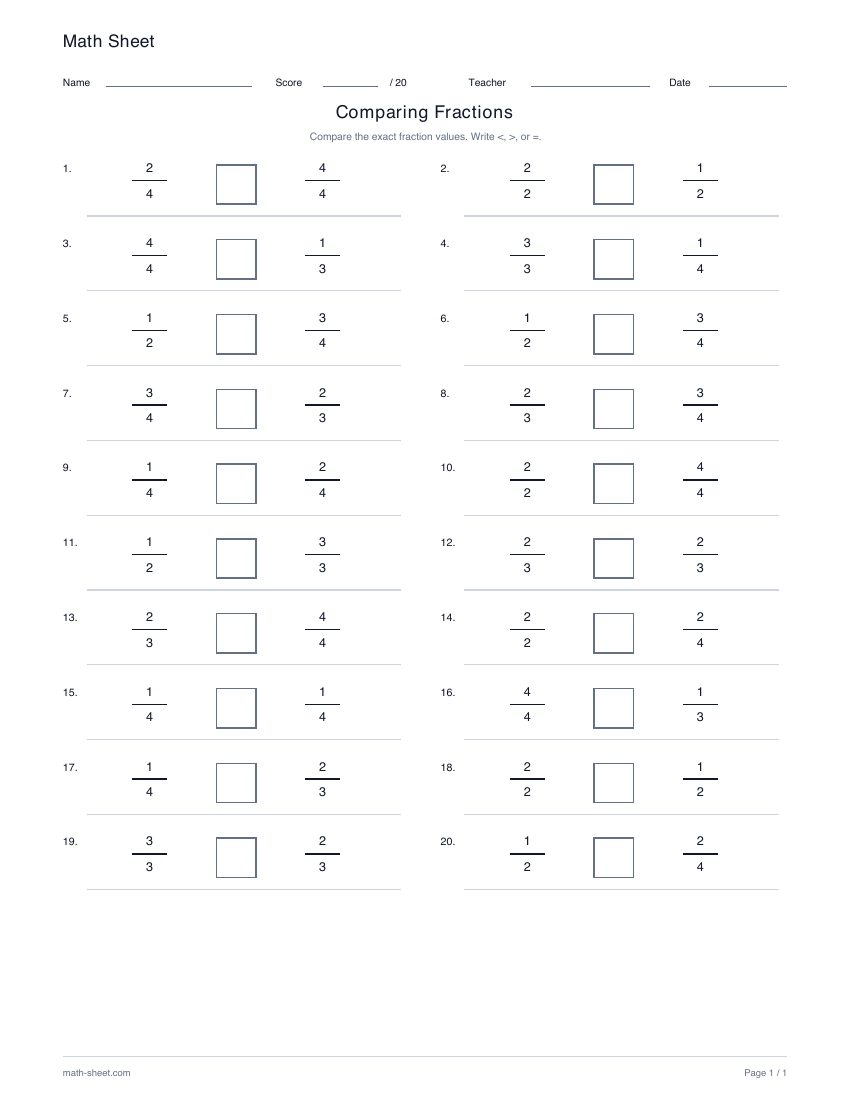
Print a 20-question comparing fractions worksheet with exact <, > and = problems. Choose positive, mixed-sign or negative values and optional denominators through 12.
Ready-made English PDF · fixed settings
Customization below makes a separate PDF.
Fixed English ready-made files. Custom settings below apply only to the configured PDF.
Ready to print
Compare the value of each fraction and write <, > or =. Use a common denominator, a familiar benchmark or exact cross-products to justify your choice.
Download the practice pages alone, or include a separate answer key or teacher model. Longer activities may use more than one page.
Customize this worksheetPaper sizes and printing help · More comparing numbers activities
Learning objective
Compare fractions as values of the same whole instead of judging their numerators or denominators separately.
Worked example
2/4 < 2/3.
Using twelfths, 2/4 = 6/12 and 2/3 = 8/12. Six twelfths is less than eight twelfths. The equal numerators do not make the two fractions equal because the parts have different sizes.
Teaching notes
Every sheet has 20 comparisons and always uses denominators 2, 3 and 4. Add any denominators from 5 through 12 for more varied pairs. Numerators run from 1 through the denominator, so the practice can include unit fractions, fractions equal to one and unreduced equivalent forms.
Leave Number signs on Positive for introductory work. Positive and negative mixes the signs, while Negative uses two negative fractions in each pair. Every sheet includes less than, greater than and equal relationships so learners must compare exact values instead of relying on how the fractions look.
Any positive fraction is greater than any negative fraction. When both are negative, the value closer to zero is greater: −1/2 > −3/4 even though the positive values have the opposite order, 1/2 < 3/4.
Equality checks whether learners recognize the same exact value in different forms, such as 1/2 = 2/4, instead of assuming different numerators or denominators must mean different amounts.
Make it yours
Choose your options, update the preview, then download the exact same pages.
A useful next step
Fractions
Compare positive fractions by separating the number of parts from the size of each part, then explain the comparison rule.
Preview and download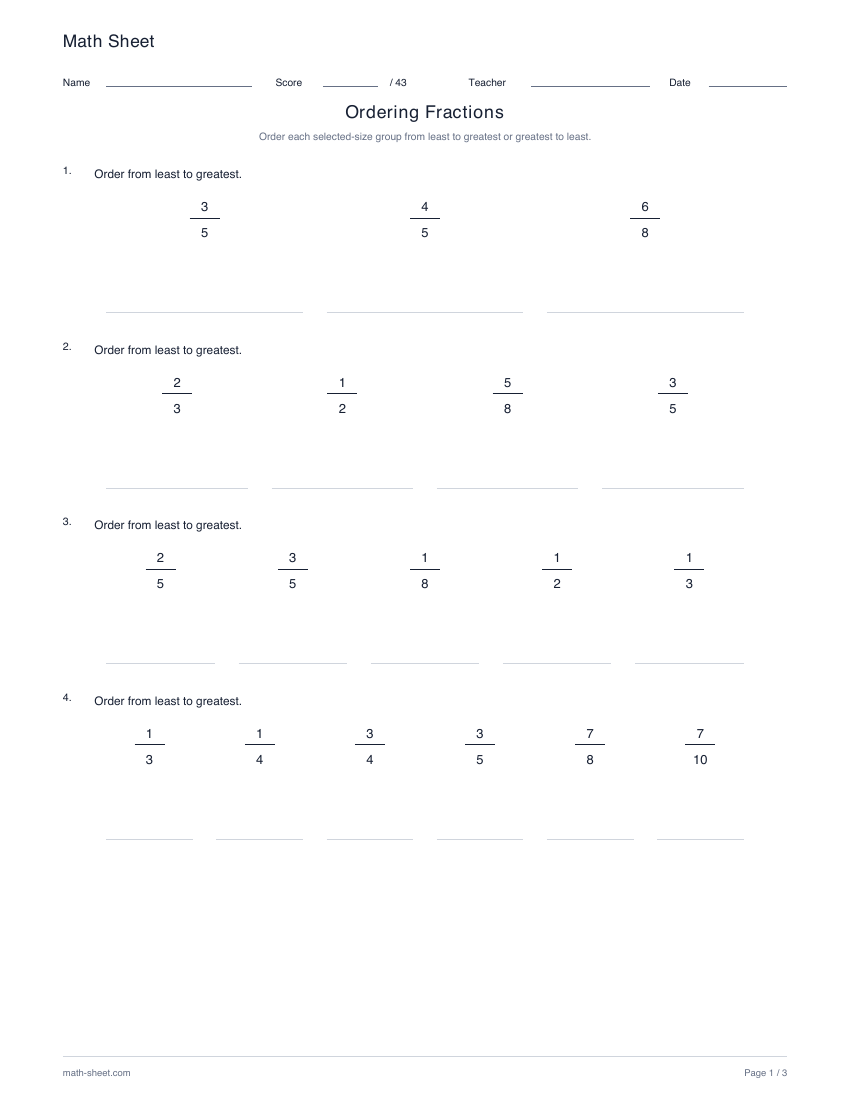
Fractions
Arrange a group of fractions in the requested direction using exact comparisons and a consistent common unit.
Preview and download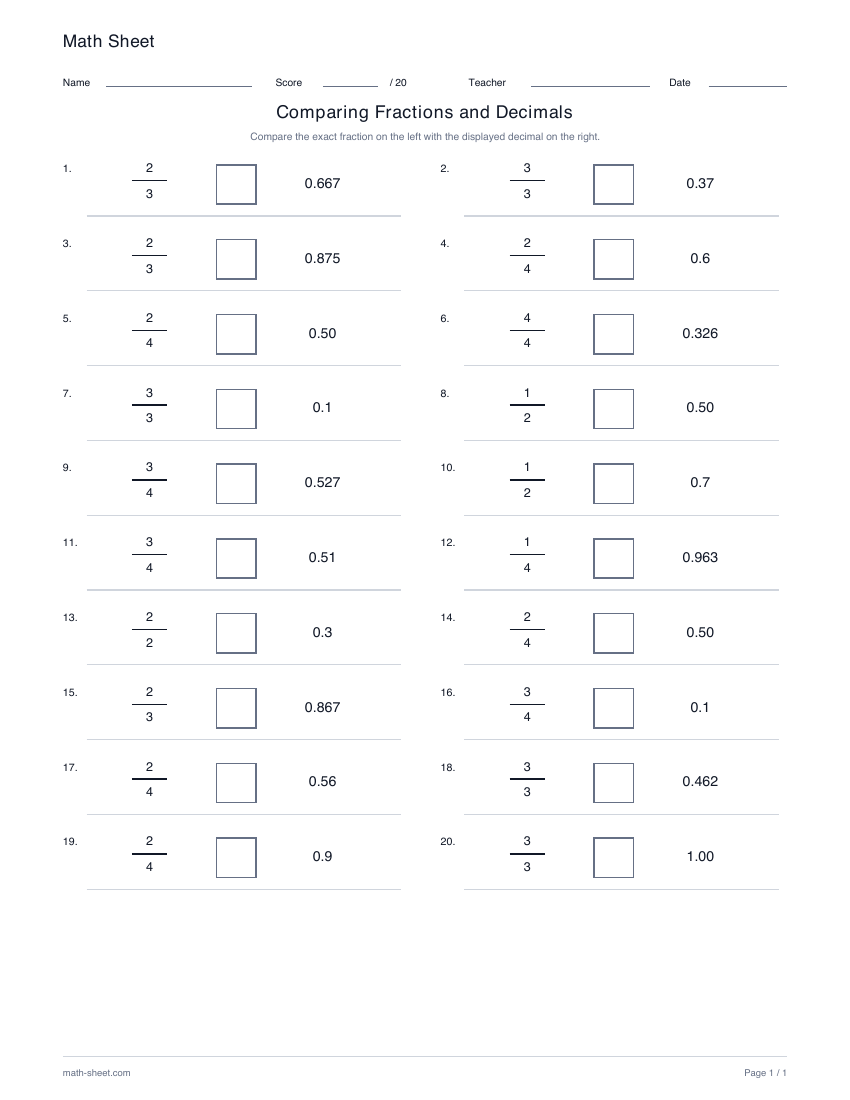
Comparing numbers
Compare a displayed fraction with a finite decimal, preserving exact values even when the fraction has a recurring decimal expansion.
Preview and download