
Fractions
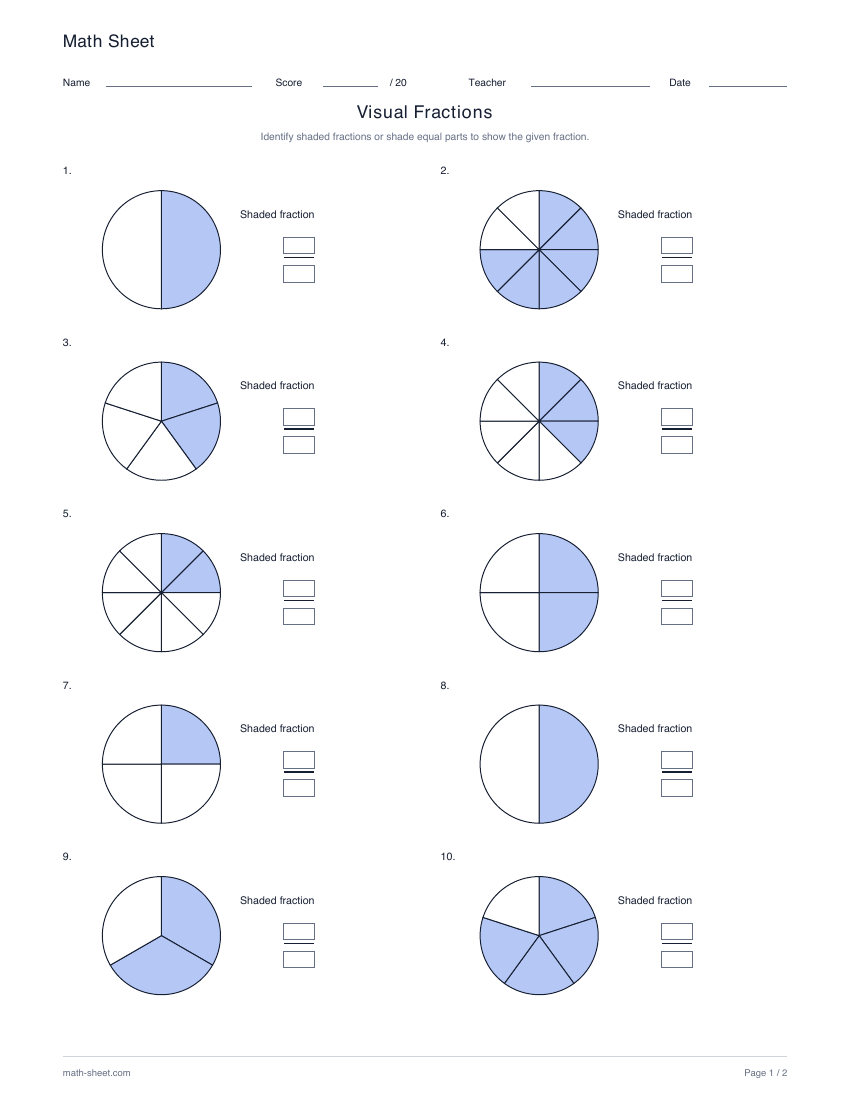
Identify and shade visual fractions
Read a fraction from a partitioned shape or shade equal parts to represent a stated fraction.
Preview and downloadFractions practice
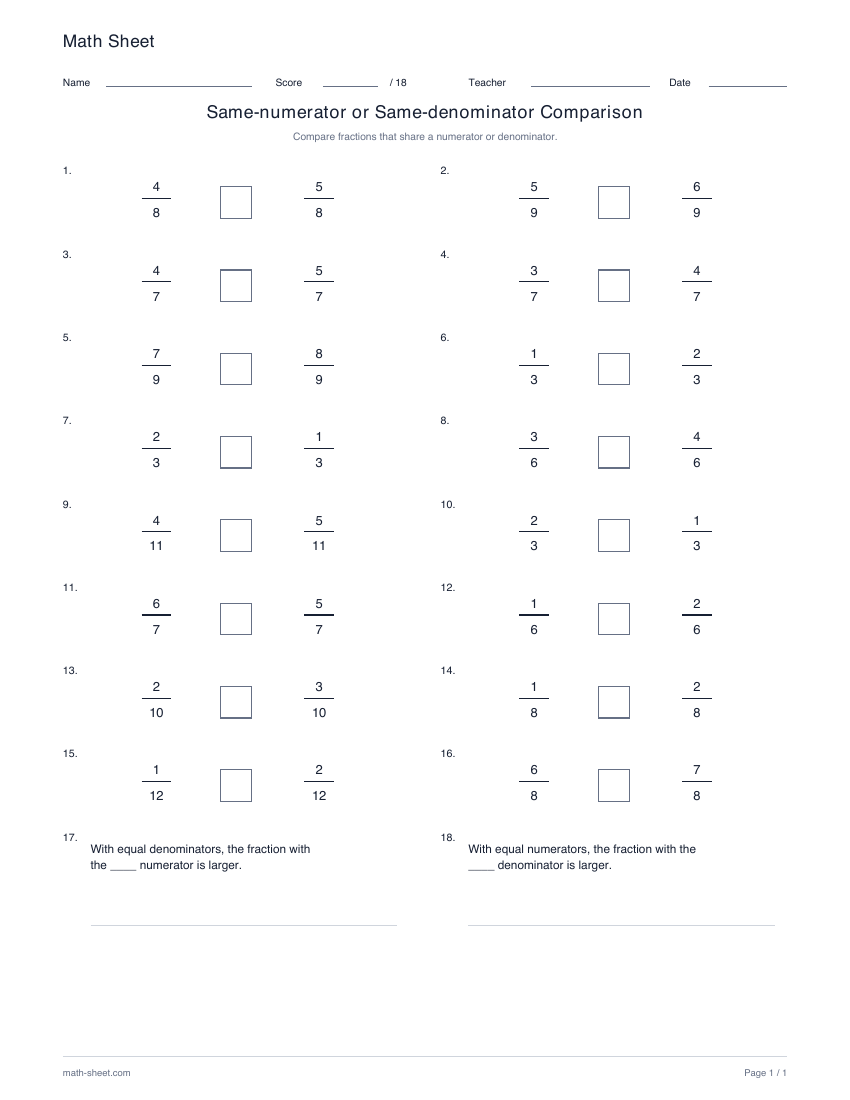
Compare positive fractions by separating the number of parts from the size of each part, then explain the comparison rule.
Ready-made English PDF · fixed settings
Customization below makes a separate PDF.
Fixed English ready-made files. Custom settings below apply only to the configured PDF.
Ready to print
Check which part of the fractions is shared. With equal denominators, compare the counts of equal-sized parts. With an equal positive numerator, compare the sizes of the parts. Write the relation and complete any explanation prompts using those ideas.
Download the practice pages alone, or include a separate answer key or teacher model. Longer activities may use more than one page.
Customize this worksheetLearning objective
Use shared numerators or denominators to compare fraction values while keeping the whole fixed.
Worked example
3/8 < 5/8, and 3/8 > 3/10.
Three eighths is less than five eighths because the parts have the same size. Three eighths is greater than three tenths because an eighth is larger than a tenth of the same whole, and both fractions count three parts.
Teaching notes
Make it yours
Choose your options, update the preview, then download the exact same pages.
A useful next step
Fractions
Read a fraction from a partitioned shape or shade equal parts to represent a stated fraction.
Preview and download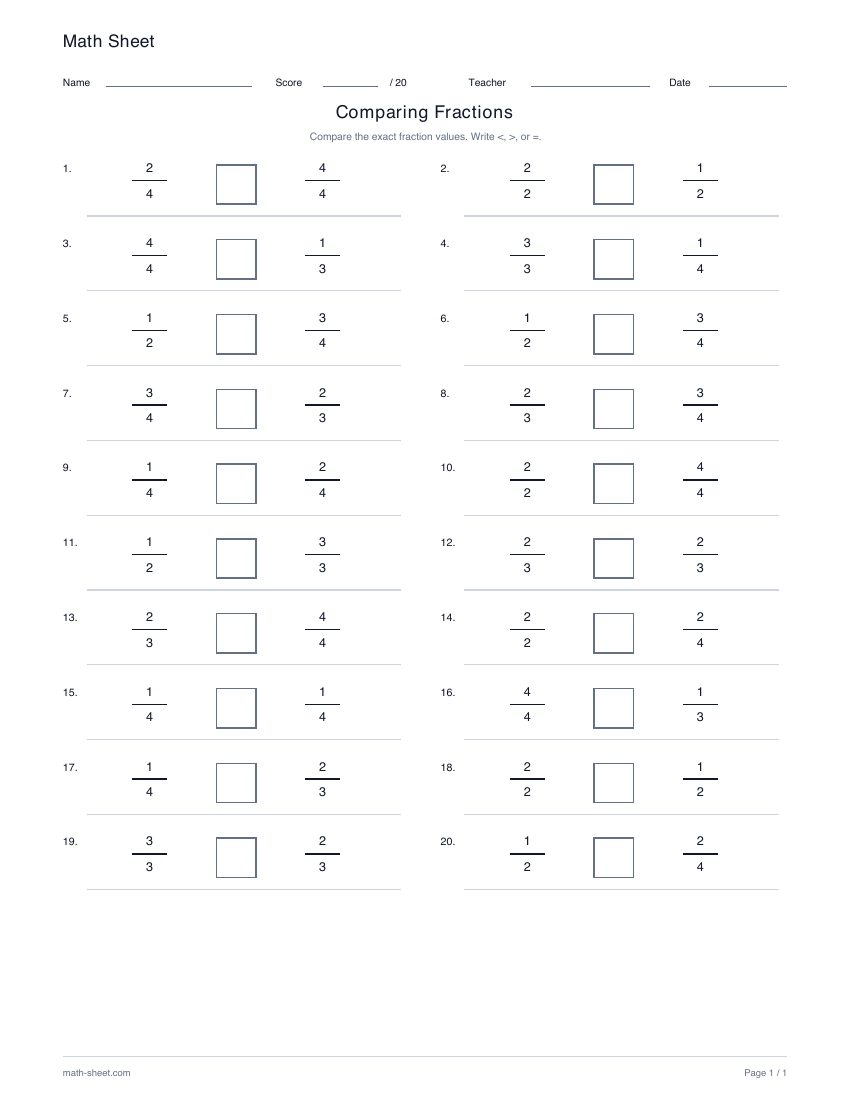
Comparing numbers
Print a 20-question comparing fractions worksheet with exact <, > and = problems. Choose positive, mixed-sign or negative values and optional denominators through 12.
Preview and download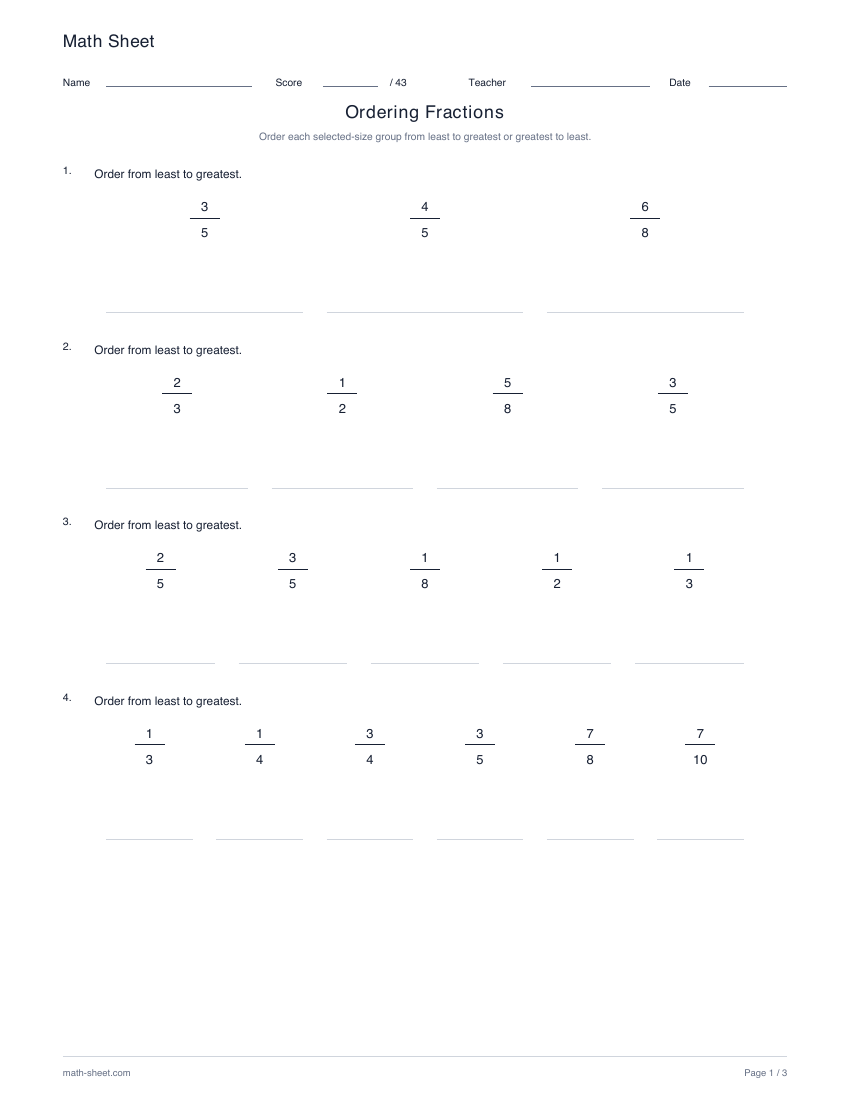
Fractions
Arrange a group of fractions in the requested direction using exact comparisons and a consistent common unit.
Preview and download