
Fractions
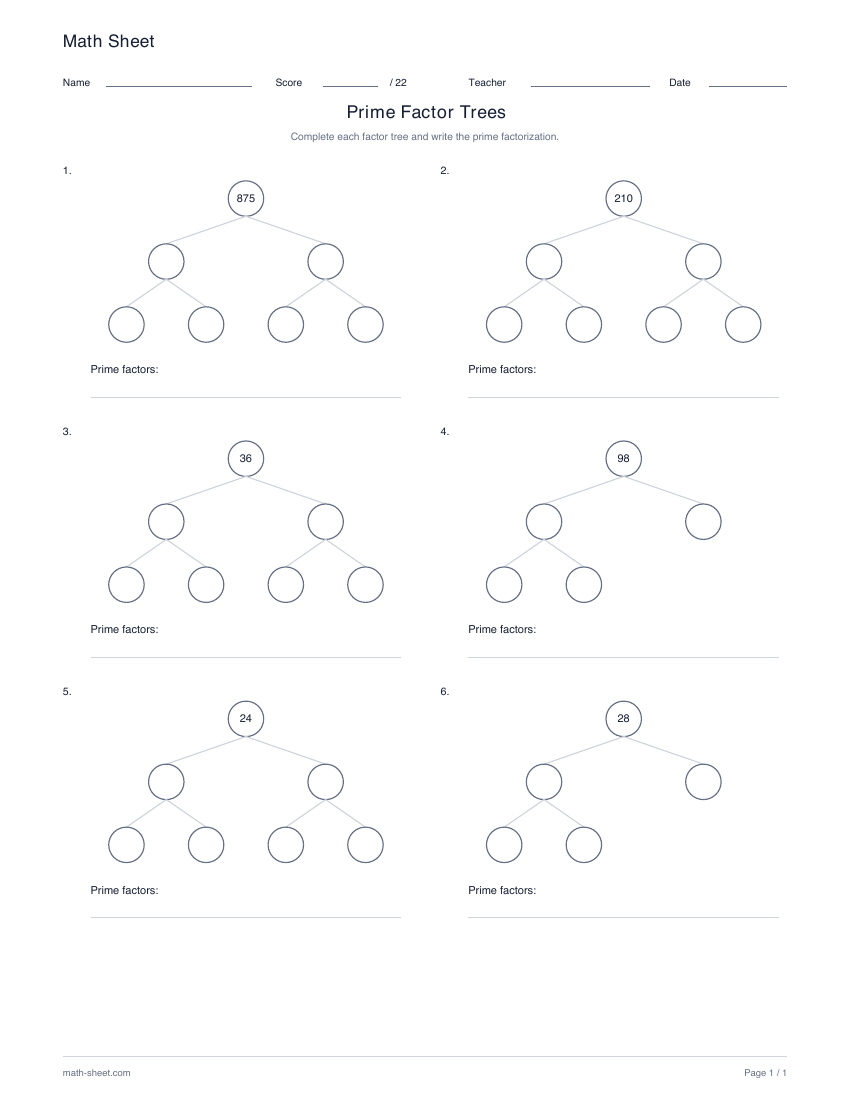
Prime factor trees
Break composite numbers into factor pairs until every branch ends in a prime, retaining repeated factors.
Preview and downloadFractions practice
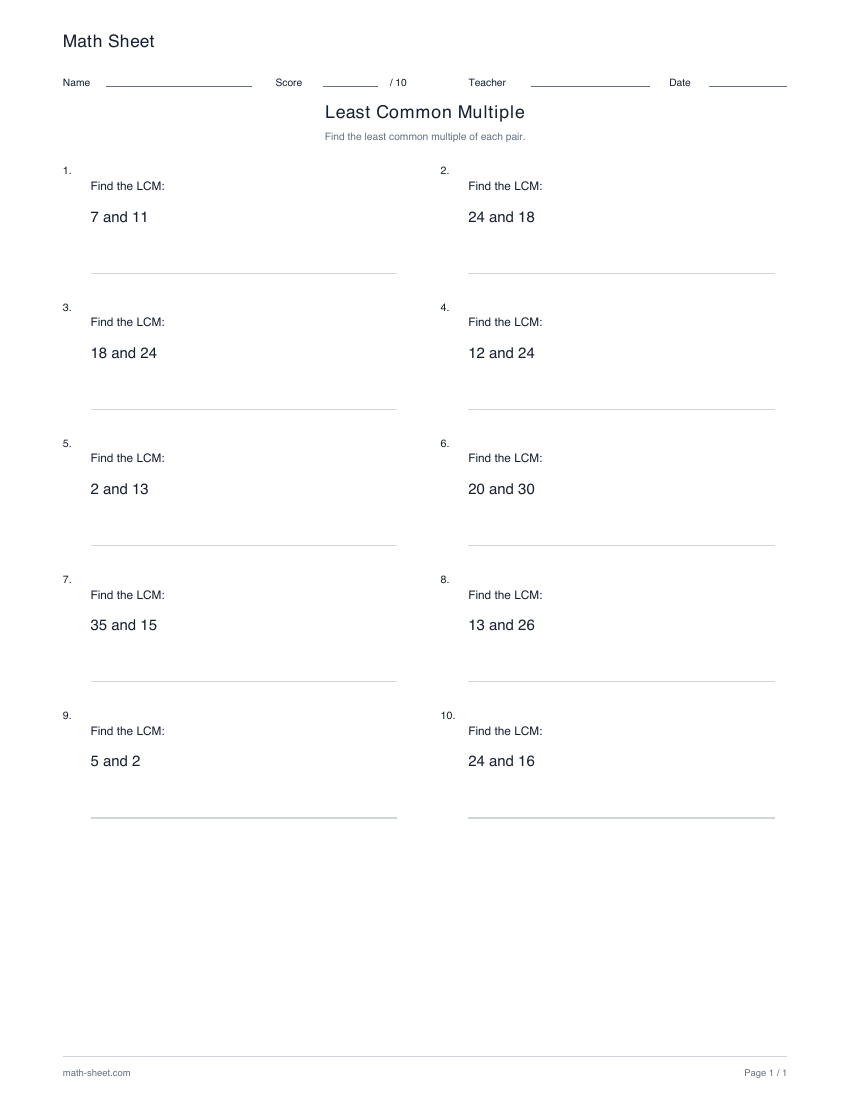
Find the smallest positive multiple shared by two numbers and use it to plan common-denominator work.
Ready-made English PDF · fixed settings
Customization below makes a separate PDF.
Fixed English ready-made files. Custom settings below apply only to the configured PDF.
Ready to print
List multiples or compare prime factors to find the smallest positive number divisible by both given numbers. Check both divisions before writing the result.
Download the practice pages alone, or include a separate answer key or teacher model. Longer activities may use more than one page.
Customize this worksheetLearning objective
Identify the first positive shared multiple without confusing multiples with factors.
Worked example
24.
The multiples of 6 begin 6, 12, 18, 24, while those of 8 begin 8, 16, 24. Their first positive match is 24. This makes twenty-fourths a useful common unit for sixths and eighths.
Teaching notes
Make it yours
Choose your options, update the preview, then download the exact same pages.
A useful next step
Fractions
Break composite numbers into factor pairs until every branch ends in a prime, retaining repeated factors.
Preview and download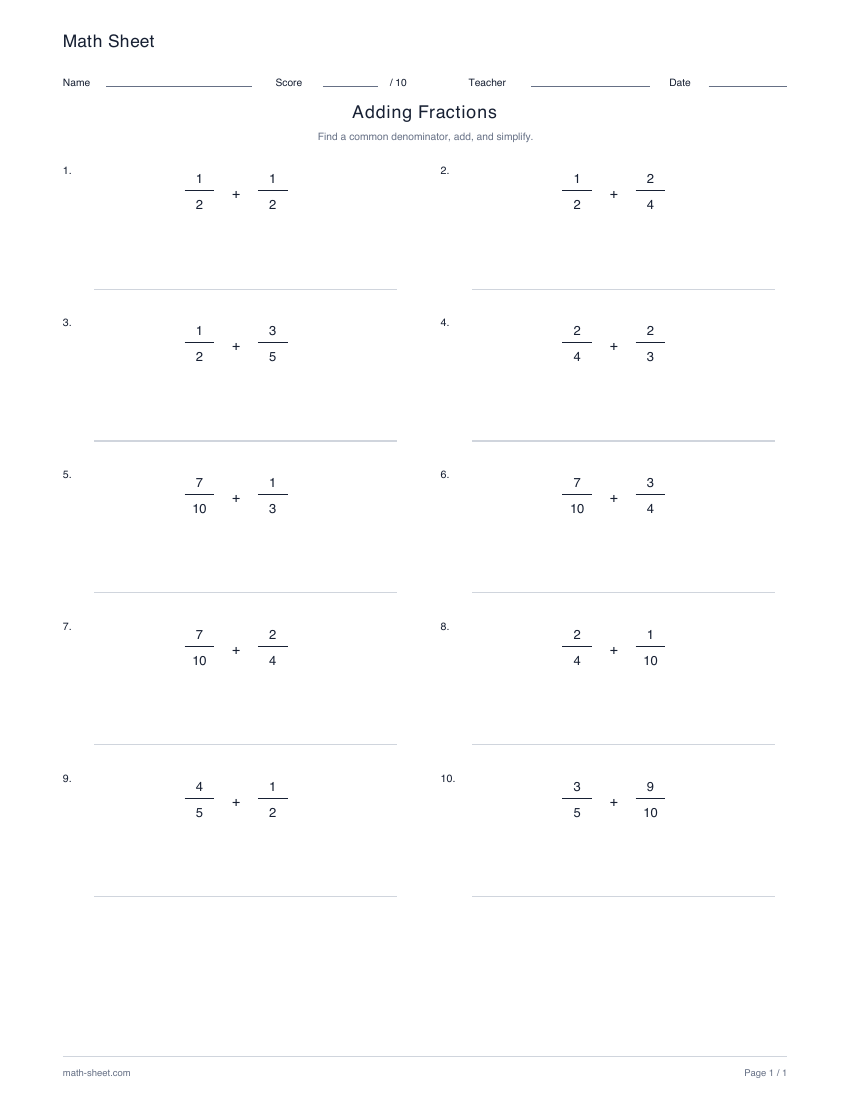
Fractions
Rename fractions as equivalent amounts with a common denominator before finding and simplifying their sum.
Preview and download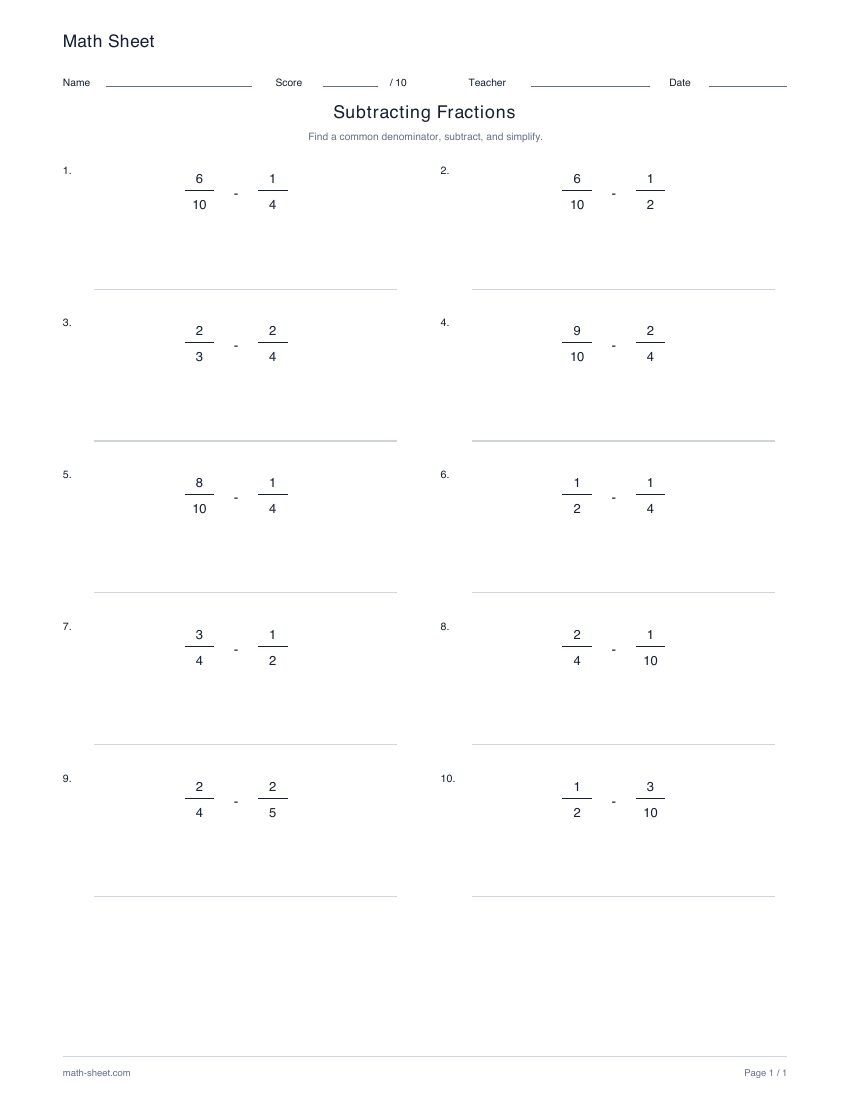
Fractions
Rename unlike fractions using a common unit before calculating and simplifying their difference.
Preview and download