
Comparing numbers
Compare decimals
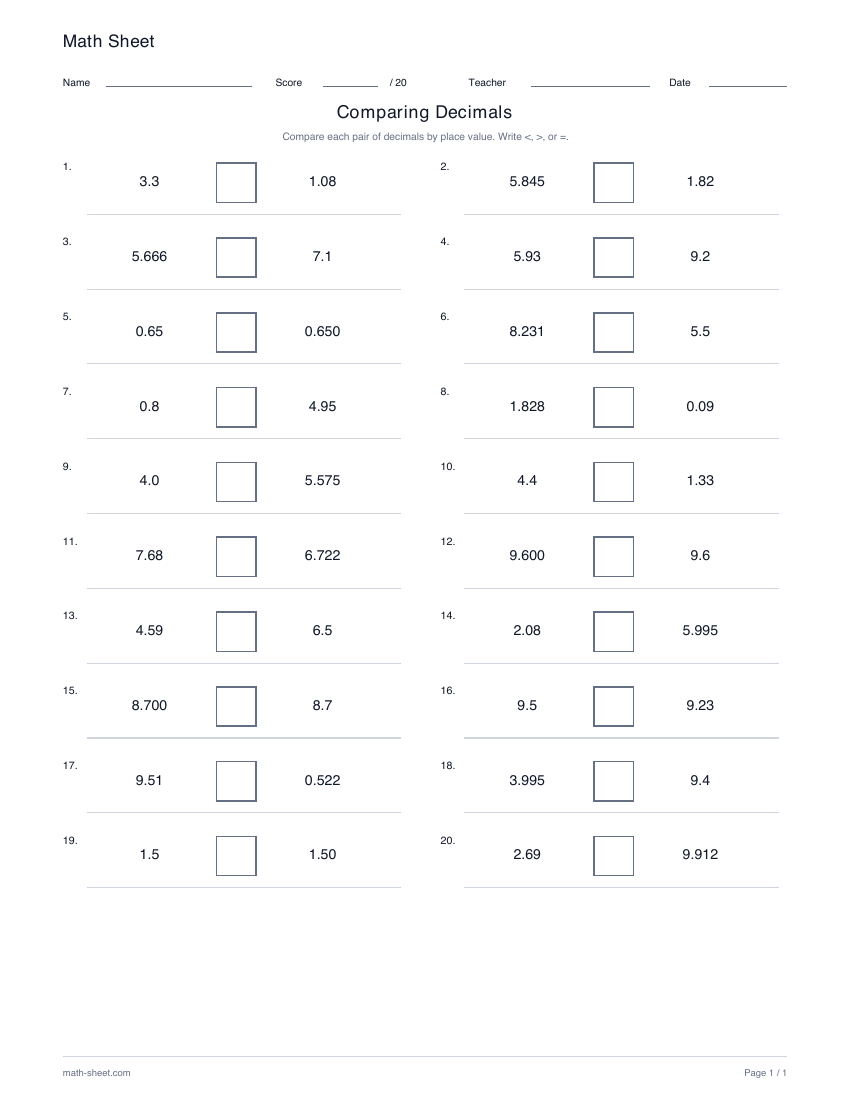
Compare decimal values displayed with one to three decimal places, including equal values, close pairs and changes in place value.
Preview and downloadDecimals practice
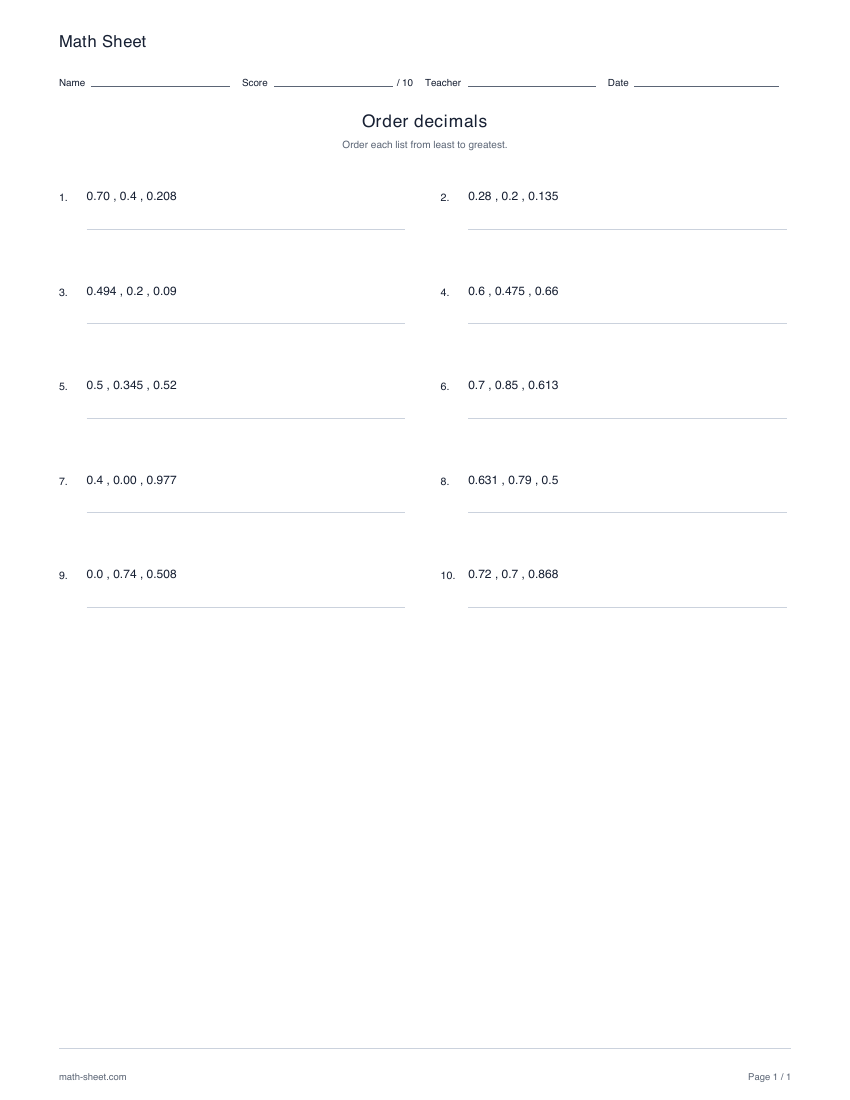
Order three or four decimals from least to greatest or greatest to least. Mix tenths, hundredths and thousandths, choose the whole-number part, and print 10–16 questions.
Ready-made English PDF · fixed settings
Customization below makes a separate PDF.
Fixed English ready-made files. Custom settings below apply only to the configured PDF.
Ready to print
Compare digits from left to right. Read the requested direction, then rewrite the complete list in order. All values in a question share the same integer part.
Download the practice pages alone, or include a separate answer key or teacher model. Longer activities may use more than one page.
Customize this worksheetReady-made PDFs are in English, in Letter and A4. Choose the student-only file or add a separate answer key. The preview shows the first page; downloads include every page.
Use the generator to change the number ranges, precision, question count, seed or teacher note. A long note or translated instructions may add a page.
Learning objective
Compare equal place values and order decimals even when they have different numbers of displayed digits.
Worked example
0.65; 0.7; 0.708
For comparison, think of 0.650; 0.700; 0.708. Compare hundredths after matching tenths, then thousandths after matching hundredths. More decimal digits do not automatically make a number larger.
Teaching notes
Make it yours
Choose your options, update the preview, then download the exact same pages.
A useful next step
Comparing numbers
Compare decimal values displayed with one to three decimal places, including equal values, close pairs and changes in place value.
Preview and download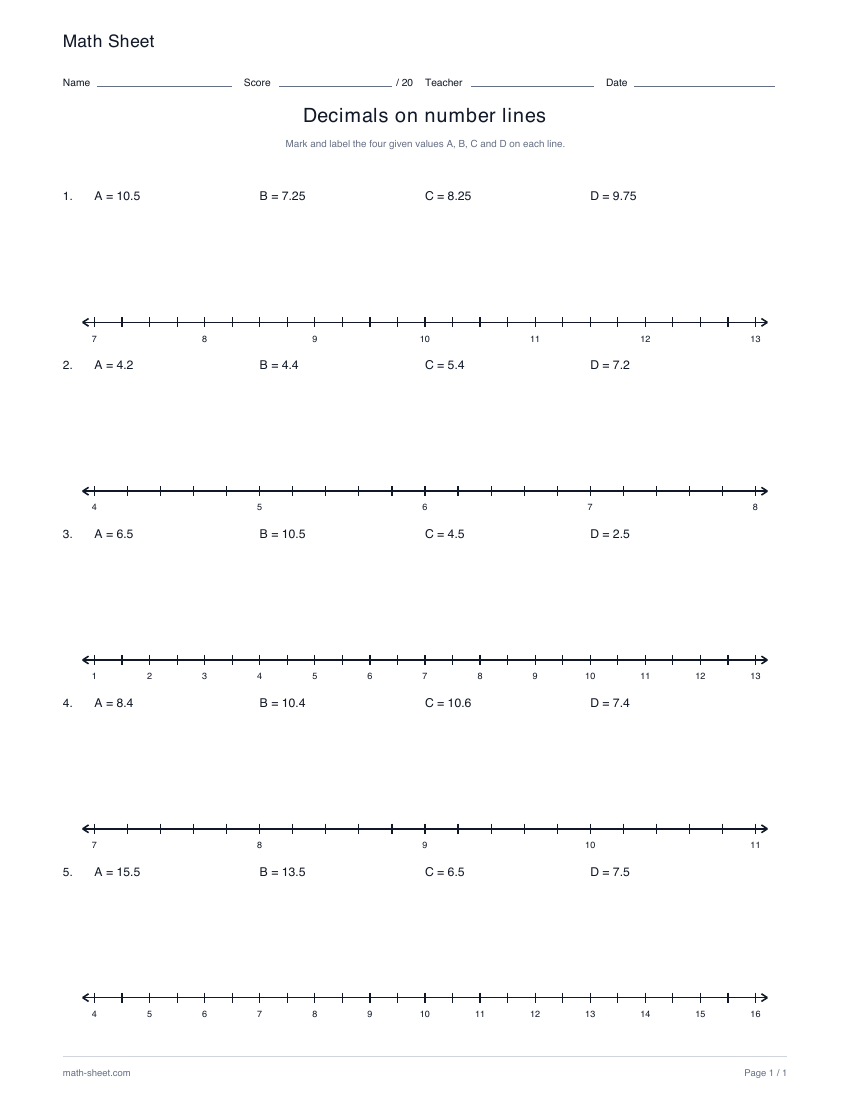
Number line
Locate four decimal values on each of five lines using halves, quarters, fifths, thirds, eighths or tenths. Choose plotting or reading practice.
Preview and download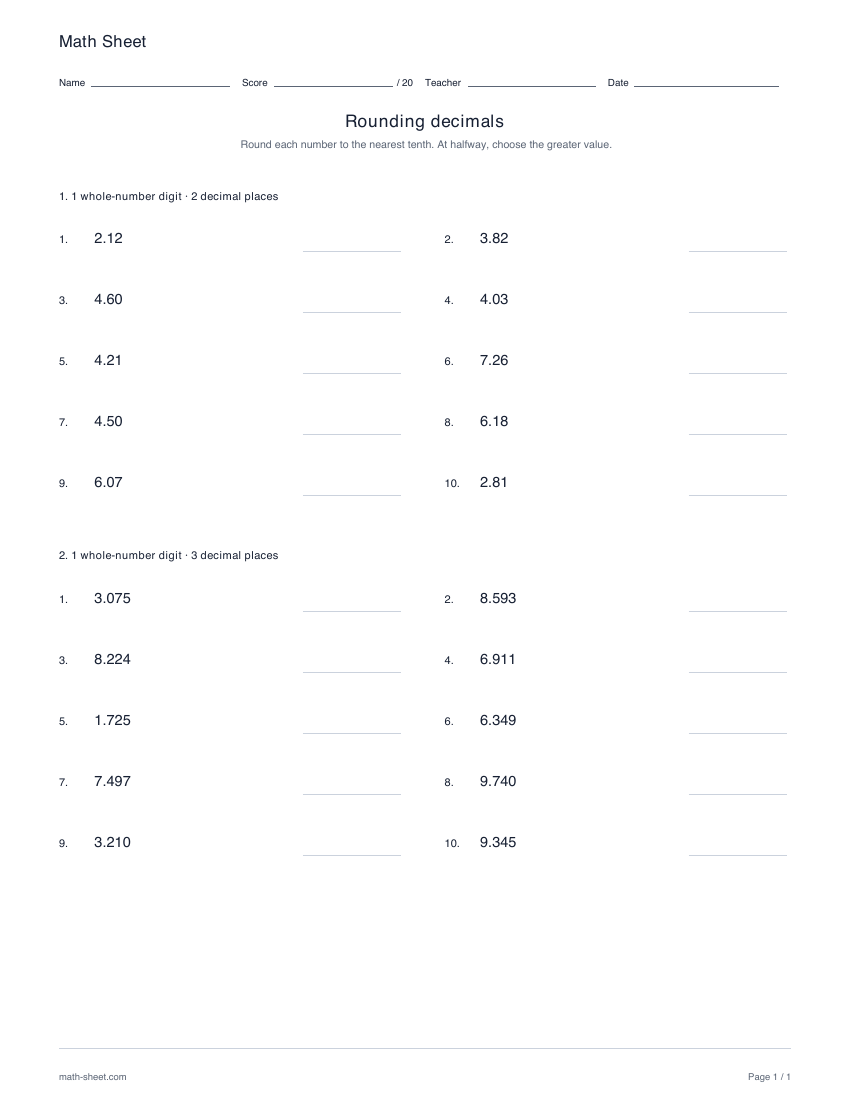
Rounding
Round decimals to the nearest tenth, hundredth or thousandth. Two groups add one then two extra decimal places, with exact answers that preserve the requested precision.
Preview and download